
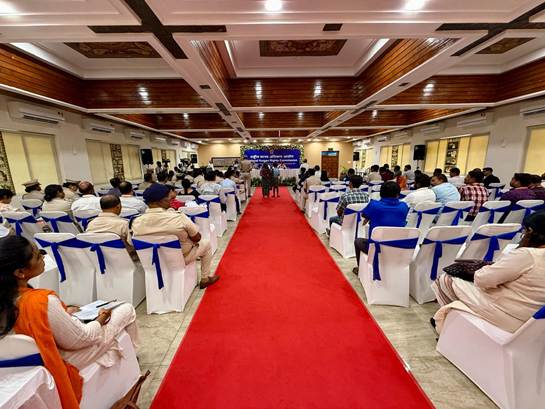
A Landmark Session of Accountability and Relief
Led by NHRC Chairperson Justice V. Ramasubramanian, alongside Members Justice (Dr.) Bidyut Ranjan Sarangi and Smt. Vijaya Bharathi Sayani, the Commission made significant interventions. The event was attended by Secretary General Shri Bharat Lal, Registrar (Law) Joginder Singh, state officials, and complainants.
The Commission dealt with a wide range of cases—custodial deaths, child trafficking, police atrocities, crimes against women and children, and more. It was a rare moment where justice was not just discussed but actively delivered.


The Commission didn’t just hear cases; it took immediate action. In several cases, it ordered:
- ₹15,000 interim relief and pension benefits to a senior tribal woman
- Expedited police investigations and chargesheet filing
- ₹4 lakh compensation each for families of five deceased cracker factory workers
These steps show NHRC’s dedication to ensuring justice, particularly for vulnerable communities.
₹1 Crore Compensation Cases Await Resolution
In a separate but related development, the NHRC reviewed 25 pending cases under the Victim Compensation Scheme amounting to nearly ₹1 crore. These matters were discussed in the presence of the Member Secretary of Odisha’s Legal Services Authority, who assured timely disbursal of compensation.
This interaction emphasized the need for swift compensation to victims, reinforcing the legal system’s commitment to timely justice.
Senior State Officials Briefed on Systemic Issues
Following the hearings, NHRC held a high-level meeting with the Odisha Chief Secretary, Director General of Police, and other senior officials. The Commission sensitized them to critical issues, including:
- Rising crimes against women and children
- Human rights violations due to witchcraft practices and sorcery
- Deaths due to snake bites and natural calamities like floods
- Trafficking during COVID-19 and aftermath
Officers were also instructed to submit action-taken reports on NHRC advisories related to Mental Health, Bonded Labour, Right to Food, and Safety.
38 Cases Closed After Hearing or Compliance
Out of the total cases, 38 were closed after hearings. Another three were disposed of upon receipt of compliance reports with payment proofs. These closures indicate both administrative cooperation and NHRC’s efficiency in resolution.
Partnership with Civil Society and NGOs Strengthened
True to its mission, the NHRC held a special session with civil society members, NGOs, and Human Rights Defenders (HRDs). They discussed:
- Human rights education and awareness
- Police reforms and accountability
- Challenges faced by transgender communities, especially regarding identity documents and access to education
The session began with a heartfelt tribute—a two-minute silence—to honor the late human rights advocate Shri Radhakanta Tripathy. The Commission also issued a formal condolence message acknowledging his contribution to justice and dignity in Odisha.
Digital Complaints Platform Promoted
The Chairperson encouraged NGOs and HRDs to use the online platform hrcnet.nic.in to file rights violation complaints. He assured them of the Commission’s support and appreciated their on-ground efforts.
“Your fearless commitment inspires change. Together, we can ensure rights for all,” Justice Ramasubramanian remarked, concluding the session with hope and determination.
NHRC’s Odisha Sitting: A Step Towards Justice
This Camp Sitting in Odisha marks a significant milestone in NHRC’s proactive approach. It not only delivered immediate relief but also set a tone of cooperation between government and civil society to uphold human rights in Odisha.
The NHRC’s open hearing and its transparent, result-driven approach offer a model that other states can follow. Odisha’s response and the Commission’s outreach together signal a strong, united front for protecting the rights of the vulnerable.