

Shri Giriraj Singh highlighted NIFT’s transformative role in India’s textile and craft sectors, noting that each graduate contributes to an estimated 8,000 to 10,000 jobs over their lifetime. He emphasised India’s shift from foreign benchmarks toward indigenous initiatives such as IndiaSize and VisionNxt, strengthening India-specific design forecasting and aligning with the vision of Aatmanirbhar Bharat.
Government Support and Sector Growth
The Minister acknowledged government measures like the reduction of GST on affordable clothing from 18% to 5% and the removal of trade barriers, including cotton import duties, as key drivers of industry growth. He further highlighted NIFT’s expanding influence beyond fashion into sectors such as automobiles and logistics.
Conference Highlights and Inaugural Sessions
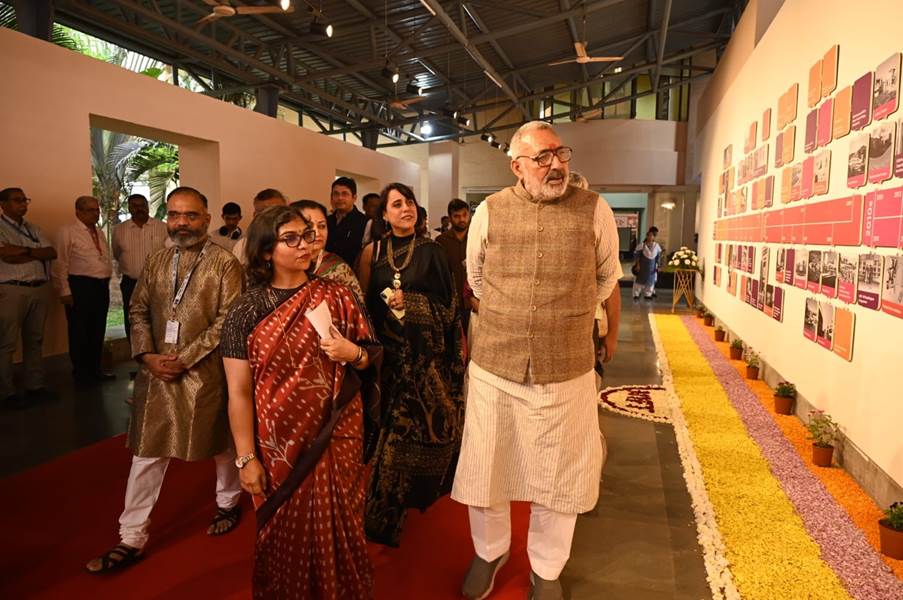
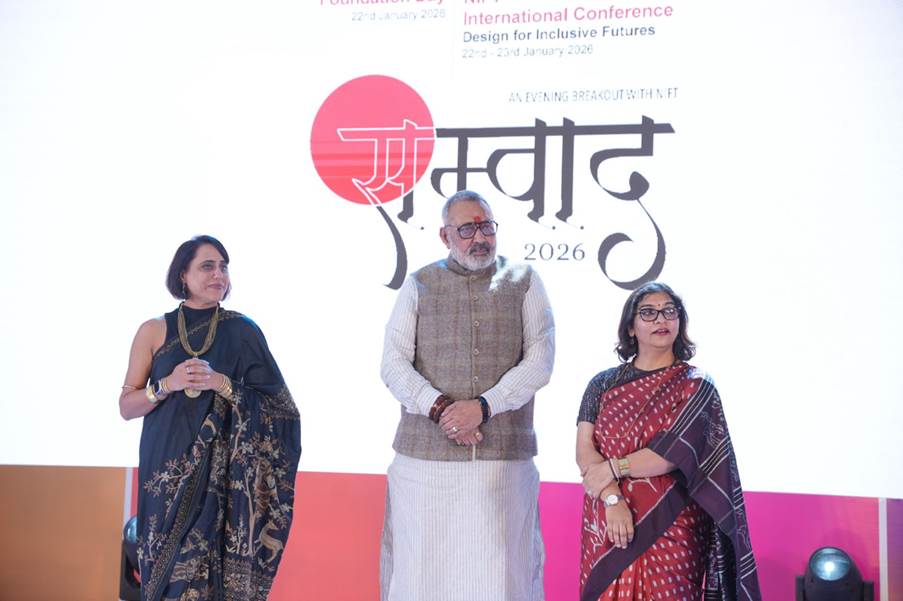
The inaugural session featured senior officials, including Neelam Shami Rao, Secretary, Ministry of Textiles, Tanu Kashyap, Director General of NIFT, and other distinguished faculty members. The event included the release of the book NIFT @40 “धरोहर”, chronicling the institute’s journey, the unveiling of the NIFT@41 logo, and the inauguration of a Craft Bazaar.
Design for Inclusive Futures
Addressing attendees, the Secretary of the Ministry of Textiles underscored NIFT’s alignment with the Prime Minister’s 5F Vision Farm to Fibre, Fibre to Factory, Factory to Fashion, and Fashion to Foreign. She praised initiatives such as VisionNxt and IndiaSize, emphasising ethical design practices, artisan respect, and the documentation of traditional knowledge to support inclusive and future-ready fashion.
Academic and Industry Engagement
The conference featured parallel technical sessions with 23 peer-reviewed research papers, covering accessibility, ethics, sustainability, and future-ready design. Workshops and curated exhibitions further enriched academic and industry discourse, while the Craft Bazaar highlighted contemporary and traditional design practices.
Through its focus on inclusive design, indigenous standards, and global engagement, NIFT continues to strengthen India’s position in the global textile and design sector, providing a robust platform for innovation, employment, and sustainable growth.