
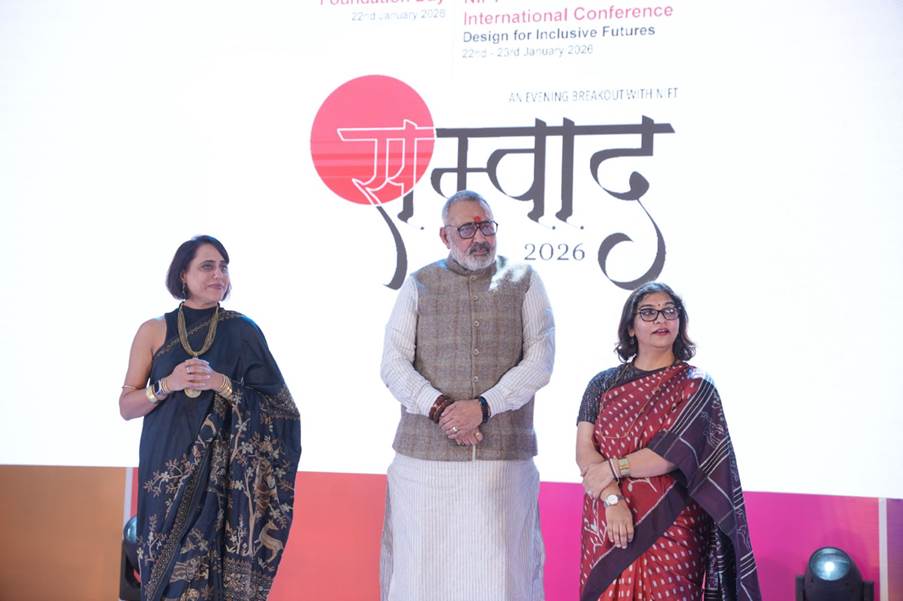
The conference emerged as a key platform for addressing how design can respond to social diversity and emerging global challenges. Through keynote sessions, technical presentations, invited research papers and panel discussions, the event explored inclusive design as both a moral responsibility and a strategic necessity for future-ready industries.
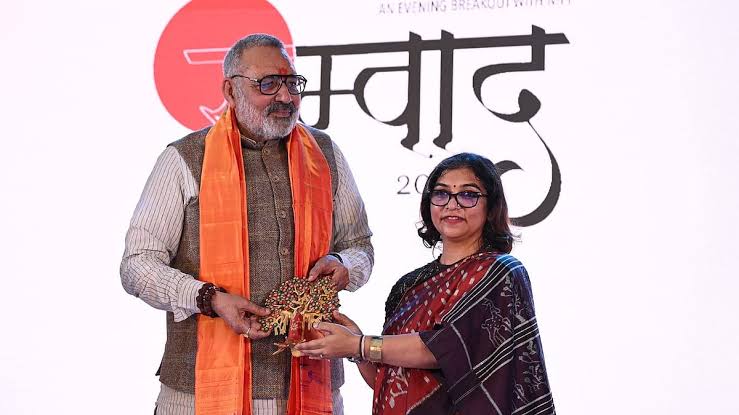

A major highlight of the conference was the Craft Demonstration-cum-Awareness Programme organised in collaboration with the Office of the Development Commissioner (Handicrafts), Ministry of Textiles. The initiative showcased live demonstrations by master artisans from across India, underlining the relevance of indigenous knowledge systems in modern design education.
Thirty-two handloom and handicraft artisans, including master weavers and craftsmen, participated in the programme. Crafts such as Gond painting, Paithani sari weaving, Ikat, Maheshwar textiles, appliqué work and Kutch Bandhani were demonstrated, offering participants a rare opportunity to witness time-honoured techniques rooted in sustainability and cultural continuity.
Inclusive Design and Accessibility in Focus
In her address, Prof. (Dr.) Noopur Anand, Dean at NIFT, emphasised embedding accessibility as a core design principle rather than treating it as an afterthought. She urged designers to view disability as an opportunity for innovation, encouraging sensory-inclusive and age-friendly solutions that uphold dignity and ethical responsibility.
The conference opened with a keynote by Shri Jalaj Hora, CEO of Synthegrate and Global Chair at Manchester Metropolitan University. He highlighted the importance of integrating artificial intelligence in fashion and design in ways that enhance, rather than replace, human creativity.
Universal Design and Global Collaboration
Another keynote address by Shri Arman Ali, Executive Director of the National Centre for Promotion of Employment for Disabled People (NCPEDP), focused on universal design as a foundational requirement for inclusive societies. He pointed out the economic and social costs of excluding persons with disabilities, particularly in digital and financial systems.
Panel discussions and technical sessions further explored how education, technology and policy frameworks can work together to mainstream inclusivity. Speakers stressed the need for international collaboration to develop design solutions that are culturally sensitive yet globally scalable.
Shaping the Future of Design Education
The valedictory session, delivered by Prof. Dr. Rupa Agrawal, Conference Chair, marked the successful conclusion of the two-day international gathering. She highlighted NIFT’s commitment to nurturing socially conscious designers and strengthening India’s position as a global hub for inclusive design education.
The conference reaffirmed NIFT’s role in bridging traditional craft knowledge with modern innovation, aligning design education with national priorities such as sustainability, accessibility and cultural preservation. It also reinforced India’s growing voice in global conversations on inclusive and responsible design.