
NIFTEM-K Leads the Charge on Food Safety Through Science and Engagement
The National Institute of Food Technology Entrepreneurship and Management, Kundli (NIFTEM-K) wrapped up its two-day celebration of World Food Safety Day 2025 on June 7. This year’s theme, “Food Safety: Science in Action,” inspired a range of community-based programs and expert-driven dialogues. These initiatives highlighted NIFTEM-K’s growing role in promoting a safer and more resilient food system in India.

Reaching the Grassroots: Workshop for Food Vendors
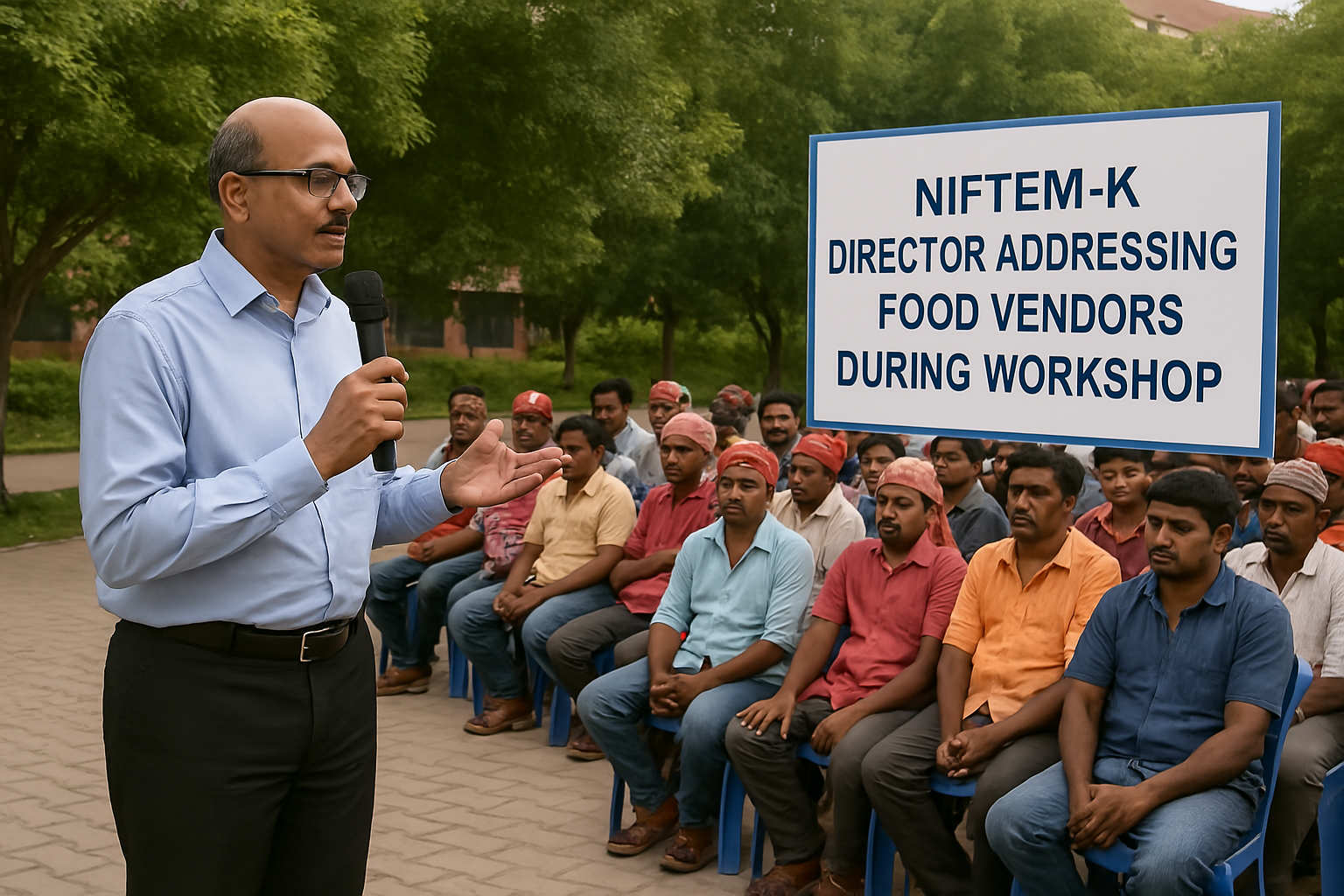
On June 6, NIFTEM-K, in partnership with the Food Safety and Standards Authority of India (FSSAI), hosted a hands-on food safety workshop for over 100 street food vendors and micro food business owners from Delhi NCR and Sonipat.
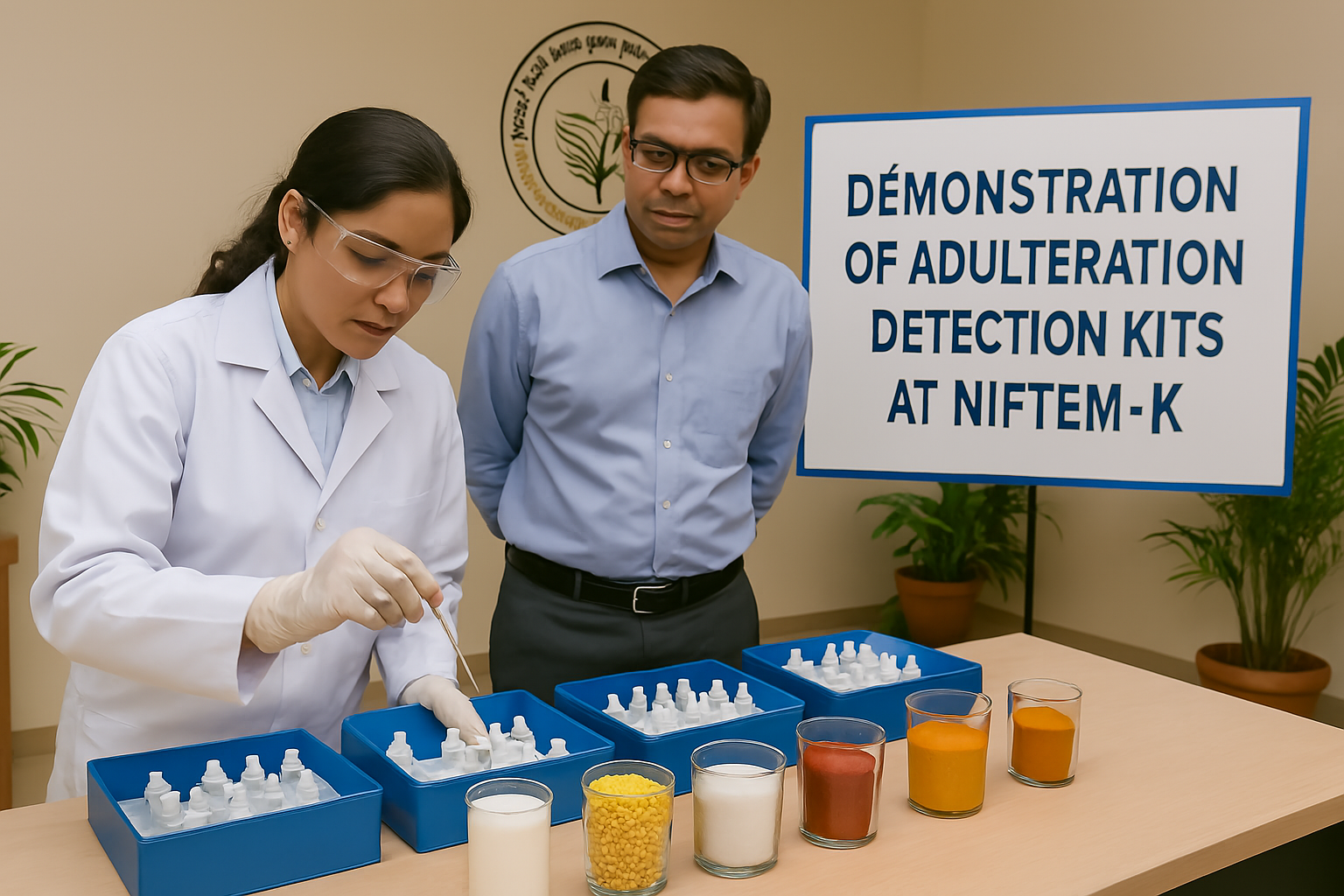
The Department of Interdisciplinary Science conducted sessions on hygiene, safe food handling, pest prevention, and legal licensing. A key highlight was the live demonstration of rapid adulteration detection kits developed in-house for testing milk, spices, and tea.
All vendors received certificates, reinforcing their responsibility in delivering clean, safe food and boosting consumer confidence.
Thought Leadership: Eat Right, Start Small
Dr. Harinder Singh Oberoi, Director of NIFTEM-K, addressed the participants, stressing the campaign’s mantra—“Thoda Kam, Eat Right”. He emphasized that food safety begins at the grassroots, and street vendors play a vital role in shaping public health.
Dr. Oberoi proposed a joint training initiative between NIFTEM-K and FSSAI, to equip selected vendors with detection kits, modern stainless-steel carts, and basic sanitation tools. These model vendors can then influence others, creating a chain reaction for improved food safety.
FSSAI’s Shri Ankeshwar Mishra and Shri Mukul Gupta (FoSTaC) added valuable insights and training modules—ranging from SOPs for utensil washing to refrigerated storage guidelines.
Expert Webinars Push for Scientific Food Safety
On June 7, NIFTEM-K hosted a webinar series with distinguished speakers from academia and industry. Dr. Oberoi opened the session by urging stakeholders to integrate food science into daily policy and education. He warned that the next health crisis may arise silently from foodborne illnesses.
He proposed:
-
Inclusion of food safety in school curricula
-
Development of low-cost test kits
-
Research into emerging foodborne contaminants
-
Creation of a Centre for Food Safety and Authenticity at NIFTEM-K
Key Highlights from Speakers:
-
Dr. Iddya Karunasagar (NITTE University): Emphasized the full cycle of risk analysis, not just testing.
-
Dr. Rajan Sharma (ICAR-NDRI): Shared data on milk safety kits and risks in perishables.
-
Prof. Afrozul Haq (MIU): Highlighted food allergens and dangers of excessive vitamin intake.
-
Mr. Rakesh Kumar (Tea Board): Discussed contamination risks in tea processing and NIFTEM-K’s testing innovations.
A Call for Policy, Research, and Public Awareness
The celebration ended with a collective call to embed food safety into national policy, education systems, and local governance.
NIFTEM-K reinforced its leadership role in promoting safe food habits, research-backed solutions, and community capacity building. Their mission: build a safer, healthier food ecosystem that benefits every Indian.