
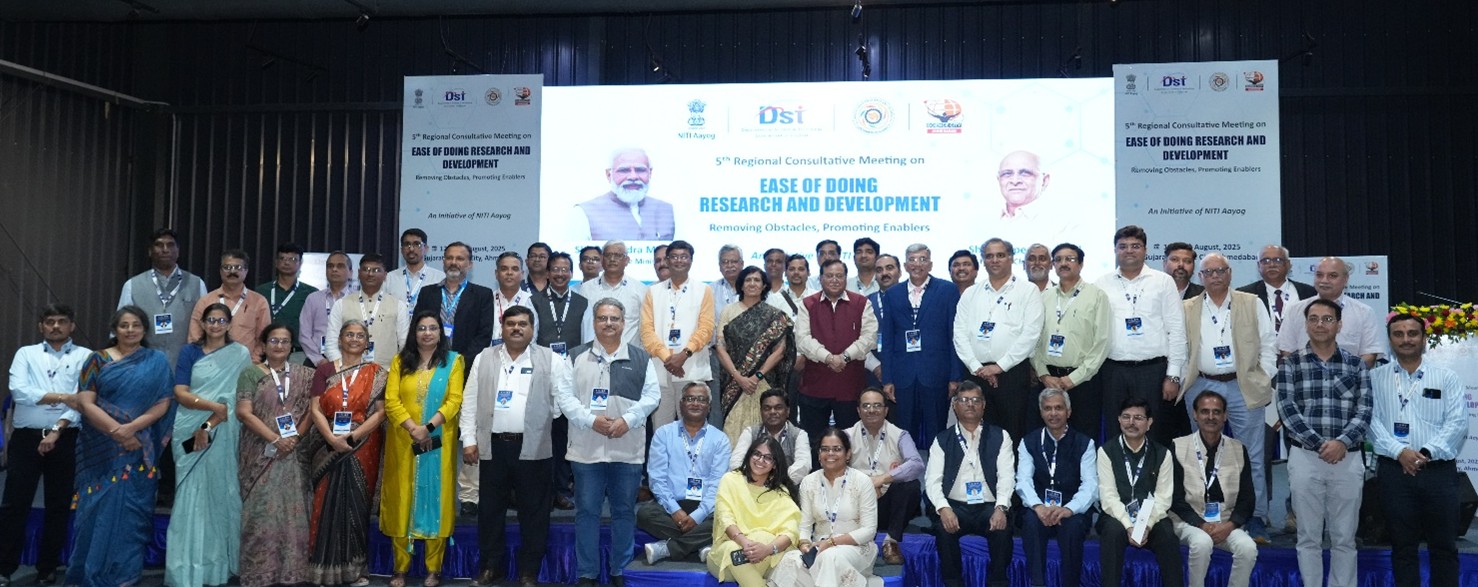
The two-day event, hosted by the Gujarat Council on Science and Technology (GUJCOST), gathered over 110 participants, including heads of premier academic and research institutions, senior policymakers, and innovation leaders. The discussions centered on making India a globally competitive hub for science, technology, and innovation.
Focus on Removing Barriers to Research
Opening the meet, Dr. Narottam Sahoo, Advisor and Member Secretary, GUJCOST, welcomed the delegates. Prof. Vivek Kumar Singh, Senior Adviser at NITI Aayog, stressed the urgency for “agile regulations” and stronger institutional frameworks to support R&D growth.
Ms. P. Bharathi, IAS, Secretary of the Department of Science and Technology, Government of Gujarat, reaffirmed the state’s commitment to advancing research in line with the Prime Minister’s vision of Viksit Bharat. She said Gujarat is focused on creating an enabling environment that supports both fundamental and applied research.
Highlighting outreach, Dr. Nilesh Desai, Director of the Space Applications Centre (SAC–ISRO), announced a 12-day space science programme for National Space Day. He also stressed the need to streamline R&D processes to encourage greater scientific participation.
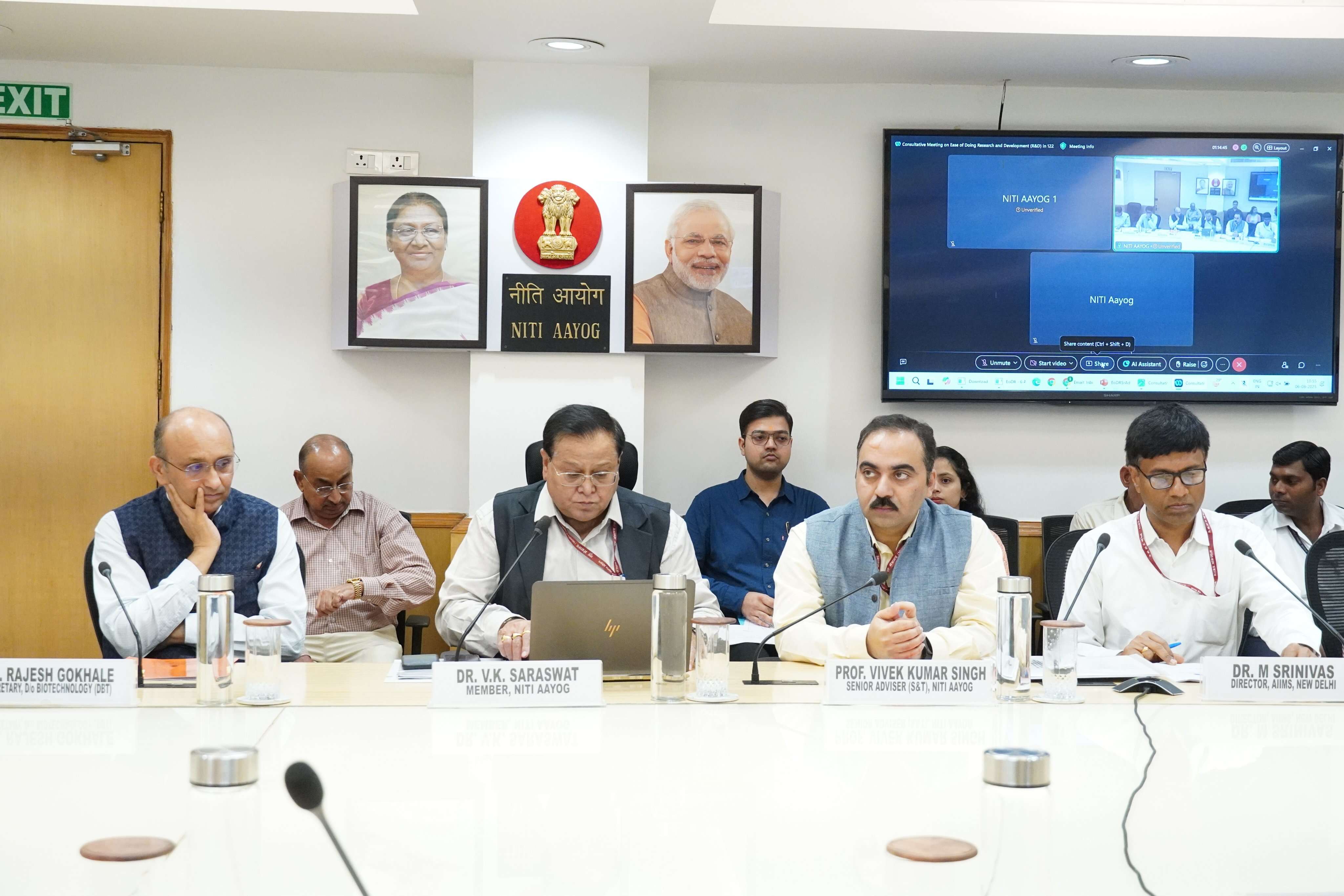

In his keynote, Dr. R.A. Mashelkar, former Director-General of the Council of Scientific and Industrial Research (CSIR), presented a candid assessment of India’s R&D landscape. He pointed out critical gaps in funding, infrastructure, and policy coordination, suggesting actionable reforms for faster progress.
The event concluded with remarks from Dr. V.K. Saraswat, Member of NITI Aayog, who called for institutional benchmarking against global standards. He underlined the need to simplify compliance procedures and promote stronger collaboration between universities, research bodies, and industry players.
Key Themes and Recommendations
- Streamlining funding mechanisms for faster project approvals.
- Enhancing regulatory agility to adapt to emerging technologies.
- Strengthening research infrastructure and knowledge networks.
- Encouraging translational research to bridge the gap between labs and markets.
- Fostering global collaborations to boost India’s innovation standing.
Delegates agreed that improving the “ease of doing R&D” will require coordinated efforts between the central and state governments, private sector, and academia. Reducing friction at each stage of the research lifecycle was identified as a top priority.
Path to a Competitive Innovation Ecosystem
According to NITI Aayog, recommendations from this meeting will feed into a national strategy to make India an attractive destination for scientists, innovators, and global research partnerships. The aim is to move beyond incremental changes and create a transformative, innovation-led economy.
By addressing funding delays, policy bottlenecks, and infrastructure gaps, the government hopes to unlock India’s full research potential. The consensus from Ahmedabad was clear — India must act now to compete with leading global innovation hubs.