
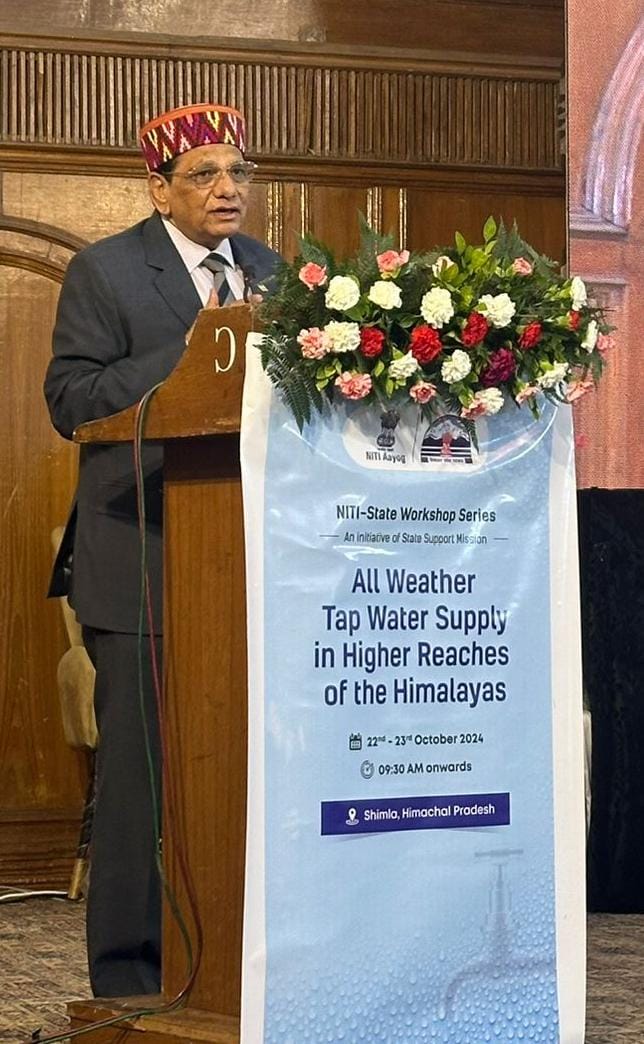
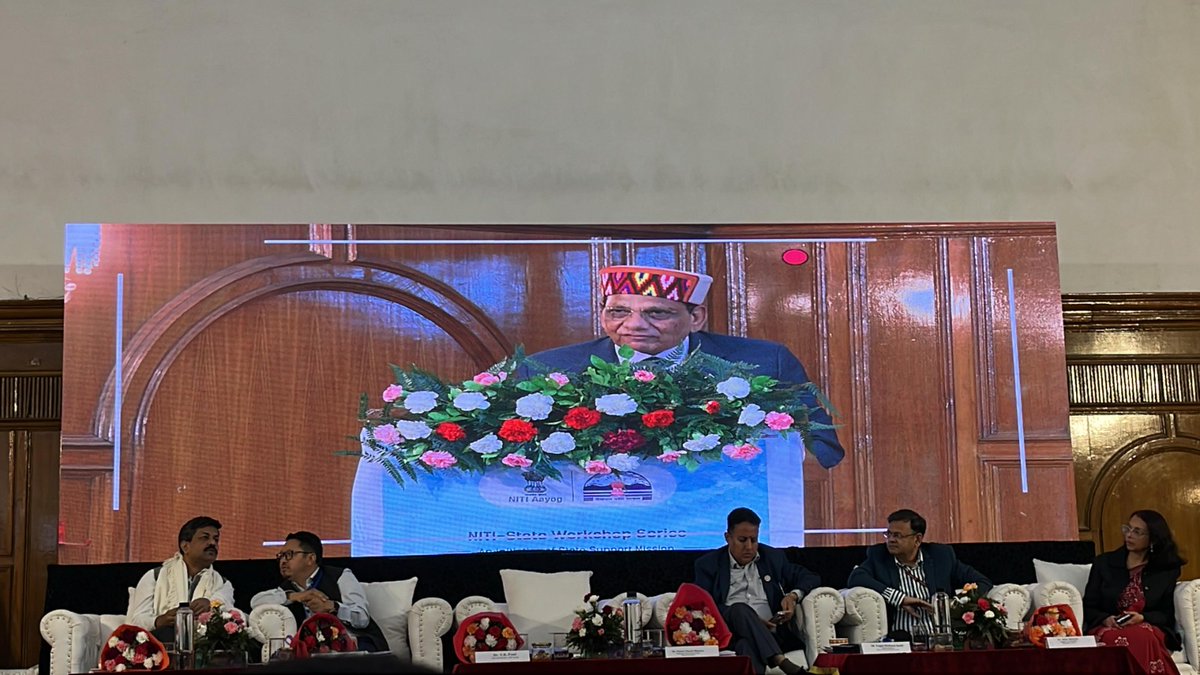

Experts emphasized active community involvement in both central and state interventions. Local participation not only deepens ownership of water assets but also ensures long-term sustainability. Strategies included capacity building, formal skill recognition for community members, and improving livelihood opportunities linked to water conservation.
Overcoming Himalayan Challenges
The discussions highlighted the geographical and climatic challenges of the Himalayan region, including harsh weather, difficult terrain, and implementation hurdles. Experts recommended innovative solutions such as spring rejuvenation, drip-based water supply systems, and modern engineering materials to ensure uninterrupted water supply.
Participants also proposed developing sustainable agriculture models, promoting agro-forestry, and integrating technology with traditional water conservation methods. Improved data collection and analysis were stressed as critical for efficient service delivery.
Centre of Excellence on Springs
To consolidate efforts, the creation of a Centre of Excellence on Springs was suggested. This hub would unite all stakeholders, promote scalable interventions, and ensure long-term sustainability of spring water sources. The compendium itself showcases successful case studies, innovations, and field experiences across Himalayan states, illustrating the potential of technology and community-led approaches.
Way Forward
The initiative underscores the importance of policy integration, local engagement, and innovative engineering solutions. By combining technology, community ownership, and capacity building, NITI Aayog aims to achieve sustainable water security even in the most remote Himalayan villages.