
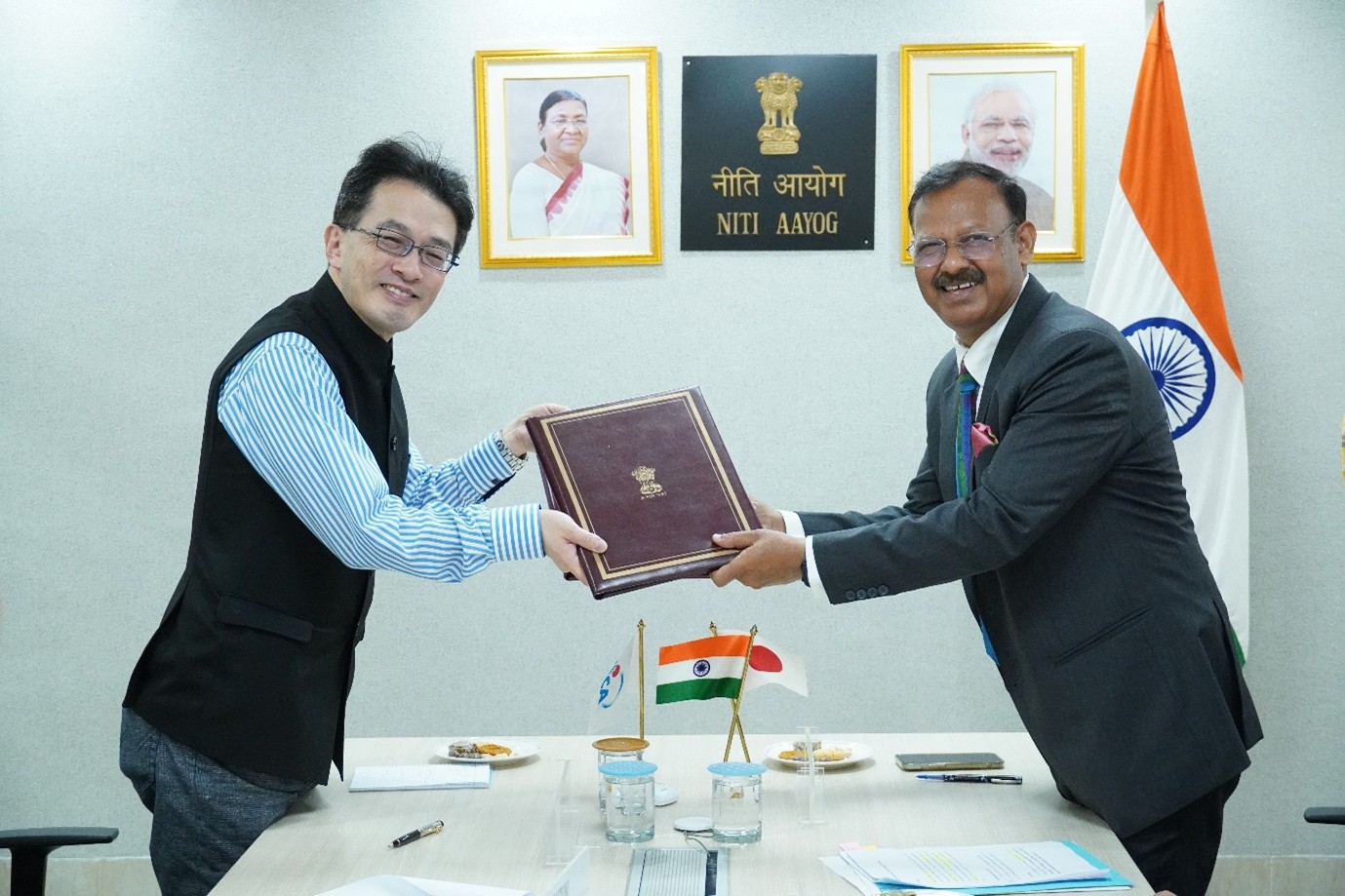
New Delhi, March 2, 2026: In a major boost to India–Japan development cooperation, NITI Aayog and the Japan International Cooperation Agency (JICA) have signed the Record of Discussions (RoD) for Phase II of the Japan–India Cooperative Actions towards Sustainable Development Goals (SDGs) in Aspirational Districts and Blocks.
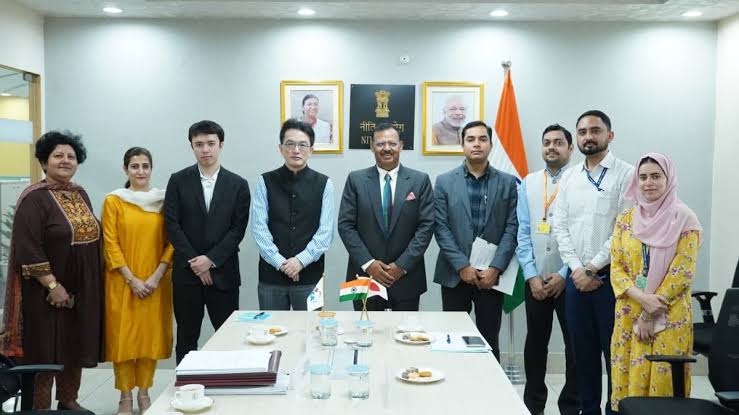

The agreement was signed in the presence of Shri Rohit Kumar, Additional Secretary and Mission Director of the Aspirational Districts and Blocks Programme at NITI Aayog, and Takeuchi Takuro, Chief Representative of JICA India. The initiative marks the continuation of collaborative efforts aimed at accelerating progress toward the Sustainable Development Goals by 2030.
Officials highlighted that Phase II will build on the achievements of the earlier partnership, reinforcing institutional mechanisms and policy frameworks in underserved regions across the country.
Focus on Aspirational Districts and Blocks
The project operates under the Aspirational Districts Programme (ADP) and Aspirational Blocks Programme (ABP), both of which are designed to improve governance and socio-economic indicators in India’s most underdeveloped areas. These programmes emphasize real-time monitoring, data-driven governance and outcome-based performance.
Through this renewed cooperation, the two sides aim to enhance localised implementation of SDGs by strengthening administrative capacity and encouraging evidence-based decision-making at district and block levels.
Six Thematic Areas of Intervention
Phase II of the Japan–India SDG collaboration will focus on six critical themes: Global Partnership, Health & Nutrition, Education, Agriculture & Water Resources, Financial Inclusion & Skill Development and Basic Infrastructure.
These focus areas align closely with India’s national priorities and global SDG commitments. The partnership aims to ensure that benefits reach the grassroots level, particularly in districts and blocks that require sustained institutional support.
Capacity Building and Knowledge Exchange
A key feature of the project is institutional capacity building. The initiative will facilitate people-to-people exchanges, Japan–India knowledge forums and technical collaborations. It will also identify and disseminate best practices emerging from the field.
By encouraging structured knowledge sharing and cross-learning, the partnership seeks to strengthen governance models that can be replicated in other regions.
Global Recognition of India’s Monitoring Model
Speaking at the event, Shri Rohit Kumar noted that the collaboration leverages shared expertise and practical experience to promote inclusive growth. He emphasized that the partnership combines institutional strengths to accelerate development outcomes in underserved regions.
Mr. Takeuchi Takuro praised India’s district and block-level monitoring systems, stating that they stand out globally for their transparency and effectiveness. He described the initiative as mutually beneficial and reflective of the deep trust between the two nations.
Shared Vision for 2030
The signing of the Record of Discussions signals a deepening of India–Japan ties in the development sector. Both countries have reaffirmed their commitment to achieving the Sustainable Development Goals by 2030 through structured cooperation and evidence-based governance.
As Phase II begins, stakeholders expect stronger institutional frameworks, improved monitoring mechanisms and enhanced implementation capacity across Aspirational Districts and Blocks.
With this renewed collaboration, India and Japan continue to demonstrate how international partnerships can play a vital role in driving inclusive and sustainable development.