
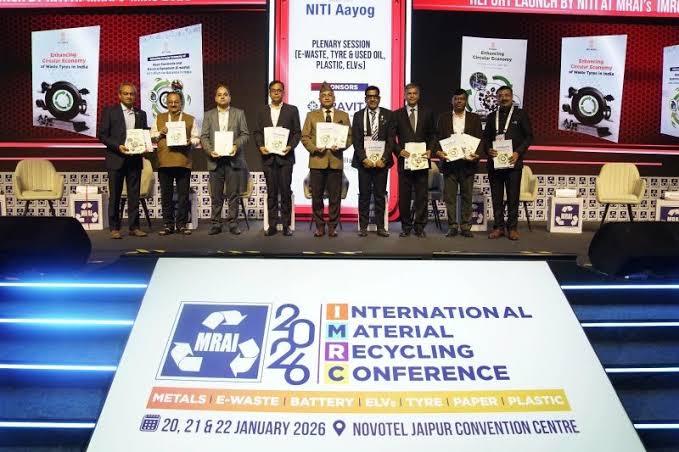

The three reports examine the circular economy potential of end-of-life vehicles, waste tyres, and electronic and electrical equipment, including lithium-ion batteries. These sectors are witnessing unprecedented growth due to rising urbanisation, digitisation and electric mobility adoption across the country.
Electric vehicle sales in India have surged dramatically, rising from just 50,000 units in 2016 to over 2.08 million units in 2024. The government has set an ambitious target of achieving a 30 per cent share of EVs in total vehicle sales by 2030, significantly increasing the demand for lithium-ion batteries.
Rising Waste Challenges
According to the projections highlighted in the reports, India’s demand for lithium-ion batteries is expected to grow from 29 GWh in 2025 to nearly 248 GWh by 2035. Simultaneously, the number of end-of-life vehicles is estimated to double from 23 million in 2025 to about 50 million by 2030.
E-waste generation is another major concern. India produced approximately 6.19 million metric tonnes of e-waste in 2024, a figure expected to rise sharply to 14 million metric tonnes by 2030. Improper disposal of such waste poses serious environmental and public health risks.
Key Recommendations
Developed through extensive consultations with line ministries, regulators, industry stakeholders and knowledge partners, the reports provide a detailed assessment of existing gaps in India’s circular economy ecosystem. They emphasise the need for infrastructure development, sector formalisation and improved compliance mechanisms.
A major focus is on strengthening the Extended Producer Responsibility (EPR) framework to ensure manufacturers take accountability for the entire lifecycle of their products. The reports also highlight the economic potential of recycling industries, which could generate significant revenue and employment opportunities.
Strategic Importance for Viksit Bharat 2047
NITI Aayog underscored that building a robust circular economy is not merely an environmental obligation but a strategic imperative for India’s long-term development. Efficient resource recovery can reduce dependence on imported raw materials, enhance material security, and support India’s clean energy transition.
By promoting sustainable waste management practices, the recommendations aim to improve resource efficiency while supporting inclusive economic growth. The reports are expected to guide policymakers and industry leaders in accelerating India’s shift towards a resilient and sustainable economy.