
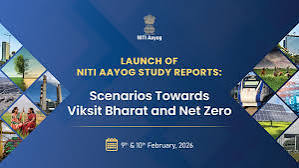


According to the synthesis report, India can achieve developed nation status by 2047 under all assessed scenarios. The analysis factors in historical trends, existing policies and additional measures aimed at accelerating electrification, energy efficiency, circular economy practices and behavioural shifts.
The studies emphasise that nearly 85 percent of the India of 2047 is yet to be built, presenting a unique opportunity to create climate-resilient and energy-efficient infrastructure at scale. This, NITI Aayog notes, can significantly lower future emissions while supporting rapid economic expansion.
Electrification, Green Energy and Mission LiFE
Electrification of energy use forms the backbone of India’s Net Zero pathway. The reports stress the need to green electricity generation through renewable sources while controlling demand through Mission LiFE, which promotes sustainable lifestyles and responsible consumption.
Circularity and resource efficiency across sectors such as industry, transport and buildings are identified as critical levers. Behavioural change at the household and community level is seen as equally important as technological interventions in sustaining long-term emission reductions.
Coal Use to Rise Till 2047
A key finding of the study is that India’s coal consumption will continue to rise until 2047, even as energy efficiency improves and emissions intensity declines. NITI Aayog officials clarified that this trajectory reflects India’s development needs and energy security priorities.
Despite the continued use of coal in the medium term, the overall Net Zero target remains achievable through rapid expansion of clean energy, improved efficiency and adoption of low-carbon technologies across sectors.
$22 Trillion Investment Challenge
The financing report estimates that India will require an unprecedented investment of about $22.7 trillion by 2070 to achieve Net Zero, with a financing gap of nearly $6.5 trillion. At least $6 trillion of this is expected to come from external sources, highlighting the importance of global capital flows.
The study calls for domestic financial sector reforms, innovative instruments and stronger international cooperation to mobilise affordable long-term finance for climate action.
India as a Global Clean Technology Leader
NITI Aayog leaders noted that India has the potential to leapfrog into global leadership in clean technologies, manufacturing and innovation. Strategic investments in R&D, critical minerals and domestic manufacturing can strengthen India’s role as a model for the Global South.
Speaking at the event, senior officials reiterated that India will adhere to the principle of Common but Differentiated Responsibilities while charting its own development path that balances growth, equity and climate goals.
The full reports are available on the official NITI Aayog website and are expected to serve as a key reference for policymakers, researchers and industry stakeholders shaping India’s long-term future.