
NITI Aayog Urges Shift to Quality Data for Stronger Governance
NITI Aayog has released the third edition of its Future Front insights series. Titled “India’s Data Imperative: The Pivot Towards Quality”, the report focuses on an issue that often goes unnoticed—data quality.
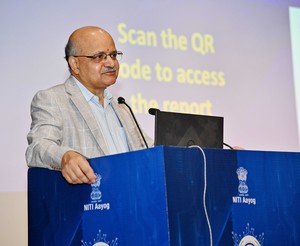
The release event, held in Delhi on 24 June 2025, saw participation from senior government officials, experts, and think tank members. The discussion highlighted how better data can build trust, support digital governance, and improve public service delivery.

India’s push for digital governance is growing fast. But poor data can slow it down.
For instance, if incorrect data is used in government schemes, it can lead to benefits going to the wrong people. It can also hurt planning, policymaking, and citizen trust.
Data quality isn’t just technical — it’s deeply human. It affects welfare, justice, and public confidence.
What’s Inside the Report?
NITI Aayog’s report doesn’t stop at theory. It offers practical tools for ministries, departments, and data professionals:
1. Data-Quality Scorecard
A tool to measure and track how accurate, timely, and complete a dataset is. It can be used across departments.
2. Data-Quality Maturity Framework
A guide for self-assessment. It helps organizations find out where they stand and plan how to improve.
These tools are meant to be simple, actionable, and adaptable.
Voices from the Event
The report launch was attended by key policymakers, including:
-
Shri B.V.R. Subrahmanyam, CEO of NITI Aayog
-
Dr. Saurabh Garg, Secretary, Ministry of Statistics and Programme Implementation (MoSPI)
-
Ms. Debjani Ghosh, Distinguished Fellow, NITI Aayog
Shri Subrahmanyam emphasized that “good governance needs good data.” He stressed that quality data will ensure last-mile service delivery and efficient decision-making.
Dr. Garg noted that many departments still rely on outdated data systems. He called the new tools “a much-needed step” to push India towards evidence-based governance.
How It Helps the Government and the Public
Better data means:
-
Faster and accurate decisions
-
Improved delivery of schemes
-
Greater accountability
-
Less duplication and fraud
Public trust grows when citizens see that data used to decide policy is clean and transparent.
This shift also supports the Digital India Mission, where automation and real-time insights are key.
India’s Data Future: What Comes Next?
The next challenge lies in adoption. Ministries and departments must:
-
Use the scorecard in regular audits
-
Train staff on the maturity framework
-
Invest in real-time data validation systems
NITI Aayog will likely follow up with pilot implementations and case studies to show how these tools can drive change.
Conclusion: Towards a Data-Driven Democracy
India stands at a crossroads where digital capacity is rising, but data quality often lags. The latest edition of Future Front sends a clear message: it’s time to stop treating data as an afterthought.
Quality data is the foundation of public trust. And trust is the foundation of democracy.
With the tools now in place, India has the opportunity to lead by example in data-driven governance.