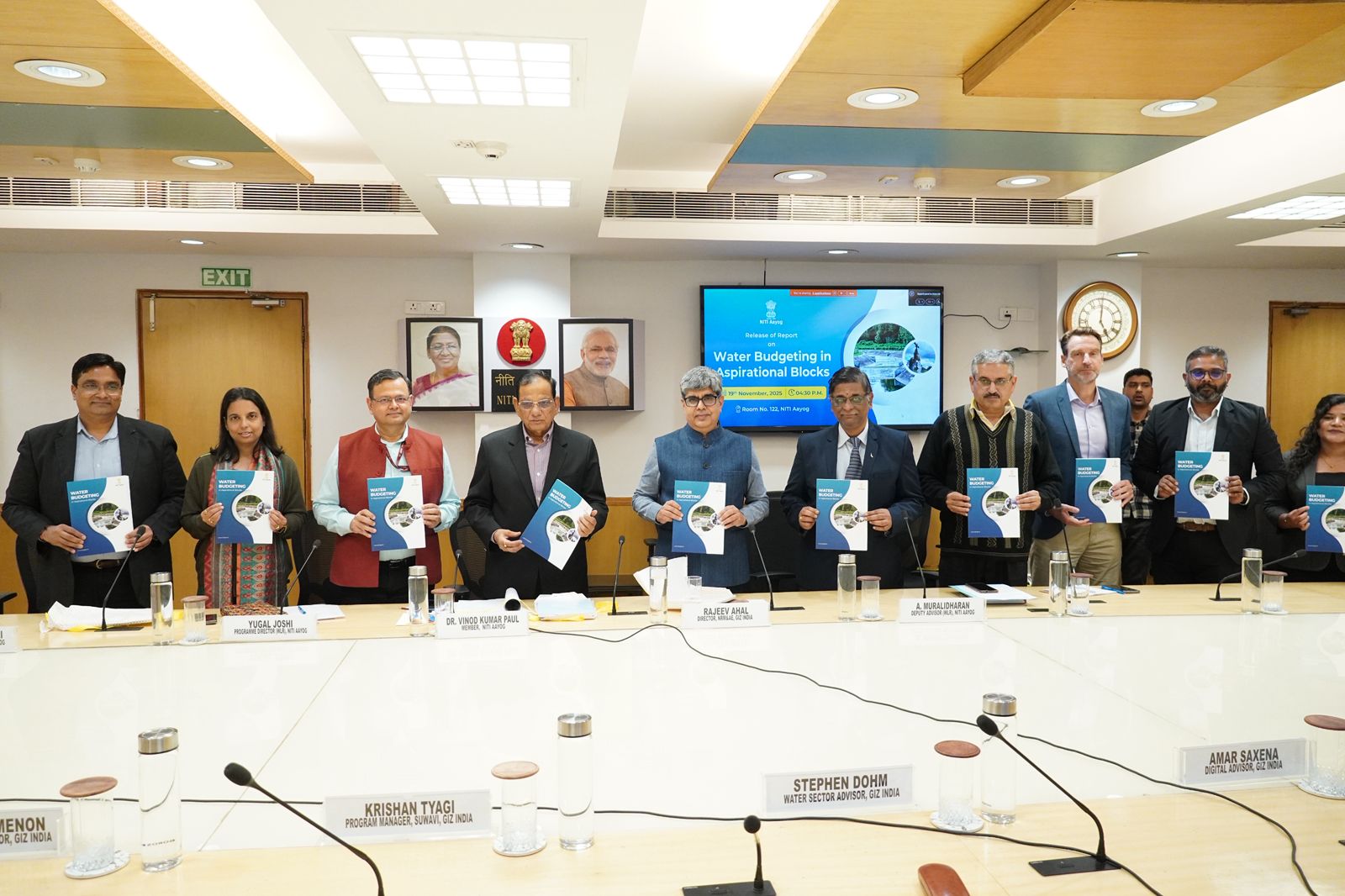
The document presents a detailed evaluation of water availability, usage, and future risks across 18 aspirational blocks in 11 states, spanning eight agro-climatic zones. It focuses on identifying block-specific challenges and recommendations to ensure that communities can sustainably manage their water resources.
 Web-Based Varuni Platform Powers the Water Budgeting Exercise
One of the most significant aspects of the report is the use of Varuni, a web-based platform designed to assist block-level functionaries in assessing real-time water demand and availability. The platform integrates data across all major water-consuming sectors — including domestic needs, livestock, agriculture, and industry — while simultaneously tracking water supply from surface water, groundwater, runoff, and inter-basin transfers.
By enabling administrators to visualise water gaps and trends, Varuni supports proactive planning and timely interventions. According to officials, such tools are essential for India’s shift toward data-driven, outcome-based water governance.
18 Aspirational Blocks Across India Assessed
The selected blocks represent a diverse range of ecological and economic landscapes. Each of them faces unique constraints in water availability and usage patterns. The report identifies variations in groundwater dependence, rainfall distribution, agricultural demands, and infrastructure gaps.
Through a combination of field surveys, stakeholder consultations, and digital inputs, the study offers customised strategies for each block. These include recommendations on water harvesting, demand-side management, aquifer recharge, crop diversification, and optimised irrigation practices.
Promoting Sustainable and Equitable Water Management
Dr. Paul emphasised that water security is central to improving health, livelihoods, and economic resilience in rural India. He noted that engaging communities in the budgeting process is crucial for building accountability and ensuring the success of water governance initiatives.
The report underlines that water budgeting must align with broader national goals such as climate resilience, integrated water resource management, and digital governance. With increasing pressure on water resources, the analysis stresses the need for collaborative action across ministries, state governments, and local institutions.
Collaboration with GIZ India and Institutional Participation
The report was prepared in partnership with GIZ India, a long-standing technical collaborator in India’s water sector initiatives. The launch event saw participation from the National Institute of Hydrology, Centre for Water Resources Development (Kerala), Central Ministries, and several other stakeholders.
The involvement of diverse institutions highlights the increasing push for integrated water resource planning. Officials noted that as India prepares for long-term development goals, accurate water budgeting will become central to securing sustainable growth.