
Vision and approach
The roadmap sets out a technology-led, farmer-centric agenda that segments cultivators into three archetypes Aspiring, Transitioning and Advanced and prescribes tailored interventions for each group. By matching tools to on-ground realities, the plan aims to accelerate adoption while protecting smallholders from undue risk.
Developed with knowledge partners including BCG, Google and CII, and shaped by industry, academic and government experts, the roadmap emphasises customization, scale and systems integration to ensure that innovation translates into measurable gains for farmers and rural economies.
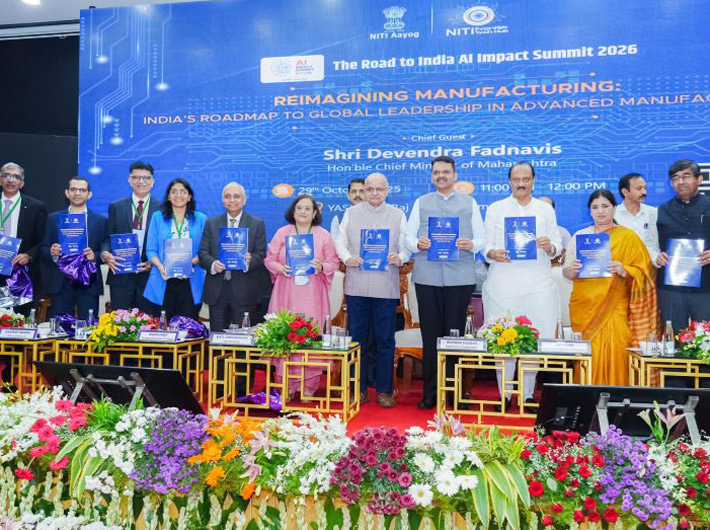

The roadmap calls out five frontier domains as priority enablers: climate-resilient seed varieties, digital twins for crop and supply-chain modelling, precision agronomy using remote sensing and IoT, agentic AI for decision support, and next-generation mechanisation for labour-sparse operations. Each domain is linked to actionable pilots, expected outcomes and pathways to scale.
These technologies are framed not as standalone fixes but as components of an integrated stack from farm-level sensing to market access designed to improve yields, reduce input waste and make water use more efficient.
Voices from the launch
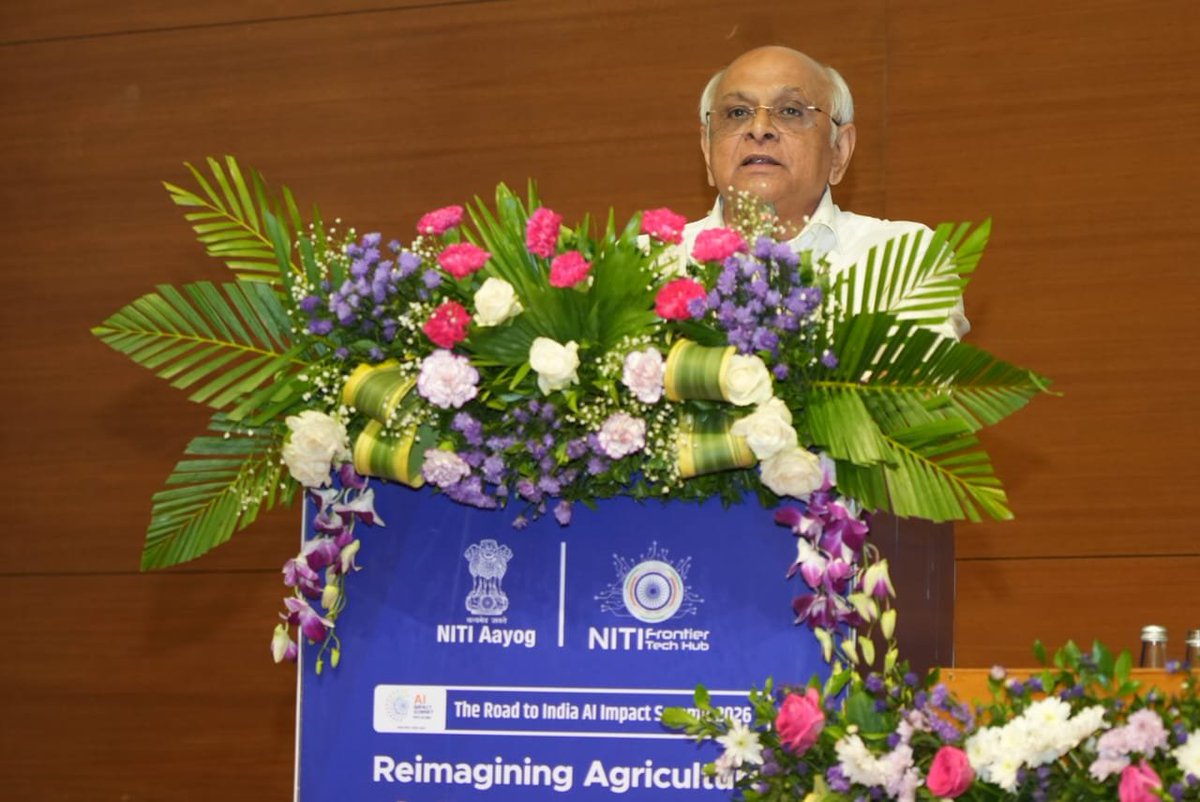
Gujarat Chief Minister Bhupendrabhai Patel said Gujarat is “uniquely positioned to lead India’s agricultural transformation,” pointing to state initiatives such as the Digital Crop Survey, the Digital Agri Farm Registry and the i-Khedut portal. He described digital integration as an empowerment tool that can lower cultivation costs and protect farmers from crop diseases.
B.V.R. Subrahmanyam, CEO of NITI Aayog, highlighted the roadmap’s emphasis on differentiation: “No two farmers in India are the same, and technology must reflect that diversity.” He urged design with empathy and deployment with precision to make the benefits inclusive and durable.
Implications for scaling and policy
The roadmap outlines enablers required at scale interoperable digital infrastructure, targeted credit and insurance frameworks, skill development for rural workforces, agritech-friendly procurement rules, and robust data governance. It also stresses public-private collaboration and state-level experimentation to refine policy models before nationwide rollout.
By proposing differentiated pathways, the document seeks to bridge the usual gap between pilot projects and mass adoption, prioritising low-cost interventions for Aspiring farmers while creating advanced data and services markets for transition and commercial segments.
Economic and social goals
Beyond productivity, the roadmap links frontier tech adoption to the larger objectives of rural livelihoods, climate resilience and India’s competitiveness in agri-innovation. The plan explicitly positions technology as a lever to achieve “Viksit Bharat 2047” by improving incomes, reducing post-harvest losses and opening new value-chain opportunities for rural entrepreneurs.
Next steps and access
NITI’s Frontier Tech Hub will collaborate with states, industry and academia to pilot recommended interventions and measure impact. Stakeholders are invited to use the roadmap as a common agenda for funding, regulation and field implementation.