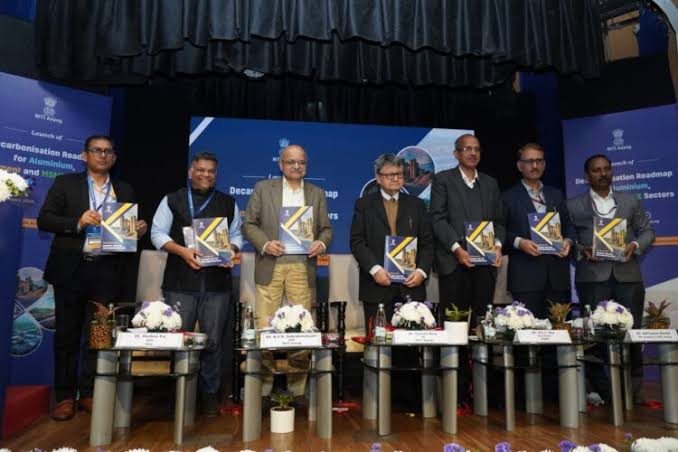
 Industry-Specific Roadmaps for a Viksit Bharat
Prepared in consultation with line ministries, industry stakeholders, research institutions and knowledge partners, the three reports offer sector-specific pathways rather than a one-size-fits-all approach. NITI Aayog said such tailored strategies are essential given the scale and diversity of India’s industrial landscape.
The roadmaps focus on deploying clean technologies, improving energy efficiency and integrating low-carbon energy sources while maintaining competitiveness and employment growth.
Cement Sector: Deep Decarbonisation by 2070
According to the report, India’s cement production is projected to increase nearly sevenfold from 391 million tonnes in 2023 to around 2,100 million tonnes by 2070, driven by infrastructure expansion and urbanisation.
To meet climate goals, the sector will need to reduce its carbon intensity from 0.63 tonnes of CO₂ equivalent per tonne of cement to about 0.09–0.13 tonnes by 2070. The roadmap prioritises greater use of refuse-derived fuels, clinker substitution, scaling up Carbon Capture, Utilisation and Storage (CCUS), and effective implementation of the Carbon Credit Trading Scheme.
Aluminium Sector: Phased Transition Strategy
India’s aluminium production is expected to rise sharply from 4 million tonnes in 2023 to 37 million tonnes by 2070. Given the sector’s high energy intensity, the roadmap outlines a phased decarbonisation strategy.
In the short term, the focus will be on transitioning to round-the-clock renewable energy and improving grid connectivity. The medium-term strategy includes adoption of nuclear power, while long-term plans emphasise integration of CCUS technologies to significantly cut emissions.
MSMEs: Greening the Backbone of the Economy
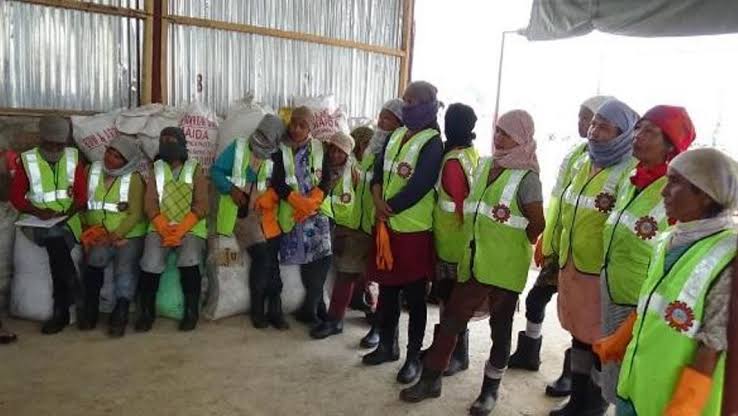
India’s MSME sector, which contributes nearly 30 percent to GDP, employs over 250 million people and accounts for about 46 percent of exports, occupies a central place in the green transition strategy.
The MSME roadmap focuses on three key levers: deployment of energy-efficient equipment, adoption of alternative fuels and integration of green electricity. A cluster-based approach has been recommended to ensure effective implementation and easier access to technology and finance.
Leadership Perspectives
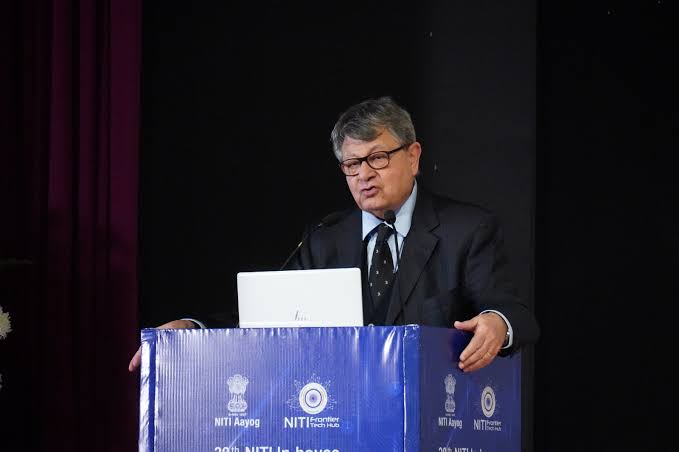
NITI Aayog Vice Chairperson Suman Bery highlighted the critical role of MSMEs in domestic and global supply chains, calling for prioritised technology adoption, affordable finance, skilling, regulatory reforms and greater participation of women in the workforce.
CEO NITI Aayog B.V.R. Subrahmanyam said the roadmaps would serve as reference manuals for India to pursue industrial growth and decarbonisation simultaneously. MSME Secretary S.C.L. Das underscored the importance of the cluster-based framework, while WRI India CEO Madhav Pai termed the timing of the reports crucial given India’s development and climate goals.
A Blueprint for Sustainable Industrial Growth
NITI Aayog Programme Director Ishtiyaque Ahmed noted that sectors such as cement, aluminium and MSMEs can be decarbonised through a combination of energy efficiency, renewable power, nuclear energy and CCUS.
Together, the three roadmaps present a strategic blueprint for transforming India’s industrial base into a cleaner, more competitive and future-ready engine of growth, supporting the twin objectives of economic expansion and climate responsibility.