 30 GHz Frequency for Vehicle-to-Vehicle Communication
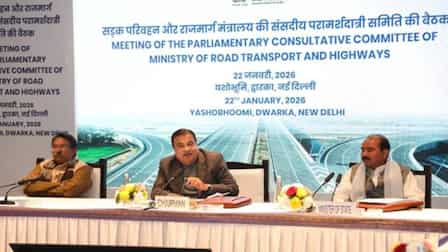
Responding to committee concerns over persistently high road accidents, Shri Gadkari announced that the Department of Telecommunications has allocated 30 GHz radio frequency for the development of vehicle-to-vehicle (V2V) communication systems. This initiative aims to enhance traffic safety by enabling real-time information exchange between vehicles, reducing collisions, and saving lives on highways.
The Minister emphasized the importance of regular meetings of the Members of Parliament Road Safety Committee (MPRSC) in districts, urging coordination between District Collectors, Police, PWD, and other local authorities. He also directed that road safety considerations be integrated into Detailed Project Reports (DPRs) for ongoing and future projects.
Enhanced Road Safety Measures Across India
Committee members raised critical issues such as rectification of black spots, highway widening, availability of trauma care facilities, improved compensation for accident victims, proper road markings, and quality signage. Suggestions included landslide-prone area mapping, road safety education in schools, and establishing trauma centres in every district.
Gadkari assured that AI-based road safety applications would be shared with States and Union Territories, while requesting MPs to submit detailed suggestions for further examination. He also highlighted the Road Safety Anthem, now available in 22 regional languages, urging its use in schools, public gatherings, and civic events to raise awareness.
Government Commitment to Safer Roads
The Minister reiterated the government’s commitment to building safer road infrastructure, integrating advanced technologies, and reducing fatalities. Through coordinated efforts involving engineering improvements, enforcement, awareness campaigns, and emergency care systems, India aims to enhance traffic safety nationwide.
Gadkari’s announcement of the 30 GHz allocation for V2V communication represents a significant step towards leveraging technology to save lives, while the consultative approach ensures that multi-level stakeholders remain engaged in road safety implementation.