
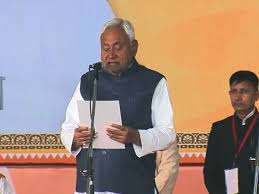
Key highlights of the swearing-in
The oath-taking was administered by Governor Arif Mohammed Khan. Prime Minister Narendra Modi, Union Home Minister Amit Shah and BJP president J.P. Nadda were among the central leaders present. The ceremony confirmed 26 ministers in the Council of Ministers: 14 from the Bharatiya Janata Party (BJP), eight from JD(U), two from Lok Janshakti Party (Ramvilas) and one each from HAM (S) and RLM.
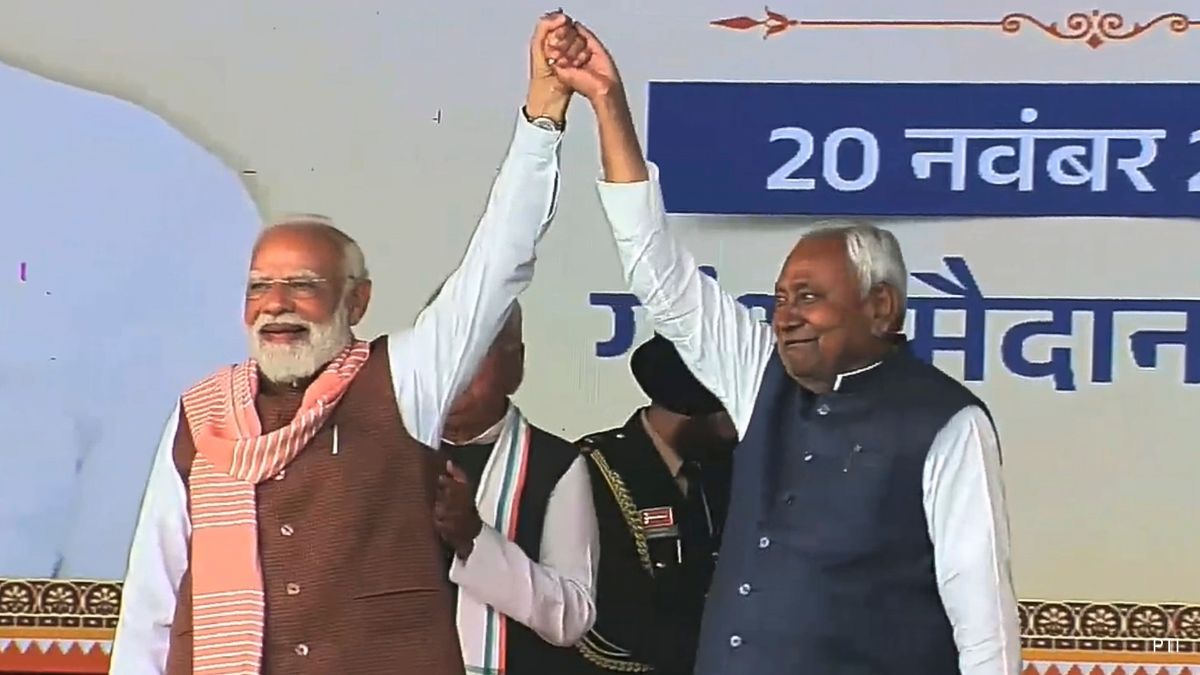

The new cabinet includes nine new faces. Media reports note the cabinet has one Muslim minister and three women among the 26 inducted. The two deputy chief ministerial posts were retained by BJP leaders.
Election context: NDA’s commanding mandate
The formation follows the NDA’s landslide victory in the 2025 Bihar Assembly elections, where the coalition won 202 out of 243 seats. The BJP emerged as the single largest party, followed closely by JD(U). Detailed results and constituency-wise data are available from the Election Commission of India.
Political significance
At 71, Nitish Kumar a veteran administrator — now further cements his place among India’s longest-serving chief ministers. Analysts say the NDA sweep shifts Bihar’s political map decisively and may influence national-level strategies ahead of future polls.
Voices from the ceremony
Leaders across the NDA praised the mandate. Prime Minister Modi described Nitish Kumar as a “skilled administrator.” Opposition leaders offered guarded congratulations while underscoring the need for the new government to deliver on development promises.
What to watch next
The new government’s first 100 days will be watched for cabinet portfolio allocations, policy priorities on infrastructure and social schemes, and measures aimed at improving investment and employment in the state.