
Clearing the Air: No ‘Warning Labels’ on Indian Food
Recently, some news reports claimed that the Union Health Ministry had issued directions to place warning labels on beloved Indian snacks like samosa, jalebi, and laddoo. These claims spread quickly, triggering a wave of public concern.
However, the Health Ministry has firmly debunked these reports. It clarified that no such directive exists. The advisory is simply a health awareness measure — not a crackdown on India’s rich street food culture.


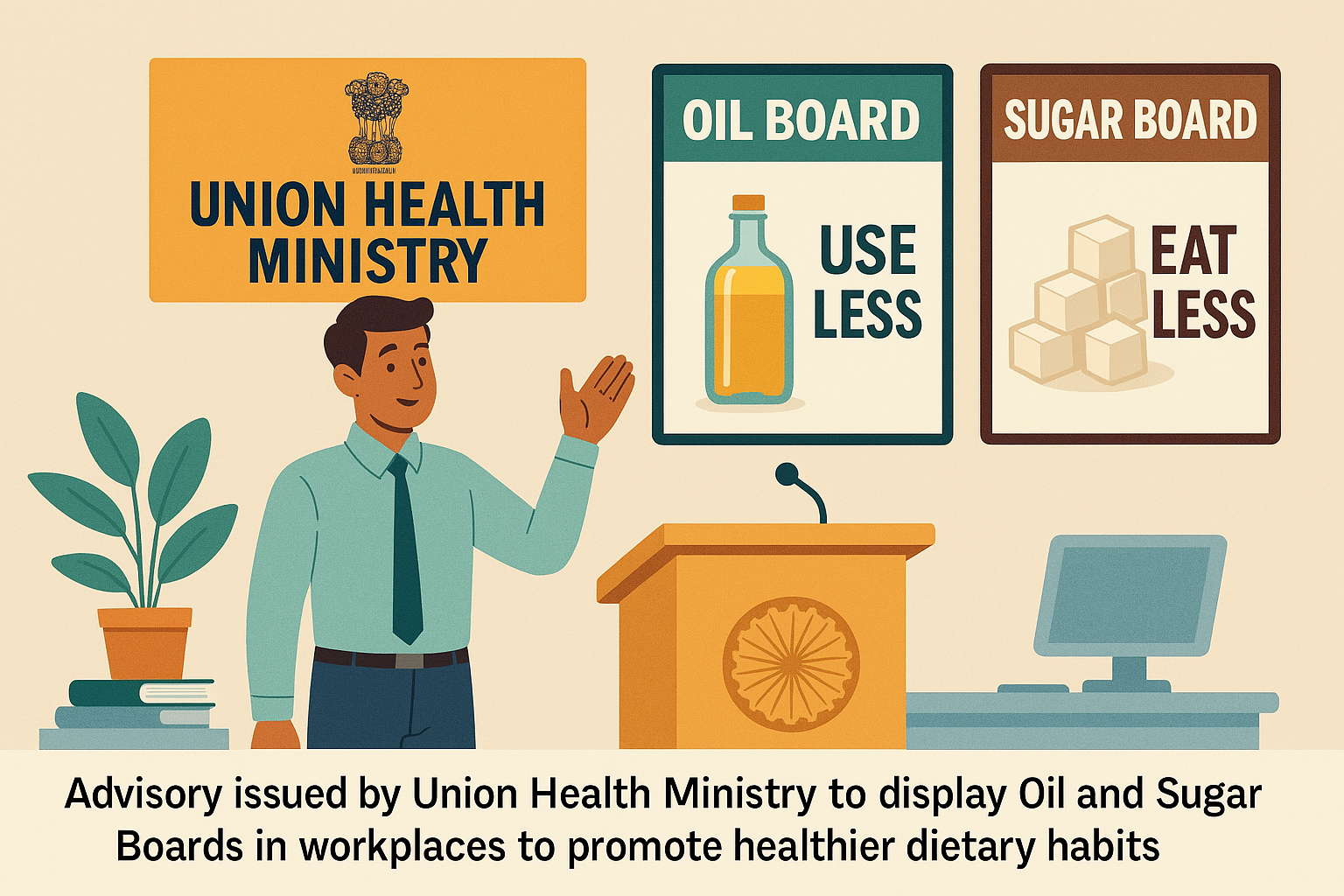
The Ministry’s advisory, dated July 15, 2025, is part of its efforts under the National Programme for Prevention and Control of Non-Communicable Diseases (NP-NCD). It recommends workplaces to display boards on the excessive use of oil and sugar in common foods.
These boards are to be installed in canteens, lobbies, cafeterias, and meeting rooms. Their goal is to serve as daily reminders to promote healthier eating habits and lifestyle changes, especially at work.
Nowhere does the advisory mention mandatory warning labels. Nor does it single out traditional Indian snacks or vendors.
Fighting Obesity and Lifestyle Diseases
Obesity, diabetes, and heart conditions are on the rise in India. According to the Ministry of Health and Family Welfare, unhealthy dietary habits are a major cause. The advisory aims to offer simple nudges in workspaces to tackle this growing concern.
These nudges include promoting:
- Fruits and vegetables
- Low-fat meal options
- Short walking breaks
- Stair usage over elevators
By encouraging healthy behavior, the initiative supports long-term disease prevention without infringing on cultural food practices.
Street Food Not Under Threat
The advisory has no impact on street food vendors. It does not call for restrictions, labeling, or reformulation of traditional snacks. The Ministry emphasized that India’s street food culture remains untouched.
Instead, the campaign focuses on awareness over enforcement. It trusts individuals to make informed choices rather than imposing rules on what they eat.
Encouraging Healthier Workplaces
Workplace settings often encourage sedentary lifestyles and quick, unhealthy meals. The advisory counters this trend by making nutritional awareness visible and constant.
It also encourages wellness-friendly work environments that include walking routes, fitness breaks, and stairs instead of lifts. These small steps aim to instill a larger culture of health and wellbeing.
Public Misinterpretation: A Lesson for Media
The misleading headlines reflect a broader challenge — the gap between policy intent and media portrayal. In this case, the intent was to encourage healthy dietary habits, not to shame traditional foods.
Journalistic responsibility becomes crucial here. Sensationalism can lead to unnecessary panic, as seen with the backlash over the assumed “ban” on laddoos and samosas.
A Positive Step Towards Healthier India
This advisory is part of a larger push towards preventive healthcare. It promotes mindful eating, not fear. It respects Indian culinary traditions while helping people make better choices every day.
In a country where over 77 million people are diabetic, such soft policy nudges can make a big difference. Studies have shown that visible health prompts can reduce calorie consumption and raise dietary consciousness.
By targeting behavior and not bans, this approach sets the right tone for a balanced and inclusive health movement.
Final Word
The Health Ministry’s advisory is a gentle reminder — not a restriction. It is aimed at improving public health without undermining India’s food heritage. By fostering awareness through simple measures, the government hopes to make wellness a workplace priority.
Let’s choose knowledge over fear. Health over headlines.