
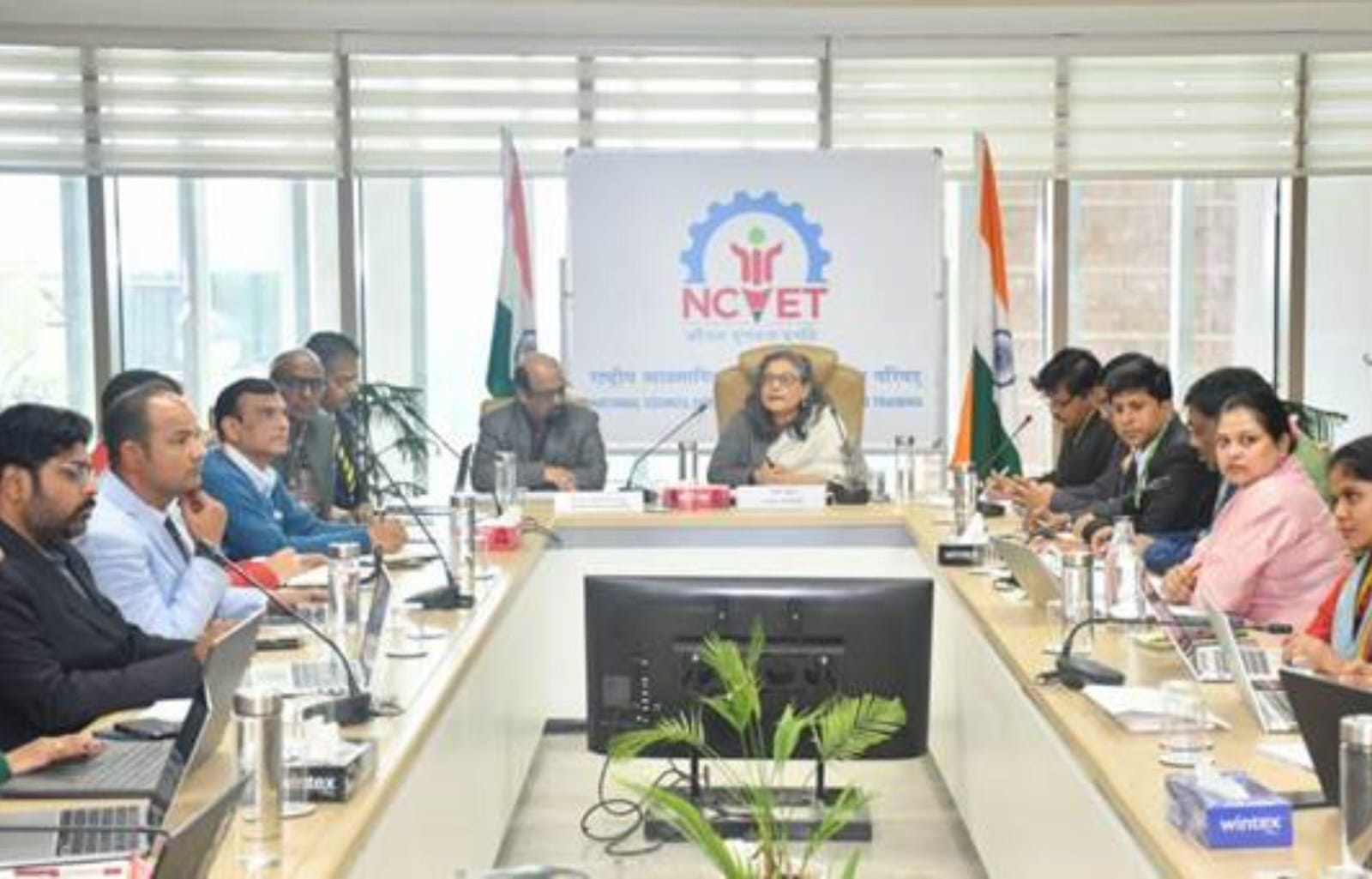

The meeting was attended by Prof. (Dr.) Ashok Kumar Gaba, Executive Member of NCVET, Dr. Suhas Deshmukh, Director and Secretary to the Council, and members of NSQC representing key Central Ministries and Departments such as the Ministry of Rural Development and the Ministry of Labour and Employment. Sector experts and other major stakeholders from the skilling ecosystem were also present.
A total of 15 Awarding Bodies presented their proposed qualifications before the Committee. In all, 80 qualifications were examined, reflecting a broad spectrum of skills required across traditional, modern and emerging sectors of the economy.
Qualifications Cover High-Growth and Priority Sectors
The approved qualifications span a wide range of high-growth sectors including automotive, electronics, IT and IT-enabled services, healthcare, life sciences, aerospace, logistics, construction, manufacturing, tourism and hospitality, green jobs, and emerging technologies. Several new and updated qualifications were also introduced to meet skill demands in medical tourism, allied services and the unorganised economy.
Institutions such as the Directorate General of Training (DGT), Directorate General of Artillery, National Institute of Electronics and Information Technology (NIELIT), National Academy of RUDSETI, Indian National Space Promotion and Authorization Centre (IN-SPACe), and multiple Sector Skill Councils played a key role in presenting these qualifications.
Strong Focus on Artificial Intelligence and Emerging Skills
One of the major highlights of the meeting was the approval of Artificial Intelligence-related qualifications from multiple Awarding Bodies. These qualifications have been brought under the Skilling for AI Readiness (SOAR) umbrella, reinforcing India’s commitment to preparing a workforce capable of thriving in an AI-driven economy.
The SOAR initiative has been aligned as a pre-event to the India AI Impact Summit 2026, underlining the government’s proactive approach to integrating emerging technologies into the national skilling framework. In addition, qualifications linked to India Skills and World Skills competitions were also ratified, strengthening India’s competitive presence at global skill platforms.
Outcome-Based and Industry-Validated Framework
The NSQC placed special emphasis on competency-driven design, curriculum relevance, robust assessment standards and industry validation. The approved qualifications are expected to provide learners with job-ready capabilities, industry-recognised certifications and flexible pathways for both vertical and horizontal mobility within the education and skilling ecosystem.
By aligning vocational education with real-world industry needs, the Committee aims to improve employability outcomes while supporting lifelong learning opportunities for youth, professionals and those transitioning between sectors.
Aligned with Viksit Bharat and NEP 2020 Vision
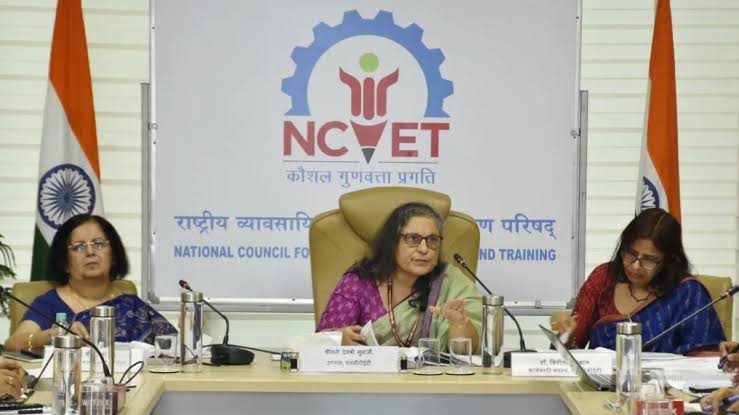
Addressing the meeting, Smt. Debashree Mukherjee emphasised that the NSQC plays a pivotal role in ensuring India’s skill qualifications remain credible, robust and globally relevant. She noted that the decisions taken reflect the government’s continued focus on building an adaptable and competitive workforce.
She further stated that the NSQC’s work aligns closely with the vision of Viksit Bharat 2047, the National Education Policy 2020 and the National Credit Framework, all of which aim to integrate education, skills and employability into a cohesive national strategy.