
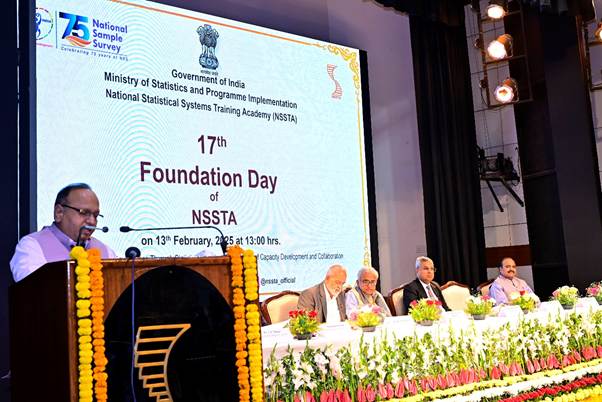
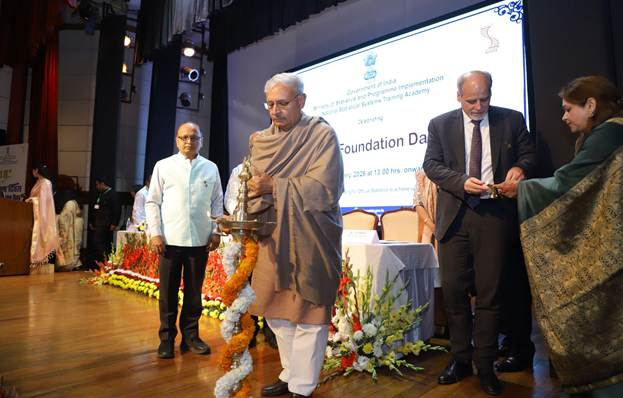

Union Minister of State (Independent Charge) for Statistics and Programme Implementation, Rao Inderjit Singh, described statistics as the backbone of evidence-based governance. He emphasised that accurate and timely data plays a vital role in addressing the diverse needs of India’s population and ensuring effective policy implementation.
The minister stressed that building strong institutions requires investment in skilled personnel and modern training infrastructure. He highlighted the need to integrate advanced technologies such as artificial intelligence, machine learning, and big data analytics into official statistical systems to improve accuracy, global comparability, and efficiency.
He also reiterated the government’s commitment to Mission Karmayogi, which focuses on strengthening capacity building and skill development for civil servants. According to him, strengthening India’s statistical workforce will directly improve governance outcomes and enhance public service delivery.
Data Emerges as Strategic National Asset
Dr. Saurabh Garg, Secretary, MoSPI, described data as the “fifth factor of production,” alongside land, labour, capital, and technology. He noted that data is now a critical resource powering artificial intelligence, economic planning, and national decision-making.
He highlighted the restructuring of the Indian Statistical Service, which now deploys officers across more than 60 ministries. This integration enables seamless data sharing, improves data quality, and ensures that policymakers have access to reliable and real-time information.
The ministry is also shifting its focus from broad national aggregates to more granular district-level data. This approach will enable precise policy interventions and help address local challenges more effectively, aligning governance with real-world conditions.
Need for AI-Ready Statistical Workforce
S. Radha Chauhan, Chairperson of the Capacity Building Commission, emphasised the urgent need to prepare statistical officers for the rapidly evolving AI ecosystem. She warned that the growing influence of artificial intelligence requires enhanced human expertise to ensure ethical, unbiased, and accurate interpretation of data.
She noted that statistical professionals must be equipped not only with technical skills but also with contextual understanding to prevent biases and ensure responsible use of technology. Continuous training and skill development will be essential to maintain the credibility and integrity of official statistics.
Digital Data Lab Strengthens Training Infrastructure
A key highlight of the event was the inauguration of a new Digital Data Lab at NSSTA. The facility will serve as a modern training hub, providing hands-on experience in data analytics, digital governance tools, and emerging technologies.
The Digital Data Lab is designed to promote digital learning, enhance analytical skills, and strengthen India’s statistical infrastructure. It will support immersive training programmes aligned with Mission Karmayogi and India’s broader digital governance goals.
The initiative reflects India’s commitment to building a robust digital ecosystem capable of supporting evidence-based policymaking and efficient governance.
Global Recognition for India’s Statistical Leadership
United Nations Resident Coordinator Stefan Priesner praised India’s statistical system and its role in advancing sustainable development. He described statistics as the “grammar of development” and emphasised their importance in achieving national and global goals, including the UN Sustainable Development Goals.
He also highlighted India’s progress in integrating modern technologies such as satellite imagery, AI, and machine learning into its statistical framework. According to him, India’s innovative statistical architecture could serve as a global model for data-driven governance.
Focus on Training, Knowledge Sharing and Communication
The event included the release of two journals prepared by Indian Statistical Service officer trainees, reflecting their academic and field training experiences. Certificates of appreciation were also awarded to top performers in government training programmes.
A panel discussion focused on improving communication of statistical data to policymakers and the public. Experts emphasised that statistics must be presented in a clear and understandable manner to enable informed decision-making and promote transparency.
Senior officers shared their professional experiences, inspiring new recruits and highlighting the evolving role of data in governance and development.
Strengthening India’s Vision of Viksit Bharat 2047
The Foundation Day celebration reaffirmed NSSTA’s role as a premier institution for statistical training and capacity building. The academy continues to play a key role in preparing India’s statistical workforce for emerging challenges in the digital era.
As India moves toward its vision of becoming a developed nation by 2047, strengthening statistical systems will remain central to effective governance. The growing emphasis on AI, digital training, and data-driven policymaking reflects India’s commitment to building a future-ready administrative ecosystem.