
Rising Central Grants: Finance Commission Support
The central transfers to Odisha’s PRIs have grown across successive Finance Commissions. As per the minister’s statement, allocations to Odisha were ₹2,898.22 crore from the XIII Finance Commission, ₹8,850 crore from the XIV Finance Commission, and ₹11,058 crore from the XV Finance Commission. These grants provide a fiscal backbone for local governance functions and development priorities determined at the gram-panchayat level.
However, the final distribution of these funds to local bodies depends on the State Finance Commission’s formula and Odisha’s internal allocation decisions. Central grants therefore act as an enabling resource while state choices shape on-ground outcomes.
RGSA Releases: Central Share and Conditionalities
The revamped Rashtriya Gram Swaraj Abhiyan (RGSA) is the central scheme that supports institution-building, e-governance, capacity building and better service delivery by PRIs. The statement records central releases to Odisha under RGSA as ₹11.40 crore (2022–23), ₹27.33 crore (2023–24) and ₹20.00 crore (2024–25).
Release of the central share under RGSA depends on several implementation conditions: timely finalisation of the State Annual Action Plan, release of the State’s matching share, submission of utilisation certificates and the actual pace of expenditure by implementing agencies. Delays or gaps in any of these steps can affect the flow of funds to local governments.
Scale of Capacity Building: Numbers and Partners
Capacity building is a core component of RGSA. Since 2022–23, Odisha has trained a cumulative total of 6,62,345 PRI elected representatives and functionaries. These programmes are delivered through State Institutes of Rural Development & Panchayati Raj (SIRD&PR), the National Institute of Rural Development & Panchayati Raj (NIRD&PR), select Indian Institutes of Management (IIMs) and District Panchayat Resource Centres (DPRCs).
The training portfolio covers governance and leadership skills, planning and implementation, resource mobilisation, financial management and sectoral themes such as health, education, gender equality and environmental protection. The intent is to build local capacity to design and implement development schemes effectively.
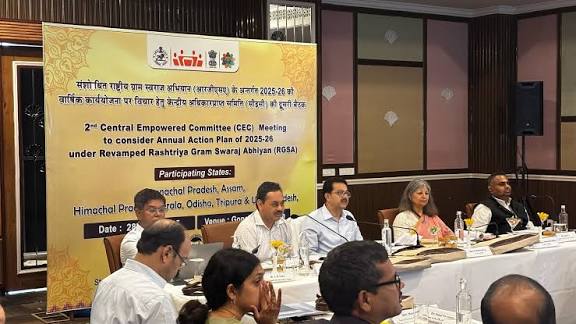

In addition to core trainings, Odisha’s RGSA activities include thematic workshops focused on social security, good governance and inclusion. These sessions aim to sensitise PRI members to caste, gender and disability concerns while strengthening their ability to respond to local vulnerabilities.
The RGSA capacity-building scheme follows national guidelines applicable to all states and union territories; there is no scope for deviations beyond the approved framework. This standardisation ensures comparability across states but also requires disciplined adherence to scheme rules during implementation.
Challenges and Implementation Bottlenecks
Despite rising central grants and active training, implementation bottlenecks remain. Common challenges include delays in finalising Annual Action Plans, staggered release of the State’s matching share, and administrative hurdles in disbursing funds to district and gram-level units. Capacity building outcomes depend not only on training delivery but also on sustained post-training support and institutional reforms at the state and district levels.
Experts note that translating training into measurable improvements in planning, procurement and service delivery requires follow-up mentoring, digital tools for transparency and stronger monitoring frameworks areas where additional investment and political will can make a difference.
What Comes Next for Odisha’s PRIs?
The central grants and RGSA investments create an opportunity for Odisha to deepen decentralised governance. With significant numbers trained since 2022–23, the immediate priorities include ensuring utilisation of funds, strengthening local planning processes and embedding thematic capacities for social inclusion and climate resilience.