

The Union Government has substantially increased its budget allocation to the Department of Agriculture and Farmers Welfare, rising from ₹21,933 crore in 2013–14 to ₹1.27 lakh crore in 2025–26. This increase reflects the Centre’s expanded commitment to strengthening agricultural infrastructure, farmer welfare, and price stability mechanisms.
Although agriculture is primarily a state subject under the Constitution, the Centre plays a key supporting role by funding schemes, offering insurance protection, and implementing price support measures. These initiatives aim to safeguard farmers against market fluctuations and natural risks.
Onion buffer stock stabilises prices and protects farmers
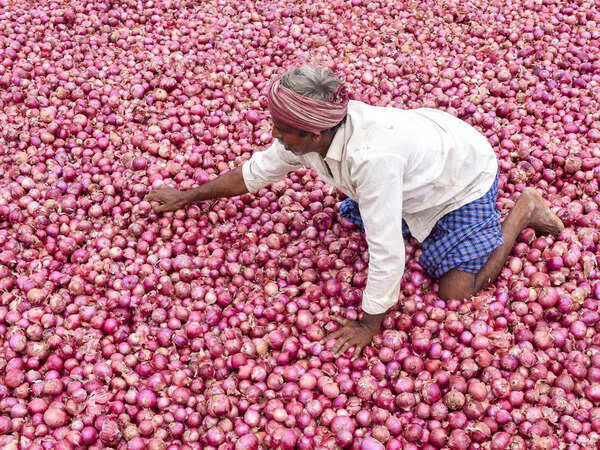
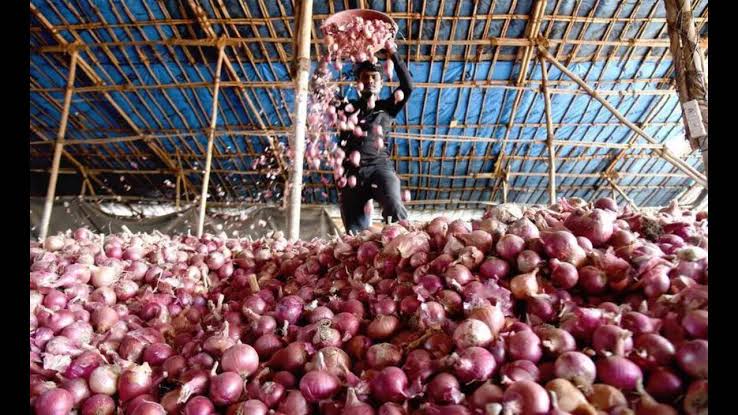
The Price Stabilisation Fund (PSF), introduced in 2014–15, plays a critical role in stabilising onion prices and protecting farmers’ incomes. Under this scheme, central agencies such as the National Agricultural Cooperative Marketing Federation of India (NAFED) and National Cooperative Consumers’ Federation (NCCF) procure onions directly from producing states.
This buffer stock helps absorb excess supply during peak harvest periods, preventing sudden price crashes that can harm farmers’ earnings. When prices rise sharply, the government releases onions from buffer stocks into markets through retail outlets, state agencies, and digital platforms to ensure affordability for consumers.
By balancing supply and demand, the buffer system protects both farmers and consumers, reducing the risk of extreme price volatility.
Market Intervention Scheme prevents distress sales
The Market Intervention Scheme (MIS), implemented under the Pradhan Mantri Annadata Aay Sanrakshan Abhiyan (PM-AASHA), ensures farmers receive fair prices for perishable crops like onions. The scheme activates when market prices fall significantly below production costs, preventing distress sales.
Under MIS, the government either procures the produce directly or compensates farmers for price losses. State governments participate in the scheme by sharing part of the financial risk, ensuring coordinated implementation.
From the 2024–25 season, a new Price Differential Payment component allows direct payment to farmers for the gap between the market price and the intervention price. This approach provides faster financial relief without requiring physical procurement.
Transport and storage support strengthens TOP crop farmers
Recognising the challenges faced by farmers producing perishable crops, the government has also introduced financial support for storage and transportation. Under this initiative, costs incurred in transporting Tomato, Onion, and Potato (TOP) crops from surplus regions to deficit areas are reimbursed.
This helps ensure stable market prices, prevents waste, and expands market access for farmers. It also strengthens national supply chains and improves price stability across regions.
Insurance schemes provide financial security to onion growers
Crop insurance schemes such as the Pradhan Mantri Fasal Bima Yojana (PMFBY) and the Weather Based Crop Insurance Scheme provide financial protection against crop losses caused by natural disasters. These schemes cover crops from pre-sowing to post-harvest stages.
Several major onion-producing states, including Maharashtra, Karnataka, Tamil Nadu, Andhra Pradesh, Rajasthan, Odisha, and Chhattisgarh, have implemented insurance coverage for onion farmers.
Between 2022–23 and 2024–25, over 27 lakh onion farmers enrolled in insurance schemes. During this period, the Centre contributed ₹339.53 crore in premium subsidies, and farmers received ₹701.54 crore in claims. Maharashtra accounted for the largest share of insured farmers and claim payouts.
Infrastructure investment reduces losses and increases income
The government is also investing in modern storage infrastructure, cold chain systems, and scientific post-harvest management. These measures help reduce post-harvest losses, improve crop quality, and enable farmers to sell their produce when prices are favourable.
Improved grading, sorting, and storage facilities allow farmers to access better markets and reduce dependence on middlemen. Value addition and processing units further enhance farmer incomes and strengthen the agricultural economy.
Government reaffirms commitment to farmer welfare
Minister of State for Agriculture and Farmers Welfare Ramnath Thakur informed the Rajya Sabha that these initiatives aim to protect onion farmers from price shocks and production risks while ensuring fair income and market stability.
The combination of buffer stock management, insurance coverage, direct financial support, and infrastructure investment represents a comprehensive strategy to strengthen onion farming in India. These measures not only secure farmer incomes but also ensure stable prices for consumers.
With continued policy support and investment, the government aims to build a resilient agricultural ecosystem that benefits farmers, consumers, and the national economy alike.