

Over five days, multidisciplinary ophthalmic teams conducted thorough screenings, diagnostics and advanced surgeries. The camp handled everything from routine cataract removals to complex retinal interventions and glaucoma management, achieving outcomes that hospital officials described as “transformative” for recipients across Udhampur, Poonch, Doda, Rajouri, Kishtwar, Ramban and other border districts.
Skilled team and leadership
The surgical roster was led by Brigadier S.K. Mishra, Head of the Department of Ophthalmology at Army Hospital (R&R), an experienced surgeon noted in official records for performing operations on senior dignitaries. The visiting team brought subspecialty expertise and advanced theatre capabilities to the field, working in tandem with Northern Command medical staff to maintain high clinical standards.
High-profile support and oversight
Raksha Mantri Shri Rajnath Singh addressed the camp’s closing ceremony virtually, commending the Armed Forces Medical Services and the Northern Command for rapid medical outreach. Chief of Army Staff General Upendra Dwivedi also extended congratulations, while Lieutenant Governor of J&K Shri Manoj Sinha attended in person alongside Northern Command GOC-in-C Lt Gen Pratik Sharma.
Political visit and public engagement
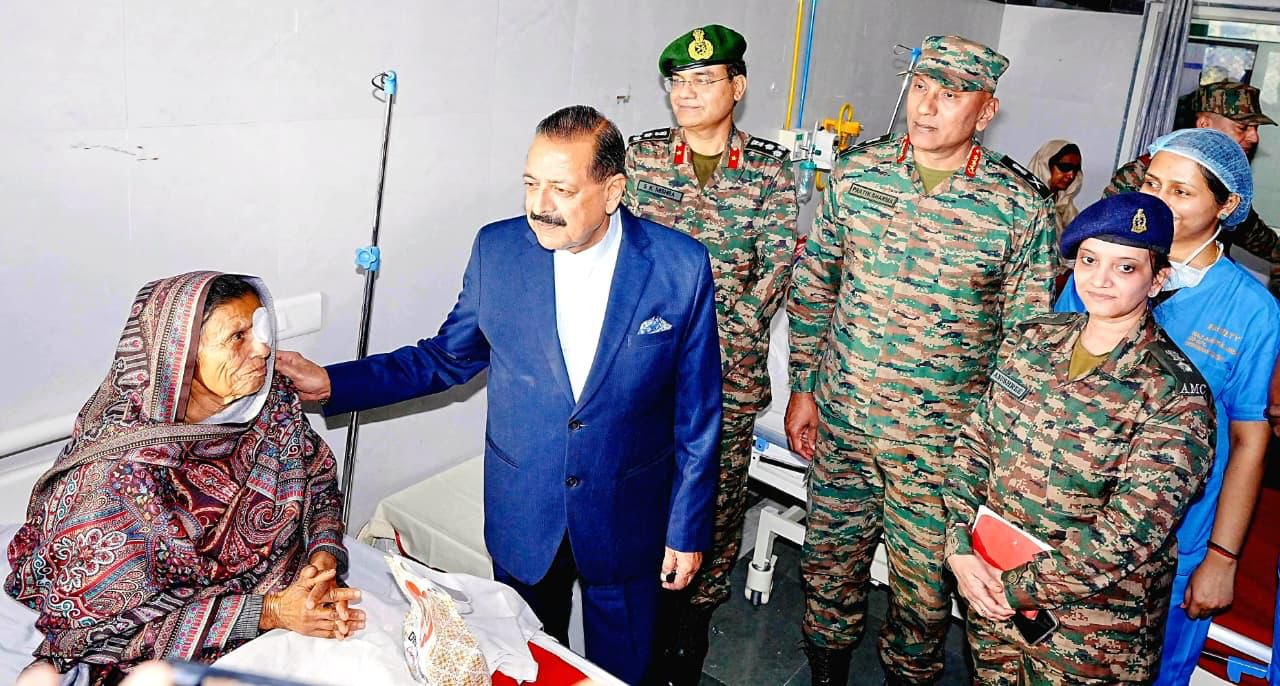
Union Minister Dr Jitendra Singh visited the camp on November 20, meeting patients and reviewing ophthalmology facilities. He praised the Army’s role in peacetime humanitarian care and highlighted the importance of bridging healthcare gaps in border and remote areas through such focused interventions.
Lives changed
Personal stories underscored the camp’s impact. Seventy-two-year-old Surinder Singh of Poonch, who had endured years of near-blindness amid traumatic conflict exposure, regained vision and now helps mobilise fellow beneficiaries. Abdullah Shafeeq, a retired soldier from Mendhar, played a key role in coordinating outreach for conflict-affected families. Ninety-six-year-old Rajkumari Devi, among the oldest operated patients, received sight-restoring surgery — a poignant symbol of the camp’s reach.
Genesis and execution
The initiative traces to a request from the Lieutenant Governor of J&K and a prompt response from Raksha Mantri Rajnath Singh. Chief of Army Staff General Dwivedi directed the highest levels of military medical leadership — including the DG AFMS and DG Medical Services (Army) — to prioritise and operationalise the camp within the Udhampur area, ensuring logistics, sterile operating capacity and postoperative care were in place.
Regional significance
Beyond immediate clinical benefit, Op Drishti strengthened civil–military ties and deepened health access in border districts often constrained by infrastructure and conflict-related disruption. The campaign also highlighted the Armed Forces’ dual role as defenders and providers of humanitarian health services.
For official details, see the Press Information Bureau release and related Defence Ministry statements. External coverage and local accounts provide patient perspectives and additional on-ground reporting.