
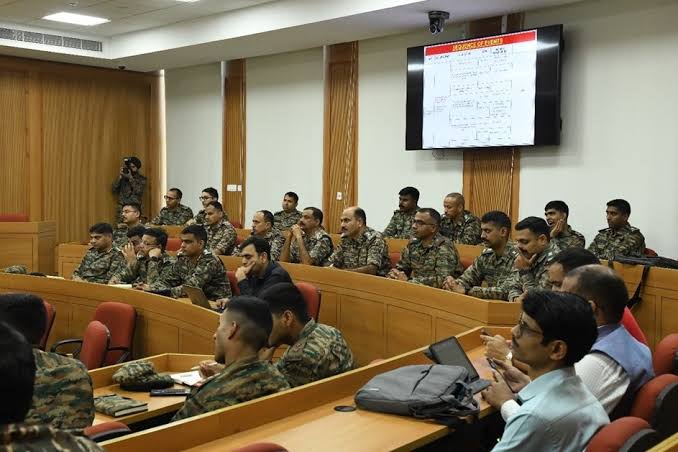
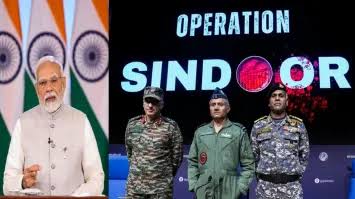
Operation Sindoor saw the Armed Forces executing a measured and non-escalatory response to eliminate terror camps in Pakistan and PoK, while administrative officers ensured accurate information dissemination and successful mock drills across India. Shri Singh highlighted that this synergy builds public confidence and strengthens governance in tandem with national security objectives.

Raksha Mantri reiterated Prime Minister Narendra Modi’s mantra of ‘Minimum Government, Maximum Governance’ and ‘Reform, Perform & Transform,’ stressing that civil servants play a pivotal role in accelerating India’s journey toward self-reliance and development. “You are not just providers but facilitators of empowerment. Your conduct should exemplify integrity and honesty as a norm, not an exception,” he said, urging officers to embrace responsibility and public accountability in their duties.
He highlighted India’s remarkable economic growth, moving from 11th to 4th largest economy since 2014, and noted projections of becoming the third largest in the next few years, underscoring the importance of capable administration in supporting national progress.
Technology as an Enabler of Service Delivery
Shri Singh urged officers to harness technology to enhance public service delivery. He cited successful initiatives like Pradhan Mantri Jan Dhan Yojana, Direct Benefit Transfer, Ayushman Bharat Digital Mission, and the Income Tax Department’s Faceless Assessment Scheme. He also highlighted the Ministry of Defence’s AI-driven SAMPURNA initiative, which streamlines defence procurement and payments transparently.
“Technology should be a medium, not an end. Use it to expand outreach, inclusivity, and welfare,” he advised, encouraging civil servants to innovate solutions in the technology-driven era.
Empathy, Inclusivity, and Women Leadership
The Raksha Mantri stressed the importance of empathy and people-centric governance. Officers were urged to understand social and economic circumstances shaping citizens’ lives, particularly among underprivileged or vulnerable populations.
He noted the rising prominence of women in civil services, citing that the top rank in the latest UPSC examination was secured by a woman, with three of the top five candidates also being women. Shri Singh expressed confidence that by 2047, women will hold top administrative positions, contributing decisively to India’s development journey.
Legacy of LBSNAA and National Icons
Describing the Foundation Course as a commitment to efficient and sensitive governance, Shri Singh lauded LBSNAA’s comprehensive training ecosystem. He drew inspiration from former Prime Minister Lal Bahadur Shastri’s leadership during the 1965 war, his role in the Green Revolution, and the enduring message of “Jai Jawan, Jai Kisan.”
The Raksha Mantri also paid floral tributes to Shastriji and Sardar Vallabhbhai Patel, and inaugurated a One District One Product (ODOP) pavilion at LBSNAA, emphasizing the importance of cultural and economic heritage alongside administrative excellence.