
India’s New Security Doctrine: Assertive, Strategic, and Self-Reliant
India’s security approach has changed dramatically. Operation Sindoor is a prime example of this shift.
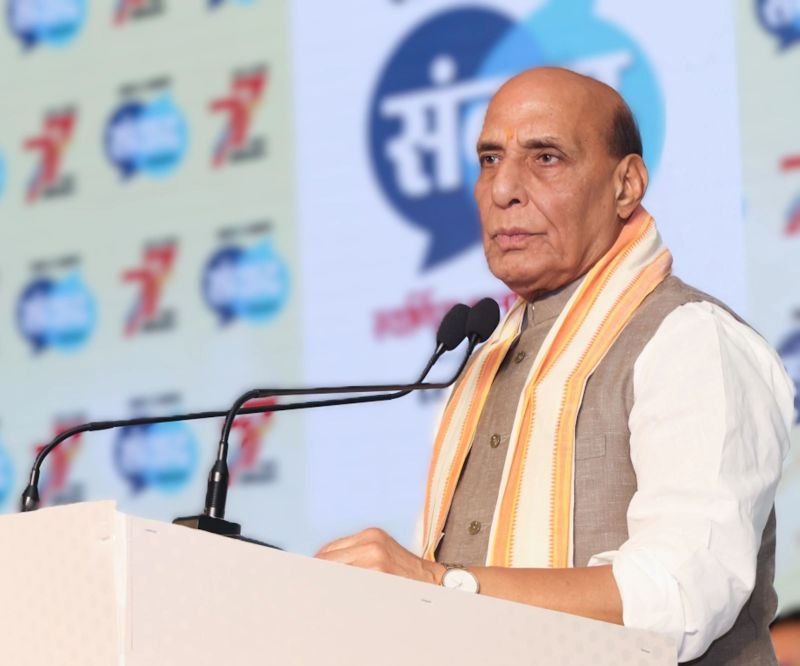
In a recent dialogue on National Security & Terrorism held in Dehradun, Defence Minister Rajnath Singh declared the operation as India’s largest anti-terror mission to date. It was launched in retaliation to the Pahalgam terror attack in Jammu & Kashmir.

According to Singh, the Pahalgam incident wasn’t just a terror strike. It aimed to disrupt India’s social unity and peace. India responded swiftly. It destroyed terror camps and infrastructure across Pakistan and PoK. This action sent a strong global message—India will not tolerate cross-border terrorism.
He stressed that terrorism cannot be justified by religion or ideology. Singh remarked, “India is the Mother of Democracy, while Pakistan has sadly become the Father of Global Terrorism.”
A Global Call to Action
Singh urged the international community to act. He demanded that the global community apply strategic, diplomatic, and economic pressure on Pakistan, especially by halting foreign funding that often ends up supporting terrorism. Singh also criticized the United Nations Security Council’s decision to appoint Pakistan as Vice-Chair of its Counter-Terrorism Panel, calling it deeply ironic. He questioned how a nation known for harboring global terrorists like Hafiz Saeed and Masood Azhar could be entrusted with leading global anti-terrorism efforts.
Strengthening Borders Through Self-Reliance
The Modi government has prioritized defense modernization and self-reliance. Since 2014, India’s defense production has jumped from ₹40,000 crore to over ₹1.3 lakh crore. Exports have reached ₹23,622 crore in FY 2024–25. The targets for this year are bold:
-
₹1.75 lakh crore in defense production
-
₹30,000 crore in defense exports
India is pushing for indigenization through:
-
10 Positive Indigenisation Lists with over 5,500 items
-
75% of capital procurement now from domestic companies
-
Indigenous development of Agni, Prithvi, BrahMos missiles and INS Vikrant
Information Warfare: A Silent Threat
While battlefield combat ends, information warfare continues. Singh warned that Pakistan used fake videos and propaganda during Operation Sindoor. These attempts aimed to weaken Indian morale.
He urged citizens to act as “social soldiers”—to verify news, stop rumors, and protect national interest.
“If people forward false news without checking, they unknowingly help the enemy,” he said.
He also advised the media to focus on truth, not trends. “In today’s world, being correct must come before being first,” he said.
The Road Ahead: From Kashmir to PoK
Singh expressed confidence about the integration of PoK. He stated, “Soon, PoK will say, ‘I too am Bharat.’”
Despite attempts to destabilize the region, development in Kashmir continues. The Udhampur-Srinagar-Baramulla railway line stands as proof of progress.
Conclusion
Operation Sindoor is more than just a military response.
It signals a paradigm shift in India’s national security doctrine. The country is no longer defensive—it is assertive, strategic, and self-reliant.
As India strengthens its borders and fights misinformation, it also seeks global responsibility in the war against terror. The message is clear:
Terrorism has no place in a civilized world—and India will face it with strength and unity.