
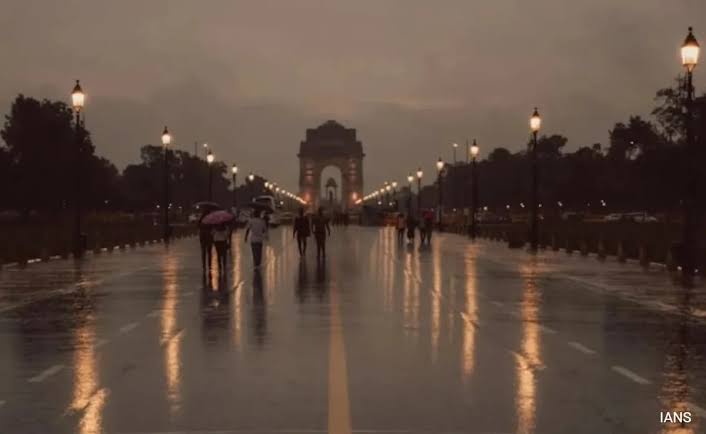
Delhiites woke up to a much-needed reprieve from the blistering heat on Sunday, May 25, after heavy overnight rains swept across the capital. The rainfall brought down temperatures significantly, offering a temporary break from the relentless heatwave that had gripped the city with temperatures soaring to a searing 46 degrees Celsius in recent days.


However, the relief came with its share of challenges. The downpour led to widespread waterlogging in several key areas, including ITO, Delhi Cantt, Dhaula Kuan, Dwarka, Chanakyapuri, Subroto Park, and the Nanakpura Underpass. Commuters faced a harrowing morning as roads were submerged, vehicles stranded, and traffic slowed to a crawl. In Delhi Cantt, visuals showed a car and a bus almost completely submerged, highlighting the severity of the water accumulation.
The India Meteorological Department (IMD) has issued a red alert for Delhi and surrounding regions, warning of continued thunderstorms, heavy rainfall, and strong winds throughout the day. The maximum temperature is expected to settle around 38 degrees Celsius, while the minimum hovers near 28 degrees Celsius. While the weather may bring respite to many, authorities have urged citizens to remain cautious and indoors when possible.
Adding to the disruption, around 49 flights were diverted at Indira Gandhi International Airport between 11:30 PM and 4 AM due to adverse weather conditions. Passengers were advised to check flight statuses regularly and stay in touch with airlines for updates. The situation has since improved, with airport authorities confirming that normal operations have resumed.
The stormy night also led to uprooted trees and blocked roads in several parts of the city. Civic bodies and emergency services have been working tirelessly to clear the debris and restore normalcy. The scenes are a stark reminder of the fragile balance between nature’s mercy and its might.
While the city breathes a sigh of relief from the scorching heat, the aftermath of the rainstorm reflects the vulnerabilities in Delhi’s infrastructure. For many residents, the cool breeze was welcomed with gratitude, even as they waded through flooded streets and navigated delays.