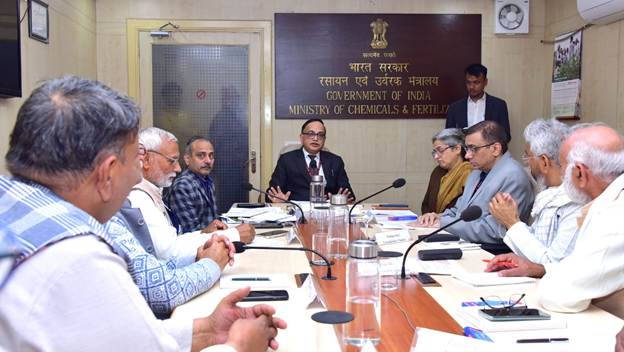
The meeting, held at Shastri Bhawan, focused on farmer-led solutions to address the growing concern of soil degradation caused by excessive and imbalanced fertilizer usage. Officials emphasized that farmers themselves must play a central role in shaping policies and spreading awareness about sustainable practices.
The dialogue was designed to bridge the gap between field-level experience and policy formulation, ensuring that soil conservation strategies reflect real-world agricultural challenges.
 Farmer-Led Solutions Take Centre Stage
Secretary of the Department of Fertilizers Rajat Kumar Mishra, who chaired the session, highlighted the importance of incorporating farmers’ expertise into policy frameworks. He said progressive farmers possess valuable insights that can guide effective interventions and pilot projects aimed at promoting balanced fertilizer use.
Mishra noted that soil health deterioration due to excessive chemical fertilizer application has become a serious concern. He emphasized that delivering timely, accurate information to farmers is critical to reversing soil degradation and ensuring long-term agricultural sustainability.
The session saw detailed discussions on practical, scalable solutions grounded in farmers’ experiences. Participants stressed that sustainable agriculture must combine scientific knowledge, traditional wisdom, and community-based approaches.
Padma Awardees Share Field-Tested Innovations
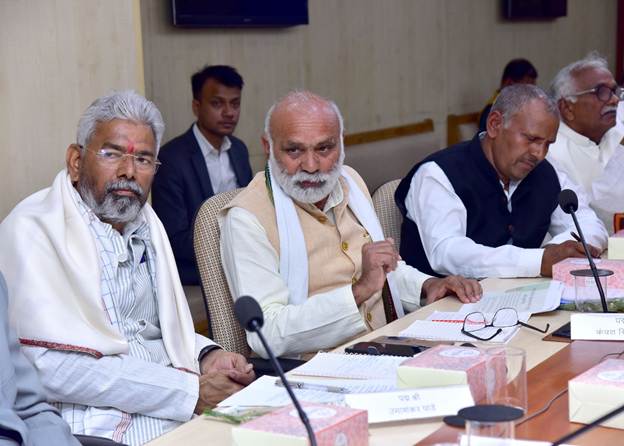
Several Padma award-winning farmers offered concrete suggestions to strengthen soil health initiatives. Progressive farmer Umashankar Pandey proposed establishing “Poison-Free Farming Schools” to educate farmers about natural and sustainable agricultural methods. He said structured training could help reduce dependence on chemical fertilizers.
Ram Sharan Verma emphasized crop diversification, green manure use, and rational fertilizer application. He stressed that farmers must move away from the misconception that higher fertilizer usage always results in higher profits, warning that excessive inputs often harm both soil and long-term productivity.
Bharat Bhushan Tyagi highlighted the importance of scientific crop planning, compost availability, and crop density management. He emphasized that crop residue should be treated as a valuable resource rather than waste, noting its role in enhancing soil fertility.
Other participants raised structural issues affecting fertilizer usage patterns. Seth Pal Singh pointed out that excessive fertilizer sales pressures can influence farming practices and called for accurate assessment of land-specific fertilizer requirements.
Organic and Natural Farming Gain Momentum
Farmers also stressed the need to expand organic farming infrastructure. Kanwal Singh suggested developing gaushalas as organic manure production centers and promoting cluster-based organic farming systems. He emphasized the importance of building reliable supply chains for natural inputs.
Chandrashekhar Singh recommended stricter quality standards and transparent labeling for organic products to ensure consumer trust. He also advocated farmer-led awareness campaigns at the village level, supported by farmer producer organizations.
Nek Ram Sharma highlighted the importance of identifying model farmers who can demonstrate sustainable practices. He linked agricultural sustainability to environmental conservation, emphasizing the role of traditional farming wisdom in maintaining ecological balance.
Shyam Sundar Paliwal proposed setting up natural fertilizer production units at the Gram Panchayat level, which would improve accessibility and encourage farmers to adopt balanced fertilizer practices.
Government Focus on Sustainable and Balanced Agriculture
The dialogue is part of the government’s broader strategy to promote responsible fertilizer use and soil conservation under the “Save Mother Earth” campaign. Officials reiterated that improving soil health is essential for ensuring long-term food security and environmental sustainability.
The Department of Fertilizers assured participants that their recommendations would be carefully examined and integrated into future policy initiatives. Pilot projects based on farmers’ suggestions are expected to be launched to test scalable solutions.
The department is also working to expand awareness programs and improve access to organic inputs at the village level. These efforts aim to empower farmers with the knowledge and resources needed to adopt balanced fertilizer practices.
Farmers as Partners in Policy and Sustainability
The participation of Padma award-winning farmers marks a significant shift toward inclusive policy-making, where farmers are treated not just as beneficiaries but as partners in shaping agricultural strategy.
Experts believe that farmer-led awareness campaigns, combined with scientific research and policy support, can significantly improve fertilizer efficiency, reduce environmental damage, and increase agricultural productivity.
The session concluded with a strong consensus that balanced fertilizer use, organic farming, and farmer education must form the foundation of India’s future agricultural strategy. With farmer participation at the forefront, the initiative represents a major step toward protecting soil health and ensuring sustainable agricultural growth.
By integrating grassroots expertise into national policy, the government hopes to build a resilient agricultural system that safeguards both farmers’ livelihoods and the environment.