
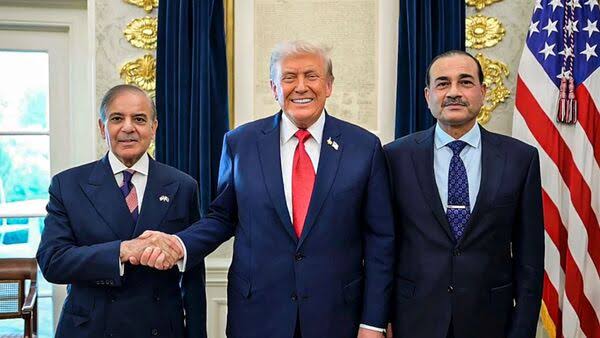
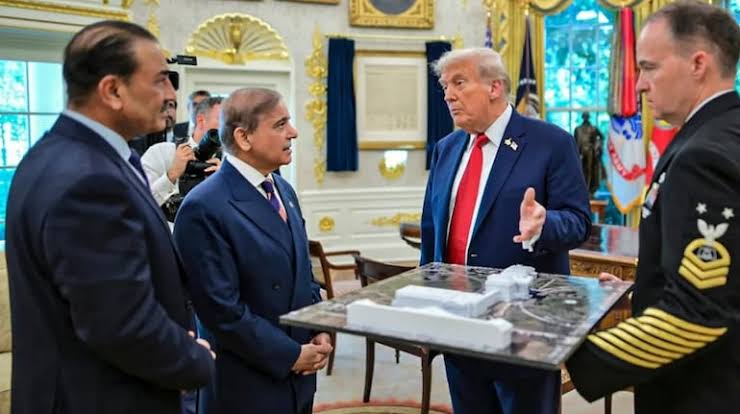

Under the proposed plan, Pasni—a modest fishing town in Balochistan—would be developed into a logistics and mineral export hub. The $1.2 billion project is expected to connect the port with the mineral-rich Reko Diq region through a new railway corridor. Financing would reportedly involve Pakistani federal funds supplemented by US-backed development finance.
The United States sees Pasni as an opportunity to access critical minerals such as copper and neodymium—essential components for green technologies, advanced electronics, and missile systems. Earlier in September, Pakistan shipped a pilot batch of minerals to Missouri-based US Strategic Metals (USSM), following a $500 million agreement with the Pakistani Military Engineering Corps. USSM’s Mike Hollomon described the deal as an effort to “rekindle a dormant friendship.”
A Blow to China’s CPEC Vision
For China, this move strikes at the heart of its strategic ambitions in the Arabian Sea. Gwadar, a cornerstone of the $60-billion China-Pakistan Economic Corridor (CPEC), has long symbolized Beijing’s foothold in the Indian Ocean. A US presence just 70 miles away directly challenges that influence.
Beijing has poured billions into Pakistani infrastructure, energy, and mining projects, including the Saindak Copper-Gold Mine and Reko Diq. Yet, with Pakistan turning to Washington—and the Asian Development Bank—for fresh funding after China’s reluctance to expand certain CPEC sections, the partnership appears strained. Islamabad’s overture to Washington may offer short-term financial relief but risks long-term strategic rupture with Beijing.
Regional Fallout: India, Iran, and Afghanistan
The geopolitical tremors extend beyond Pakistan and China. For India, a US foothold at Pasni could complicate its own connectivity projects, including Iran’s Chabahar Port, which lies less than 200 miles away. The move also comes as the US withdraws sanctions waivers for Chabahar, weakening India’s strategic outreach to Central Asia.
Iran, meanwhile, views Pasni as a potential surveillance post for Washington, allowing it to monitor Tehran’s shipping routes. The development could further isolate Iran at a time when tensions in the Gulf remain high. For Afghanistan, Pasni could become a logistical node for renewed US engagement, complementing reports that Washington is exploring access to Bagram Air Base once again.
Islamabad’s Gamble
Pakistan frames the Pasni proposal as “strategic diversification.” But observers see it as a calculated gamble driven by economic desperation. Historically, Islamabad has aligned with whichever superpower offers the most immediate returns—from Cold War alliances with Washington to its more recent embrace of Beijing’s Belt and Road Initiative.
This oscillation has often yielded short-term aid but long-term instability. China has stood by Pakistan during its global isolation—providing loans, infrastructure, and diplomatic backing. Yet, Islamabad’s readiness to invite a rival superpower into Beijing’s strategic backyard could be seen as an act of betrayal.
The End of the ‘Iron Brotherhood’?
The so-called “iron brotherhood” between Pakistan and China now faces its most severe test. For Beijing, Pasni represents not just a loss of influence but a lesson in the fragility of alliances built on financial leverage. For Washington, it offers both strategic access and a renewed foothold in a volatile region.
As the United States and China vie for dominance across the Indo-Pacific, Pakistan’s move could reshape maritime power equations in the Arabian Sea, Central Asia, and the Gulf. But in choosing short-term gains over long-term loyalty, Islamabad risks alienating a partner that has long been its diplomatic lifeline.
In geopolitics, loyalty traded for convenience seldom endures. Pakistan’s Pasni gamble may yield dollars today, but it could cost it trust tomorrow.