
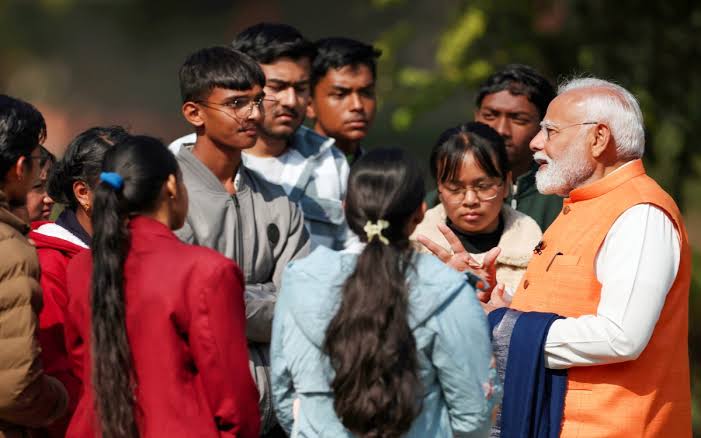
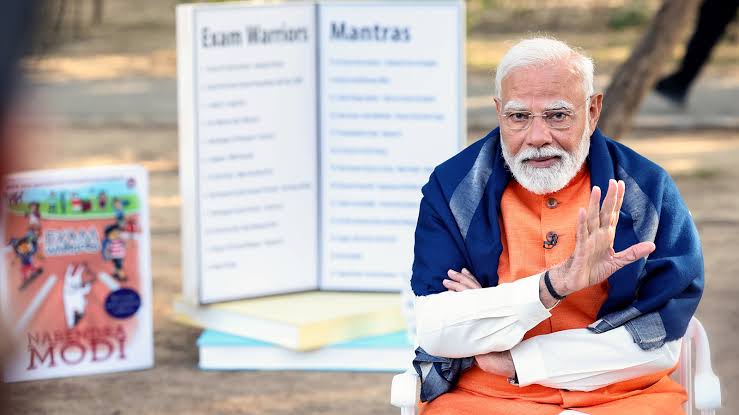

Launched in 2018, Pariksha Pe Charcha was initially conceived as an interactive platform where the Prime Minister engages directly with students ahead of examinations. Over the years, its scope has expanded significantly, bringing parents, teachers, and education experts into the conversation.
The article explains that the initiative has gradually taken the shape of a Jan Andolan by addressing exam-related stress, promoting emotional resilience, and encouraging a positive outlook towards learning. Its reach across schools and communities has helped normalize discussions around mental health and academic pressure.
NEP 2020 at the Core
Union Minister Dharmendra Pradhan, in the article shared by the Prime Minister, reiterates that the success of Pariksha Pe Charcha is closely linked to the principles of the National Education Policy (NEP) 2020. The policy’s child-centric approach, emphasis on conceptual understanding, and reduced focus on rote learning resonate strongly with the initiative’s objectives.
According to the article, NEP 2020 seeks to prepare students for the challenges of the 21st century by nurturing creativity, critical thinking, and adaptability. Pariksha Pe Charcha complements this vision by encouraging students to view examinations as opportunities for growth rather than sources of fear.
Indian Knowledge Systems and Mother Tongue
A key aspect highlighted in the article is the renewed focus on Indian knowledge systems and learning in the mother tongue, as envisioned under NEP 2020. These elements aim to make education more inclusive, relatable, and rooted in India’s cultural context.
By integrating these ideas into mainstream education discourse, Pariksha Pe Charcha reinforces the message that academic success does not require abandoning cultural identity. Instead, it promotes confidence among students by valuing local languages and traditional knowledge alongside modern learning tools.
Role of Parents and Teachers
The evolution of Pariksha Pe Charcha into a Jan Andolan has also brought parents and teachers to the forefront. The article stresses that reducing exam stress is a shared responsibility, requiring empathy and understanding from adults who shape a child’s learning environment.
Teachers are encouraged to adopt flexible and innovative teaching methods, while parents are urged to support their children without imposing unrealistic expectations. This collective approach, the article notes, is essential for creating a nurturing education ecosystem.
Education as Foundation of Viksit Bharat
By sharing the article, Prime Minister Modi has once again emphasized that education lies at the heart of India’s development goals. A confident, skilled, and emotionally balanced student community is seen as critical to achieving the vision of Viksit Bharat.
The Prime Minister’s endorsement of the article signals the government’s continued commitment to reforming education beyond infrastructure and curriculum, focusing equally on student well-being and mindset.
Broader National Conversation
Pariksha Pe Charcha now stands as a symbol of India’s broader effort to humanize education. Its transformation into a Jan Andolan reflects growing public participation in shaping educational priorities.