
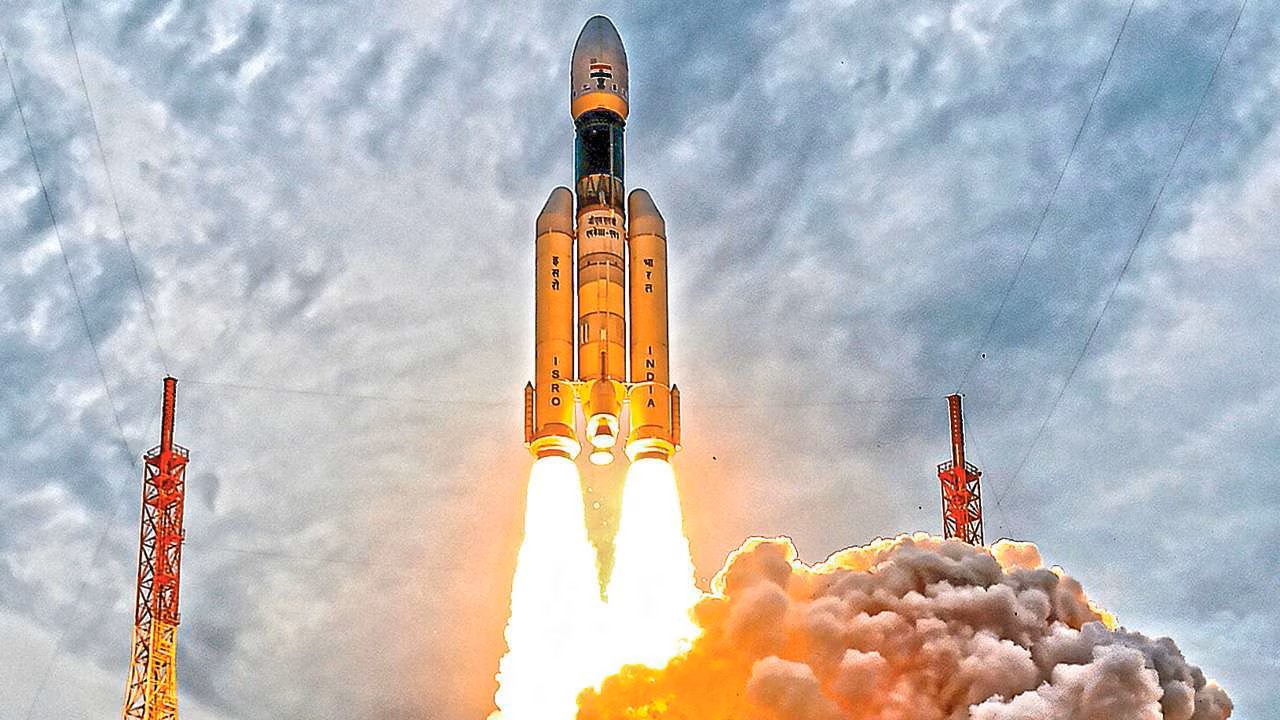
The progress of the Gaganyaan mission, India’s ambitious human spaceflight program, has reached several key milestones. Below is a summary of its current status:
Ground testing of the propulsion system, including solid, liquid, and cryogenic engines, has been successfully completed for the human-rated launch vehicle.

Crew Module Escape System (CMES):
The design and production of five types of solid motors for the Crew Escape System have been finalized, with static testing for all motors completed. The first Test Vehicle mission (TV-D1), which validated the performance of the Crew Escape System, was successfully carried out.
Orbital Module Systems:
The design of the Crew and Service Module structures has been finalized. Various parachute systems have undergone testing, including the Integrated Main Parachute Airdrop Test and Rail Track Rocket Sledge Tests. The ground test program for human-rating the Crew Module Propulsion System has been completed, and testing for the Service Module Propulsion System is nearing completion. Additionally, the thermal protection system has been fully characterized.
Astronaut Training:
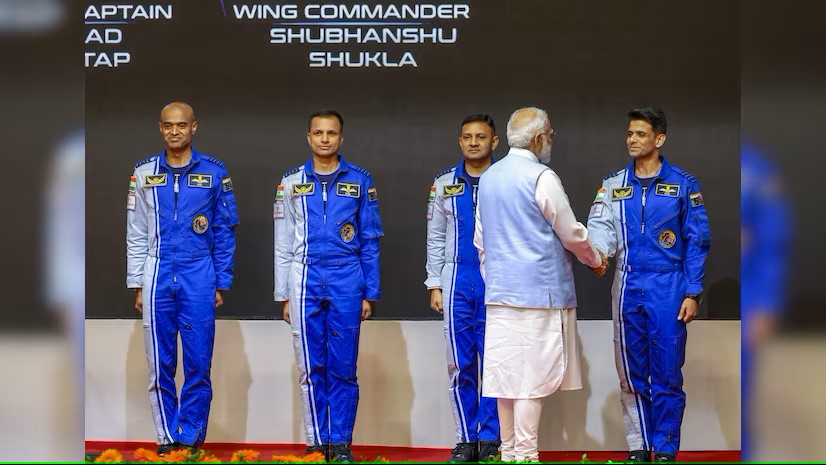
Two out of three semesters of astronaut training have been completed. Independent Training Simulators and Static Mockup Simulators have been developed and are operational.
Ground Infrastructure:
Critical facilities such as the Orbital Module Preparation Facility (OMPF), Astronaut Training Facility (ATF), and Oxygen Testing Facility are operational. The Mission Control Centre (MCC) and Ground Station Networks are also nearing completion.
Gaganyaan First Uncrewed Mission:
The solid and liquid propulsion stages of the human-rated launch vehicle are ready for flight integration. The preparation of the C32 cryogenic stage is underway. The realization of the Crew and Service Module structures has been completed, and flight integration activities are in progress.
Socio-Economic Benefits of Gaganyaan Mission:
The Gaganyaan mission holds substantial socio-economic advantages for India, including:
- Technological Advancements: The mission will lead to the development of new technologies in cryogenic engines, life support systems, robotics, and lightweight materials, benefiting various industries such as aerospace, automotive, healthcare, and energy.
- Job Creation: It is expected to create numerous job opportunities in aerospace, research, and related sectors.
- Economic Growth: The development of indigenous space technology will foster investment, promote domestic manufacturing, and contribute to overall economic growth.
Inspiring Future Generations:
- STEM Education: The Gaganyaan mission will motivate young minds to pursue careers in science, technology, engineering, and mathematics (STEM).
- National Pride: A successful human spaceflight program will inspire national pride and a sense of achievement among Indians.
International Collaboration and Scientific Research:
- Global Partnerships: The mission will facilitate international collaborations with spacefaring nations, promoting knowledge-sharing and joint ventures.
- Scientific Research: Conducting microgravity experiments will likely lead to breakthroughs in fields such as biotechnology, materials science, and medicine. The mission may also enhance weather forecasting and disaster management capabilities.
Space Sector Reforms:
The government has introduced several initiatives to involve Indian industries and startups in space programs, such as the formation of IN-SPACe (Indian National Space Promotion and Authorization Center) to promote and regulate non-governmental space activities. Additionally, the Indian Space Policy-2023 was released to support the active participation of non-governmental entities in India’s space economy, aiming for innovation, competition, and a larger share of the global space economy.
The government has also implemented various schemes to support the private sector, including Seed Fund Scheme, Mentorship Support, and Skill Development in the Space Sector, among others. Reforms in the Foreign Direct Investment policy for space have also been made to encourage foreign investment in the space domain.
This update was provided by Dr. Jitendra Singh, Union Minister of State for Science and Technology, Earth Sciences, Atomic Energy, Space, and Personnel, Public Grievances and Pensions, in a written reply in the Lok Sabha.