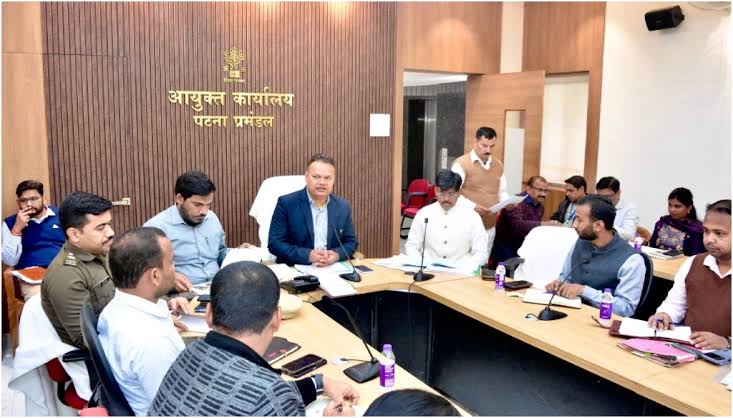
 Focus on Drainage Infrastructure
Officials have been asked to conduct detailed inspections of nine major drains along with dozens of smaller channels to detect blockages, encroachments and structural weaknesses. Cleaning of manholes and catchpits has been prioritised to ensure smooth water flow during intense downpours.
The Patna Municipal Corporation (PMC), Bihar Urban Infrastructure Development Corporation (BUIDCO) and the district administration have been instructed to function in close coordination. Any lapse, officials were warned, would invite immediate corrective action.
Pumping Stations on High Alert
A total of 56 permanent and 35 temporary pumping stations will remain operational throughout the monsoon period. Together, these facilities house 255 pumps strategically distributed across Azimabad, Kankarbagh, Bankipur, Patliputra and Nutan Rajdhani zones.
Zone-wise data shows that Nutan Rajdhani alone accounts for 105 pumps, reflecting its vulnerability to waterlogging. Azimabad has 33 pumps, Kankarbagh 46, Bankipur 35 and Patliputra 36, ensuring citywide coverage during emergencies.
Power Supply and Workforce Monitoring
Recognising past failures caused by power outages, the road construction and electricity departments have been asked to provide dedicated feeders to pumping stations. Mobile repair teams will remain on standby to address technical faults without delay.
To ensure accountability, biometric attendance has been made mandatory for pump operators, electricians, cleaners and fitters. Staffing will be organised in three shifts to maintain uninterrupted operations during heavy rainfall.
Additional Equipment and New Projects
BUIDCO officials informed the meeting that 108 trolley-mounted pump sets and 39 new generator sets will be deployed during the monsoon. These mobile units are expected to provide rapid response in low-lying areas prone to sudden flooding.
Patna has also been divided into three independent operational divisions—east, central and west—to streamline mechanical and construction activities. Work is currently underway on 22 new pumping stations, while paving and strengthening of major drains continues.
Smart Monitoring and Inter-Agency Coordination
District magistrate Thiyagarajan S M said senior officers would personally lead field inspections to verify the quality of desilting and drain cleaning. The PMC has already begun desilting operations, which started in January this year.
These efforts are being monitored through a central control room linked to the Patna Smart City command centre. CCTV cameras, sensors and e-surveillance tools are being used to track water levels and flow patterns in real time.
The administration has also been directed to coordinate closely with Metro authorities, the National Highways Authority of India and local engineering agencies to prevent disruptions in the drainage network during infrastructure work.
Learning from Past Monsoons
Urban flooding has long plagued Patna, disrupting daily life, damaging property and raising public health concerns. Officials say the current strategy focuses on prevention rather than post-flood response, marking a shift in administrative approach.
By combining upgraded infrastructure, technology-driven monitoring and strict accountability, the administration hopes to ensure that residents experience minimal disruption during the 2026 monsoon.