
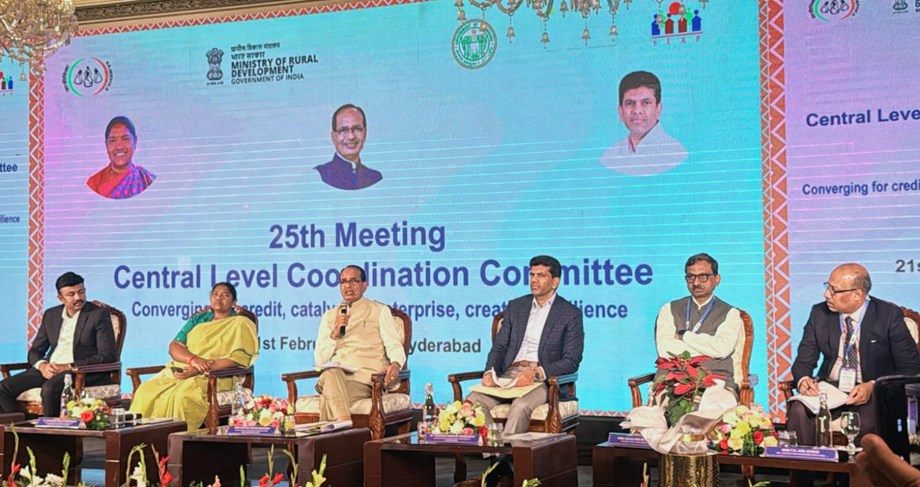
Hyderabad, February 21, 2026: Union Minister of State for Rural Development and Communications, Dr. Chandra Sekhar Pemmasani, has called for sweeping digital and structural reforms to strengthen credit access for women-led Self Help Groups (SHGs), while addressing the 25th Central Level Coordination Committee (CLCC) meeting in Hyderabad.
Highlighting the transformation achieved under DAY-NRLM, Dr. Pemmasani said women entrepreneurs have proven to be disciplined borrowers with Non-Performing Assets (NPAs) below 1.5 percent significantly lower than many other credit segments.
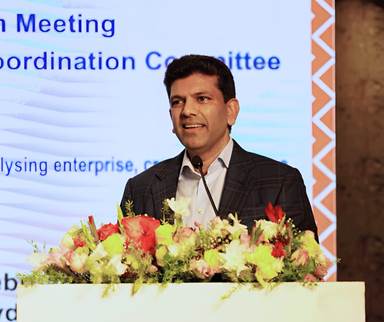

The Minister noted that loan disbursement to SHGs has expanded nearly tenfold over the past decade from around ₹23,000 crore in 2013 to approximately ₹2 lakh crore in 2024. This surge reflects the growing strength of the SHG–Bank linkage ecosystem.
He further highlighted the progress of the Lakhpati Didi initiative, stating that nearly 50–60 lakh women have been connected to formal banking systems. Individual enterprise financing has also risen sharply from ₹138 crore benefiting 30,000 women in 2021 to over ₹8,300 crore reaching more than 5.5 lakh entrepreneurs this year.
“Women entrepreneurs are not beneficiaries of charity. They are dependable economic partners and among India’s most loyal and underserved customers,” he said.
Call for Single Standardised Loan System
Emphasising the need for systemic reform, Dr. Pemmasani proposed a single standardised loan application system to simplify access for women entrepreneurs. He urged banks to integrate digital KYC processes, transaction data, and appraisal mechanisms to reduce paperwork and processing delays.
The Minister also advocated the creation of real-time dashboards accessible to banks and stakeholders for better transparency and monitoring. Time-bound loan processing norms and dedicated officers for SHG engagement were recommended to improve last-mile delivery.
Cluster Level Federations (CLFs), he said, must be strengthened to ensure effective outreach and smoother coordination between SHGs and banking institutions.
Strengthening the SHG Ecosystem
Over the last 14 years, DAY-NRLM has mobilised more than 10 crore rural women into nearly 93 lakh Self Help Groups across States and Union Territories. These community institutions collectively manage an internal corpus exceeding ₹1.2 lakh crore.
The programme has facilitated cumulative credit disbursements of over ₹12 lakh crore, backed by consistently high repayment rates. Officials attribute this success to structured financial inclusion, capacity building, and strong partnerships with banks and NABARD.
Dr. Pemmasani stressed the importance of financial literacy, digital platforms such as She-Marts, marketing support, and enterprise skill development to help rural women scale their businesses sustainably.
About the CLCC
The Central Level Coordination Committee assists the Department of Rural Development in policy formulation and monitoring of SHG–Bank linkage programmes. It is chaired by the Secretary, Ministry of Rural Development, and includes representatives from the Reserve Bank of India, NABARD, central ministries, and commercial banks.
The committee meets annually to review progress, identify policy bottlenecks, and recommend corrective measures to strengthen rural financial inclusion.