Air India Flight 171 Crash: A Tragic Day for Aviation
On June 13, 2025, Air India Flight 171 took off from Ahmedabad’s Sardar Vallabhbhai Patel International Airport en route to London’s Gatwick. Just minutes later, tragedy struck.
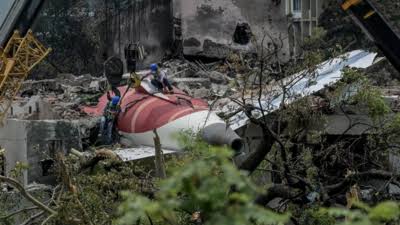
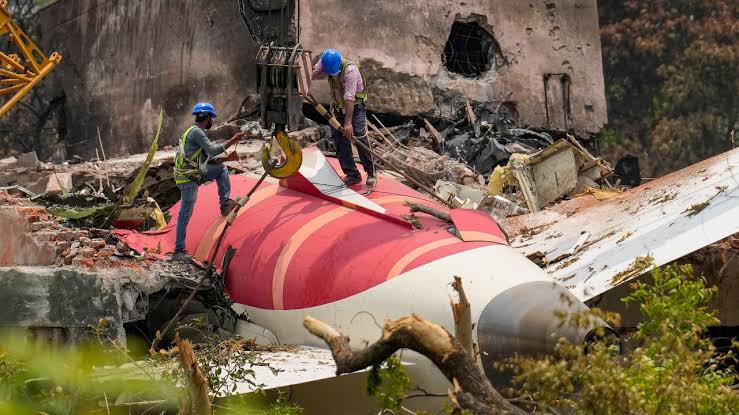
The aircraft crashed into the BJ Medical College premises, resulting in the death of 260 people. This included 241 passengers and crew on board and 19 individuals on the ground. Only one person survived—a 40-year-old British national named Vishwas Kumar Ramesh.
This crash ranks among the deadliest in Indian aviation history.
 Crash Report Raises Alarming Questions
On July 12, the Aircraft Accident Investigation Bureau (AAIB) released its 15-page preliminary crash report. The report points to a critical anomaly: both engines’ fuel cutoff switches were found in the “CUTOFF” position shortly after takeoff.
According to the flight data, the switches moved from RUN to CUTOFF within a one-second interval. The cockpit voice recorder captured one pilot questioning the other: “Why did you cut off?” The reply was: “I didn’t do so.”
This exchange has triggered widespread media speculation—some even suggesting pilot suicide. However, aviation experts and the pilot community have strongly opposed these theories.
ICPA Defends Pilots, Condemns Speculation
The Indian Commercial Pilots’ Association (ICPA) responded sharply. In a public statement, they called such speculation “reckless, unfounded, and deeply insensitive.”
“Invoking suicide based on incomplete information is irresponsible,” said the ICPA. “There is no evidence to support this, and such narratives only dishonor the memory of those lost and traumatize their families.”
The association emphasized that any discussion of pilot error or intent must wait for a full, verified investigation. “To make claims at this stage is not only premature but a disservice to aviation safety,” the statement added.
Media Ethics Under Scrutiny
This incident has reignited the debate on media responsibility during aviation crises. Aviation lawyer Anjana Desai said, “Speculating about suicide or error without solid proof violates every principle of ethical reporting.”
Several aviation experts noted that critical flight data and mechanical evidence are still being analyzed. Premature narratives can influence public opinion and misdirect the investigation.
What the Preliminary Report Reveals
Here are some confirmed facts from the AAIB’s report:
- The flight took off at approximately 1:38 PM (IST).
- Both engine fuel switches went from RUN to CUTOFF at 42 seconds after takeoff.
- The switch transition occurred within one second.
- Cockpit audio confirms confusion between the pilots about who made the action.
Experts believe further analysis of the black box, maintenance logs, and crew history will be essential before drawing any conclusions.
Aviation Experts Call for Patience and Respect
Captain Aarav Mehta, a retired senior commander with over 25 years of experience, appealed to the public: “Investigations are complex. Jumping to conclusions before all facts are known dishonors the legacy of the crew and the aviation profession.”
Meanwhile, the AAIB has promised a final report by October 2025, which will include findings from mechanical inspections, weather data, air traffic communications, and human factors analysis.
Why Facts Matter More Than Speculation
Accidents like Flight 171 highlight the importance of grounded, evidence-based journalism. While public grief is real, misinformation can do long-term harm—to victims’ families, professionals, and future flight safety reforms.
The ICPA has urged the media to refrain from publishing unverified details. They have also asked the Ministry of Civil Aviation to take action against news outlets propagating baseless claims.
Conclusion: Let the Investigation Lead
Air India’s crash is a heartbreaking moment for the nation. But in grief, truth must remain the guiding principle. Let’s respect the investigation process and the memories of the 260 lives lost by avoiding harmful speculation.
The final AAIB report may offer clarity. Until then, silence is not only respectful—it is necessary.