
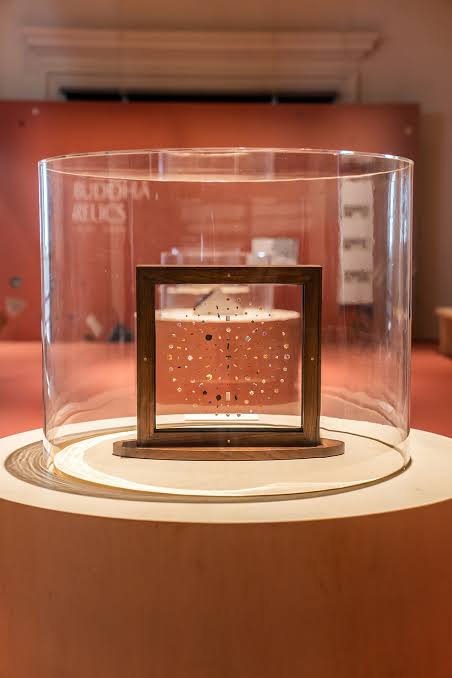
Prime Minister Narendra Modi has welcomed the return of the sacred Piprahwa relics of Bhagwan Buddha to India after 127 years, marking a historic and emotional milestone for the nation.
A Cultural Homecoming After 127 Years
The sacred relics, believed to belong to Bhagwan Buddha, were discovered in Piprahwa, Uttar Pradesh, in 1898. These remains had been taken overseas during the colonial period. Now, after more than a century, they have been returned to their rightful home.
This moment brings not just national pride but spiritual fulfillment. The return reflects India’s deep cultural and historical connection to the teachings of Buddha and its dedication to protecting its ancient heritage.


Prime Minister Narendra Modi, in a post on X (formerly Twitter), expressed joy and pride at the return. He wrote:
“A joyous day for our cultural heritage!
It would make every Indian proud that the sacred Piprahwa relics of Bhagwan Buddha have come home after 127 long years. These sacred relics highlight India’s close association with Bhagwan Buddha and his noble teachings.”
He added that this is another step under the vision of ‘Vikas Bhi Virasat Bhi’, a campaign that focuses on development alongside cultural preservation.
Colonial Plunder and Global Auction
The relics were taken from India during British rule. For decades, their whereabouts remained a mystery. Earlier this year, they reappeared in an international auction. This alerted Indian authorities and historians alike.
Efforts were quickly initiated by the Indian government, including the Ministry of Culture and the Archaeological Survey of India (ASI), to halt the sale and bring the relics home. After months of negotiation, the relics were officially returned to India.
Why Piprahwa is Important
Piprahwa, near the Nepal border in Siddharthnagar district, is one of the most significant Buddhist archaeological sites. In 1898, British archaeologist William Peppe unearthed a stupa there containing relics with inscriptions linking them to Lord Buddha.
The site has since been central to Buddhist pilgrimages and archaeological research. The return of these relics reinstates Piprahwa’s significance on the global cultural map.
India’s Global Cultural Diplomacy
This return adds to India’s growing success in reclaiming looted artefacts. Over the past decade, the country has recovered more than 300 antiquities from museums and private collectors abroad.
These include rare idols, sculptures, manuscripts, and now, the sacred Piprahwa relics. It is part of India’s larger mission to reclaim its identity and pride in the global arena.
Voices of Appreciation
The Buddhist community across the world has hailed the move. Monks, scholars, and heritage activists see this as more than a diplomatic success—it is a spiritual reunion.
The Ministry of External Affairs, along with Indian missions abroad, has been instrumental in tracking such artefacts. PM Modi appreciated the efforts of all involved and reiterated India’s responsibility as a guardian of spiritual values.
A Boost for Spiritual Tourism
The relics are expected to be housed in a secure and revered space, possibly at the National Museum or a Buddhist cultural centre in Uttar Pradesh. This will encourage both domestic and international tourism, especially from countries like Sri Lanka, Japan, Thailand, and Myanmar.
This return could turn Piprahwa into a major Buddhist tourist destination, boosting local economies and spreading the message of peace and dharma globally.
Preserving Heritage in Modern Times
The return of the Piprahwa relics isn’t just a recovery. It is a reminder. A reminder that history matters. That our roots are not forgotten. And that India, even in modern times, upholds its spiritual and cultural commitments.
As the world watches, India leads by example—honouring the past while building the future.