 Buddhism Spread Through Dialogue, Not Force
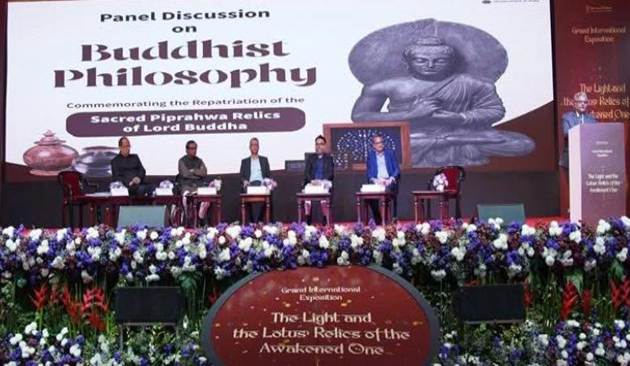
Chairing the session, Prof. Siddharth Singh, Vice-Chancellor of Nava Nalanda Mahavihara, emphasised that Buddhism spread across continents not through conquest or coercion, but through dialogue, ethical conduct, and personal example. He noted that the Buddha’s message appealed to conscience and compassion, making it universally accessible.
He observed that Buddhist traditions, like other Dharma-based paths, prioritise mental purification and the alleviation of suffering rather than proselytisation, a principle that remains relevant in contemporary society.
Piprahwa Relics as Living Traditions
Prof. Siddharth Singh highlighted that relics of the Buddha continue to sustain living traditions by connecting present-day practitioners with the historical Buddha. He described the repatriation of the Piprahwa relics as a gesture of shared stewardship that strengthens global Buddhist heritage rather than asserting exclusive claims.
This approach, he said, reinforces India’s role as a responsible custodian of spiritual and cultural legacy.
Buddhist Philosophy and Contemporary Challenges
Prof. Nalin Kumar Shastri underscored the renewed relevance of Buddhist philosophy in addressing modern challenges such as ethical governance, environmental sustainability, and mental well-being. He noted that teachings such as Anattā, the Brahmavihāras, and Pratītyasamutpāda offer frameworks for social harmony and ecological responsibility.
He reaffirmed India’s position as the Motherland of Dhamma, stating that Buddhist thought bridges ancient wisdom with present-day global concerns.
Relics as Embodiments of the Dhamma
Prof. Anand Singh explained that relics of the Buddha and his disciples function as symbolic embodiments of the Dhamma, integrating both the living presence of the Buddha and his teachings. He highlighted how relic veneration contributed to the expansion of Buddhist sacred geography through stūpas and caityas.
He also noted Buddhism’s ability to absorb local cultural elements while preserving its core philosophical values.
India’s Civilisational Role Reaffirmed
Prof. Bala Ganpathi observed that Buddhism’s global acceptance stems from its philosophical depth and ethical universality. Describing the Piprahwa relics as living reminders of the Buddha’s message, he said Buddhist philosophy offers a humane framework for peace and coexistence in an increasingly fragmented world.
Other scholars highlighted historical centres like Varanasi as hubs of philosophical dialogue and emphasised the doctrinal significance of Sarnath, where the Buddha delivered his first sermon.
Gesture of Global Goodwill
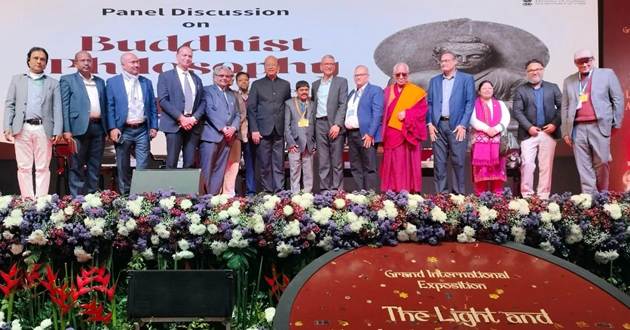
The panel collectively acknowledged the efforts of the Prime Minister and the Minister of Culture in facilitating the repatriation of the Piprahwa relics. The scholars described the move as a gesture of cultural stewardship, global goodwill, and India’s enduring commitment to peace and shared human values.