
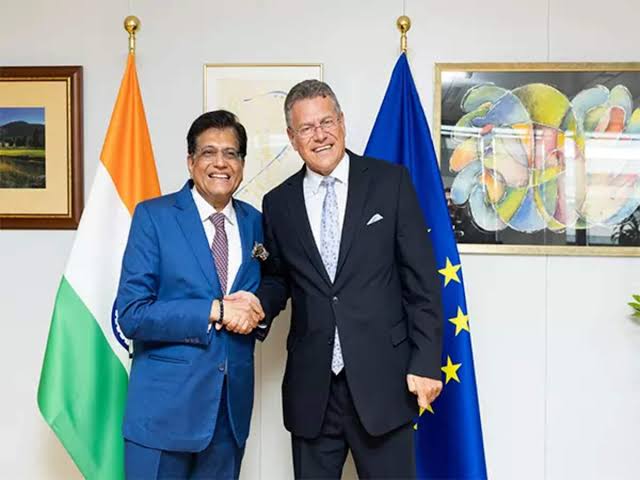
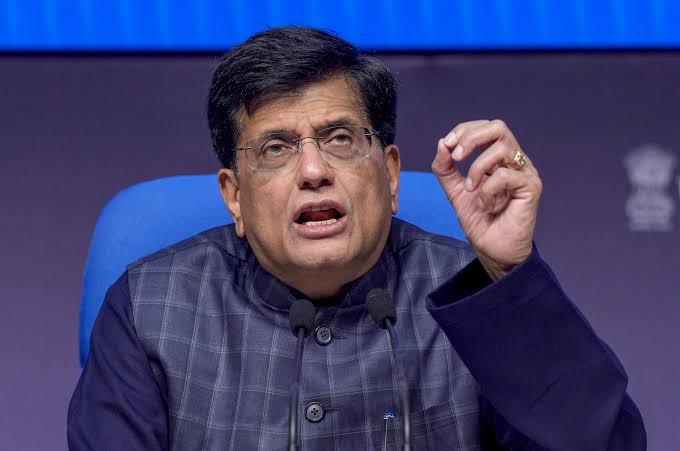

Goyal’s remarks came after senior Congress leader Jairam Ramesh criticised the FTA, describing it as the largest trade opening India has granted to any partner. Ramesh argued that tariff relief on over 96 percent of EU exports could significantly increase imports, potentially widening India’s trade deficit.
Ramesh also raised concerns about the European Union’s Carbon Border Adjustment Mechanism (CBAM), which comes into effect on January 1, 2026. According to him, India’s aluminium and steel exports to the EU have already declined from $7 billion to $5 billion and could fall further once CBAM is enforced.
Responding to these concerns, Goyal dismissed them as exaggerated and politically coloured. He accused Ramesh of being “anti-development” and alleged that environmental clearances during his tenure as environment minister stalled major infrastructure and industrial projects.
Criticism of UPA-Era Trade Agreements
The commerce minister drew a contrast between the India–EU FTA and agreements signed during previous Congress-led governments. He claimed FTAs signed with Japan and South Korea under the UPA failed to boost Indian exports while allowing imports from those countries to surge.
“The duty concessions given then did not help Indian exporters. Our products did not gain access, but imports into India doubled,” Goyal said, adding that such imbalanced agreements hurt domestic manufacturing.
He emphasised that the current government follows a calibrated trade strategy, avoiding agreements with countries that directly compete with India or have significantly lower labour costs. “We negotiate on our own terms and protect Indian industry,” he asserted.
RCEP and China Factor
Goyal also accused the Congress of pushing India towards economically risky arrangements, particularly the Regional Comprehensive Economic Partnership (RCEP). He described RCEP as effectively an FTA dominated by China and questioned the Congress’s judgment in supporting India’s participation.
“How could they even think of putting India at such risk? Entering an FTA with China would have severely harmed Indian interests,” Goyal said, reiterating that the current government chose to stay out of the pact to safeguard domestic sectors.
India–EU FTA as a Strategic Milestone
Defending the agreement, Goyal highlighted that nearly 99 percent of Indian exports to the EU will enjoy zero-duty access, calling it a balanced and forward-looking deal. He described the FTA as a landmark that elevates India’s position at the “high table of global geopolitics”.
According to Goyal, the agreement with the 27-nation EU bloc enhances mutual complementarity and positions India as a preferred trading partner for developed and developing nations alike. “Together, we become a force multiplier,” he said.
He also rejected claims that the Indian economy is struggling, countering Congress leader Rahul Gandhi’s remark that the economy was “dead”. Goyal cited India’s 7–8 percent growth rate, poverty reduction, startup expansion and infrastructure development as evidence of economic resilience.
Global Recognition Under Modi Government
Goyal credited Prime Minister Narendra Modi’s leadership for India’s growing global recognition, stating that the country is now viewed as a strategic ally and reliable trade partner. He said the India–EU FTA reflects international confidence in India’s economic and regulatory framework.