
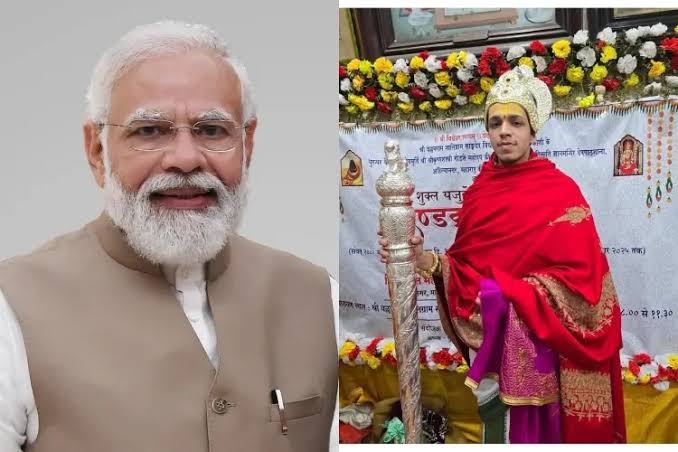
What the Dandakrama Parayanam Entailed
The Dandakrama Parayanam is a concentrated Vedic recital demanding rigorous memorisation, breath control, tonal precision and absolute continuity. Devavrat’s achievement involved flawless recitation of verses from the Madhyandini recension of the Shukla Yajurveda, a Vedic tradition passed down through the guru-shishya parampara over centuries. Completing such a Parayanam without interruption reflects extraordinary discipline and deep immersion in Vedic pedagogy.
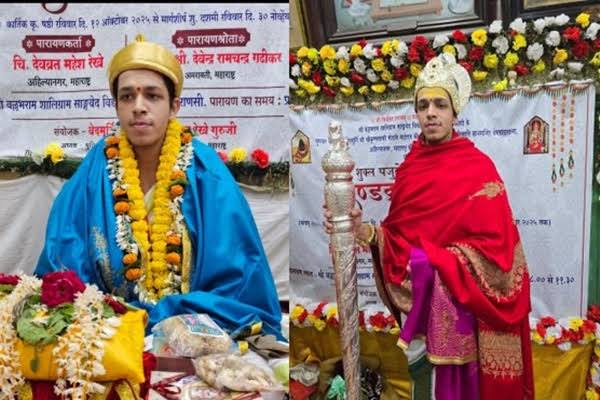

“What 19-year-old Vedamurti Devavrat Mahesh Rekhe has done will be remembered by the coming generations,” the Prime Minister wrote, celebrating the young scholar for embodying the finest values of the Guru Parampara. As the Member of Parliament representing Kashi, Mr Modi said he felt elated that this extraordinary spiritual and scholastic exercise took place in the sacred city of Kashi, a long-standing centre of Vedic learning and ritual practice.
Support Network: Family, Saints and Scholars
The Prime Minister acknowledged the role played by Devavrat’s family alongside a broad network of saints, seers, scholars and cultural organisations from across India who provided logistical and spiritual support during the Parayanam. Such community backing is often vital to sustain extended recitations, which require continuous oversight, ritual correctness and round-the-clock arrangements for the performer.
Vedic Tradition and Modern Relevance
Vedic recitations like the Dandakrama Parayanam are not merely ritual acts; they preserve phonetic precision, oral history and ancient pedagogical practices. Scholars argue that sustained engagement with Vedic chanting helps maintain linguistic fidelity of Sanskrit intonation and offers a bridge between classical learning and contemporary cultural identity. Young Vedic practitioners such as Devavrat symbolise renewed interest among India’s youth in classical knowledge systems.
Recognition and Cultural Impact
Recognition from the Prime Minister elevates the event beyond a local spiritual milestone to a matter of national cultural pride. Public acknowledgement has also drawn attention to the institutions that sustain Vedic learning gurukulas, pathshalas and temple-based teaching centres and has sparked discussions on how to document and support oral traditions in the digital age.
Preserving Guru-Shishya Lineage
Devavrat’s accomplishment reiterates the centrality of the guru-shishya relationship in keeping oral traditions alive. The uninterrupted Parayanam underscores daily regimens, austerities, and pedagogical methods that have been transmitted for generations. Many observers hailed the event as an inspiration for replicating structured teacher-training and youth engagement programmes for Vedic studies across India.
What Comes Next for the Young Vedamurti
While specifics about future plans for Vedamurti Devavrat were not detailed in the official message, recognitions of this kind often lead to invitations for further scholarly study, participations in Vedic seminars, and opportunities to teach or perform at cultural events. The broader community response is likely to aid in archiving his recitations and making them accessible for posterity.