
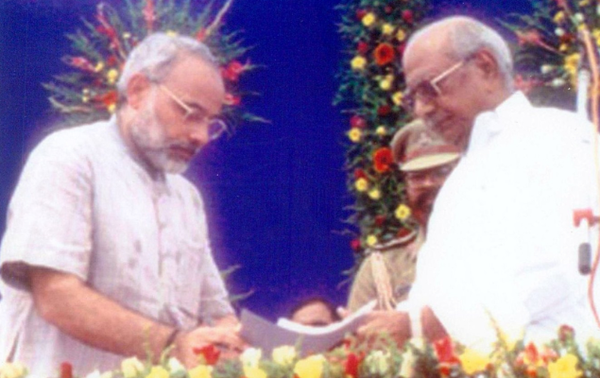
Longest-Serving Chief Minister of Gujarat
Taking over from Keshubhai Patel amid political instability and post-earthquake recovery, Modi led the BJP to three consecutive assembly victories in 2002, 2007, and 2012. His governance style, widely recognized as the “Gujarat Model,” set the foundation for the party’s national ambitions.


2014 marked a turning point. Under Modi, the BJP won a historic solo majority in the Lok Sabha, ending the coalition era and relegating Congress to just 44 seats. This dominance ensured there was no official leader of the opposition in the 16th Lok Sabha.
Third Longest-Serving Prime Minister
Surpassing leaders like Atal Bihari Vajpayee and Dr. Manmohan Singh, PM Modi became the third longest-serving Prime Minister of India. Only Jawaharlal Nehru and Indira Gandhi have had longer tenures, making Modi the first non-Congress leader to achieve this milestone.
Electoral Dominance
The BJP’s parliamentary strength surged from 161 Lok Sabha and 49 Rajya Sabha seats in 2013 to 240 and 102 seats, respectively, today. The party’s vote share jumped from 18.8% in 2009 to 37.36% in 2019. Even after a marginal dip in 2024, the NDA coalition retained power with strategic alliances.
Expanding Across States
When Modi became Prime Minister in 2014, the NDA governed seven states. By 2024, the coalition had expanded to over 18 states, strengthening BJP’s presence even in previously challenging regions, including the Northeast and southern India.
Global Recognition
PM Modi consistently ranks among the world’s most approved democratic leaders. Morning Consult reports domestic approval ratings hovering around 75%, over 30 points higher than the US President at the time. His digital outreach, with more than 108 million followers on X (formerly Twitter), allows direct engagement with citizens.
Economic Transformation
Under Modi’s leadership, India’s nominal GDP has more than doubled in just 11 years, rising from the 10th largest economy in 2014 to the 4th largest in 2025, behind only the US, China, and Germany. According to the IMF, India’s GDP currently stands at $4.3 trillion, reflecting significant economic growth and global recognition.