
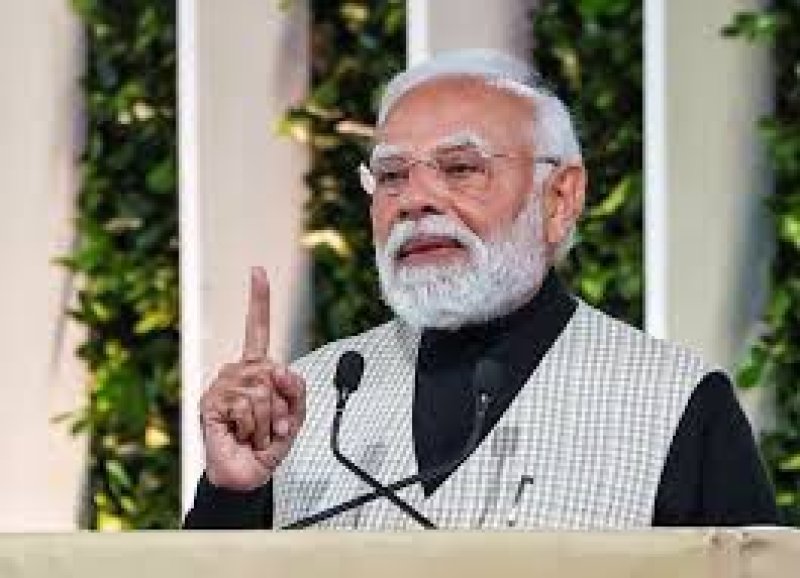
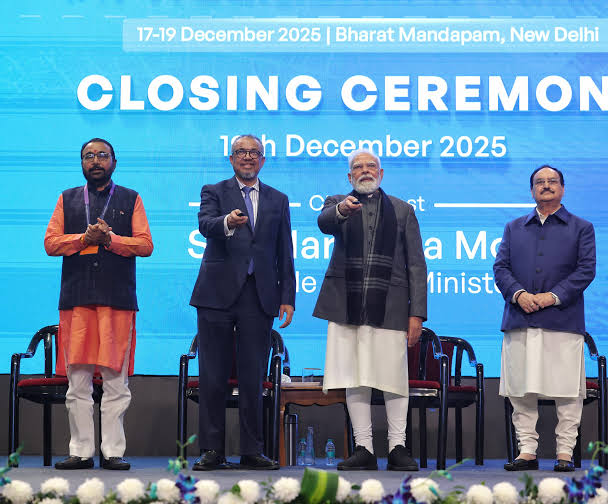

Highlighting India’s growing role in global healthcare, the Prime Minister said it was a privilege that the WHO Global Centre for Traditional Medicine has been established in Jamnagar, Gujarat. He recalled that during the first summit in 2022, the world entrusted India with this responsibility.
Shri Modi noted that the centre’s expanding global influence and the success of the current summit demonstrate the confidence the international community places in India. He said the convergence of traditional knowledge with modern scientific practices at the summit has the potential to transform the future of medical science.
Global Cooperation and Delhi Declaration
The Prime Minister underlined that the summit facilitated dialogue among health ministers and country representatives, opening new avenues for joint research, simplified regulations, and knowledge-sharing. He said such cooperation would help make traditional medicine safer, more effective, and globally trustworthy.
He welcomed the Delhi Declaration, which emerged from the summit, describing it as a shared roadmap for future collaboration. Strengthening research, expanding digital applications, and building credible regulatory frameworks, he said, would empower traditional medicine worldwide.
Yoga and Ayurveda: India’s Global Gift
Calling yoga an integral part of traditional medicine, Shri Modi said it has guided humanity towards health, balance, and harmony. He recalled that through India’s initiative and the support of over 175 nations, the United Nations proclaimed June 21 as International Yoga Day.
The Prime Minister noted that yoga has now reached every corner of the world. He congratulated the recipients of the Prime Minister’s Awards for the Promotion and Development of Yoga, saying they symbolise dedication, discipline, and lifelong commitment.
Restoring Balance: A Global Urgency
Referring to the summit theme, ‘Restoring Balance: The Science and Practice of Health and Well-being,’ Shri Modi said Ayurveda teaches that balance is the essence of health. He pointed out that many modern diseases stem from lifestyle imbalances related to diet, sleep, work-life patterns, and emotional health.
The Prime Minister warned that technological advancement, automation, and reduced physical exertion are creating new health challenges. Restoring balance, he stressed, is no longer just a global cause but a global urgency that requires faster and more determined action.
Science, Safety, and Evidence
Addressing concerns about safety and evidence in traditional medicine, Shri Modi said India is committed to scientific validation. He cited Ashwagandha as an example, noting that its global demand increased during the COVID-19 pandemic.
The Prime Minister said India is advancing Ashwagandha through research-backed evidence and international discussions on quality, safety, and usage. He affirmed India’s resolve to integrate time-tested herbs into global public health responsibly.
New Initiatives and Global Partnerships
The Prime Minister highlighted several landmark initiatives launched during the summit, including the Traditional Medicine Global Library and the My Ayush Integrated Services Portal. He said these platforms would ensure equitable access to scientific data and policy resources.
He also noted the inauguration of the WHO South-East Asia Regional Office in Delhi, calling it a humble gift from India. The facility, he said, would serve as a global hub for research, regulation, and capacity building.
Looking Ahead
Shri Modi said traditional medicine stands at a decisive turning point. While a large global population relies on it, trust must be strengthened through science and global collaboration.
He concluded by calling on all nations to advance traditional medicine with trust, respect, and responsibility, expressing confidence that the spirit of cooperation witnessed at the summit would guide future progress.