
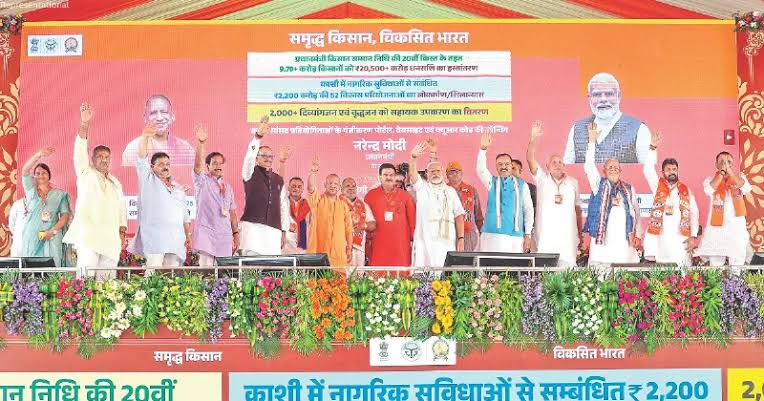
Modi’s Strong Message from Varanasi
Prime Minister Narendra Modi has reignited the call for “Swadeshi” by urging Indians to sell and buy only local goods. His message came in the wake of rising global trade tensions, especially after US President Donald Trump announced fresh tariffs on Indian exports.
Speaking in Varanasi on August 2, 2025, Modi emphasized that economic self-reliance is not a political slogan but a national necessity. His renewed push for “Vocal for Local” aims to empower Indian industries while shielding the economy from foreign policy shocks.


The PM’s remarks follow a White House directive slapping 25% tariffs on Indian goods. Trump, in a harsh statement, even called India a “dead economy.” This move has triggered widespread concern in Indian business circles and government corridors.
PM Modi framed his response as both strategic and patriotic. “When we buy something, we should ask — was it made by Indian hands?” he asked the crowd in Banauli village, urging every Indian to think consciously before making purchases.
10 Key Takeaways from Modi’s Swadeshi Speech
- The global economy is facing major instability. Every nation is protecting its own interests first.
- India is on track to become the world’s third-largest economy, and must prioritize local development.
- Government efforts are focused on farmers, small businesses, and youth employment.
- Every citizen must take responsibility for promoting Swadeshi products.
- Swadeshi is not about Modi — it’s a national call. Every party, every leader should support it.
- Consumers should buy only Indian-made products — products made with Indian skill and sweat.
- Traders and shopkeepers should sell only Swadeshi goods, especially during festive and wedding seasons.
- Buying local is the true service to the nation and a tribute to Mahatma Gandhi.
- Earlier appeals have led many Indians to hold weddings in India instead of abroad.
- The government remains committed to farmer welfare and rural upliftment.
Trump’s Tariff Threat and India’s Tough Response
Trump’s new tariffs come amid delays in a bilateral trade agreement (BTA) between the two nations. The US had earlier tried to push India to ease restrictions on agricultural goods, dairy, and GM foods.
India, however, has taken a tough stance. Officials declined to offer blanket concessions. In retaliation, Trump’s administration has announced further duties and penalties — including for buying crude oil and military gear from Russia.
Trade experts believe this is a pressure tactic. India’s refusal to bend has made it a target, even as the US secures deals with Japan, the UK, and the EU.
Swadeshi Push: More Than Economic Policy
Modi’s message goes beyond trade figures. It’s about reshaping consumer behavior. He called upon citizens to be conscious consumers. If something is made by Indians, it should be the first choice.
“This is the way to honour the sweat of our people. Let our festivals, weddings, and daily shopping be a celebration of Indian craftsmanship,” he declared.
Can India Weather the Tariff Storm?
Despite the US tariffs, India remains confident. Officials said India will continue to build strong global partnerships without compromising its interests.
India’s exports to the US include textiles, pharmaceuticals, steel, IT services, and auto components. Analysts believe that while short-term disruptions are likely, the focus on self-reliance and diversification will soften the blow.
Public Sentiment and Industry Reaction
Initial reactions on social media and in trading communities have been supportive. Business leaders from the Swadeshi Jagran Manch and Confederation of All India Traders (CAIT) have welcomed the PM’s appeal.
“If this leads to a national movement, Indian businesses stand to gain in the long term,” said CAIT spokesperson Praveen Khandelwal.
Conclusion: A Rallying Cry for Self-Reliance
PM Modi’s speech is a bold and timely call for national unity through economic action. As India faces tariff threats from global powers, it is doubling down on its own strength — its people, its skills, and its spirit of Swadeshi.
Now more than ever, Vocal for Local isn’t just a slogan. It’s a path to national resilience, economic justice, and global respect.