
PM Modi Celebrates Raksha Bandhan With Kids and Brahma Kumaris
A Celebration of Tradition and Togetherness
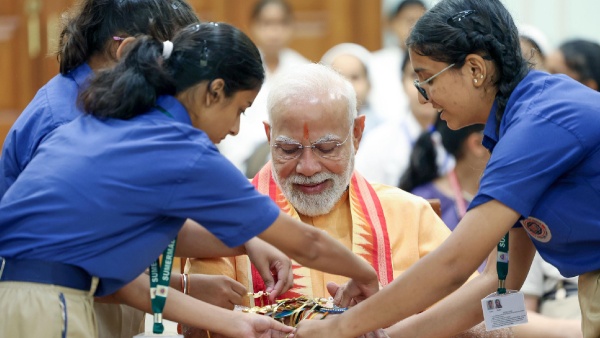
On the morning of August 9, 2025, Prime Minister Narendra Modi welcomed a group of schoolchildren and members of the spiritual organisation Brahma Kumaris to his official residence in New Delhi.
The occasion was Raksha Bandhan, a festival deeply embedded in India’s cultural fabric.
Modi’s residence echoed with laughter, smiles, and the rustle of colourful rakhis.
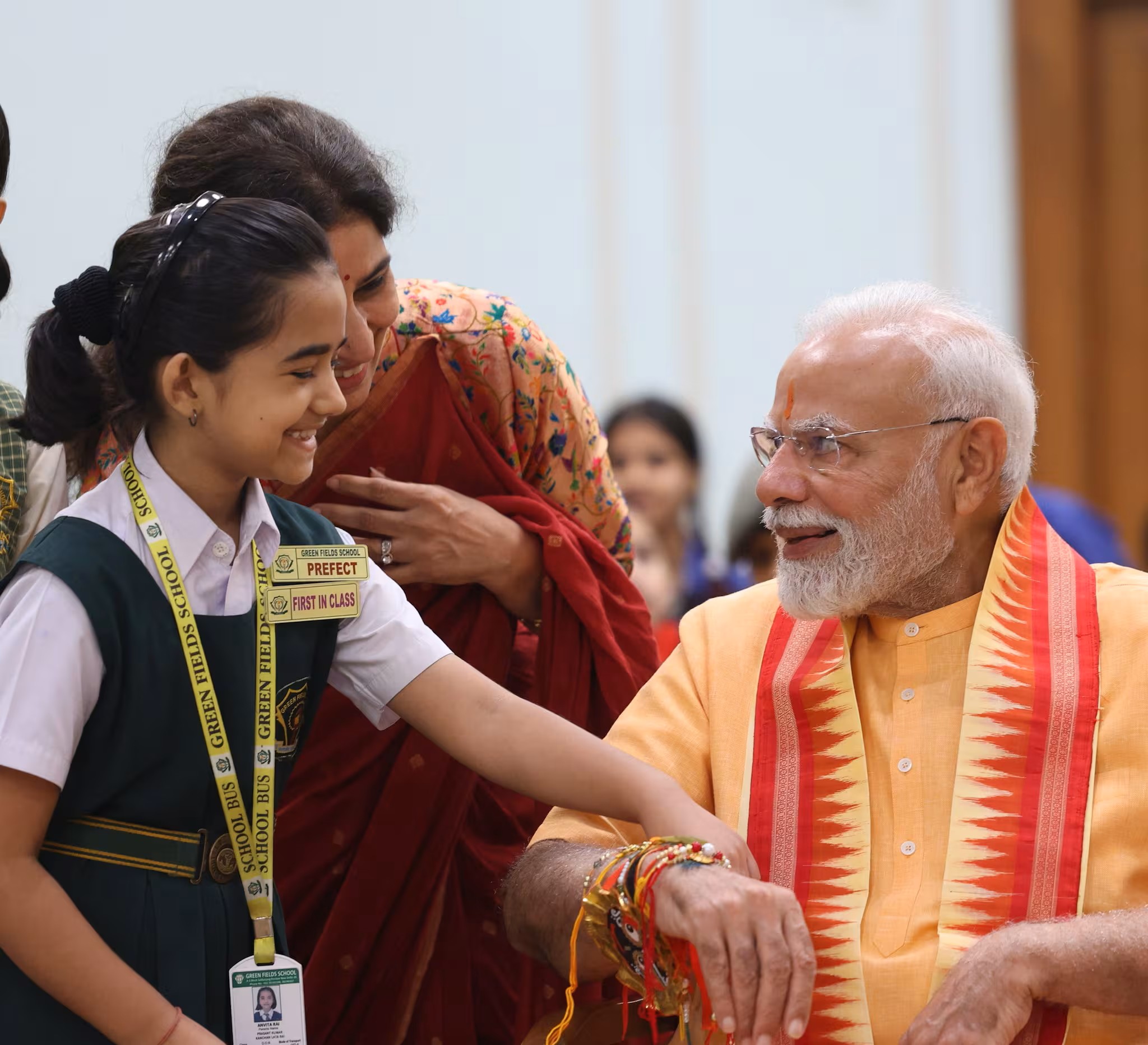
Children tied the sacred thread on his wrist, symbolising love, respect, and protection.

Earlier in the day, PM Modi extended his wishes to the country through his official social media accounts.
He called Raksha Bandhan a celebration that “strengthens the eternal bond of affection between brothers and sisters.”
The Prime Minister’s message reflected the emotional essence of the day — family bonds transcending time and distance.
The Brahma Kumari Connection
Members of Brahma Kumaris, known for promoting peace and spirituality, also tied rakhis on the Prime Minister’s wrist.
Their gesture symbolised universal brotherhood and the pledge to protect humanity and moral values.
Brahma Kumaris have a tradition of tying rakhis to leaders and citizens alike, spreading the idea that the festival is not limited to blood relations.
The Historical Significance of Raksha Bandhan
Raksha Bandhan is not a modern invention.
It is mentioned in ancient Hindu texts such as the Bhavishya Purana and Mahabharata.
One famous tale recounts how Draupadi tied a strip of her saree on Krishna’s wrist after he was injured, prompting him to promise lifelong protection.
Another story recalls Rani Karnavati of Mewar sending a rakhi to Mughal Emperor Humayun, seeking help during a siege.
These stories illustrate how the rakhi transcends personal relationships, symbolising trust and unity in society.
Celebrations Across the Country
Across India, sisters prepared rakhis, sweets, and gifts for their brothers.
Markets in cities like Delhi, Jaipur, and Lucknow were decorated with bright stalls, offering everything from handmade silk rakhis to eco-friendly designs.
Government data from the Ministry of Culture (2024) shows that over 70% of Indian households celebrate Raksha Bandhan annually, making it one of the most widely observed festivals in the country.
Rakhi in Modern India
Today, the rakhi is tied not only to brothers but also to friends, mentors, and even soldiers at the borders.
It has become a symbol of solidarity and respect beyond gender and bloodlines.
PM Modi’s decision to celebrate with children and spiritual leaders sends a clear message — Raksha Bandhan belongs to everyone.
A Day of Smiles and Blessings
Photographs from the event showed Modi bending down to receive rakhis from young girls in school uniforms.
His warm smile and affectionate interactions created a homely atmosphere despite the grandeur of the venue.
In one image, a Brahma Kumari sister ties a rakhi on his wrist while others look on, radiating calm and joy.
Why This Celebration Matters
In an era where traditions sometimes fade in urban life, public figures celebrating festivals can inspire renewed interest.
By involving schoolchildren, PM Modi emphasised the importance of passing cultural values to the next generation.
The celebration also reflected inclusivity — bringing together children, spiritual leaders, and a national leader under the same festive spirit.