
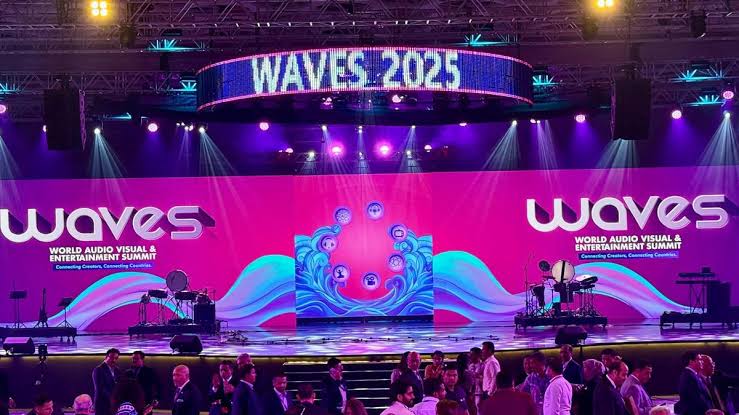
Mumbai, 2 May 2025 — The second day of the World Audio Visual and Entertainment Summit (WAVES) 2025 witnessed an inspiring and forward-looking discussion on the global expansion of Indian cinema, with some of the industry’s most respected voices coming together at Mumbai’s Jio World Centre.
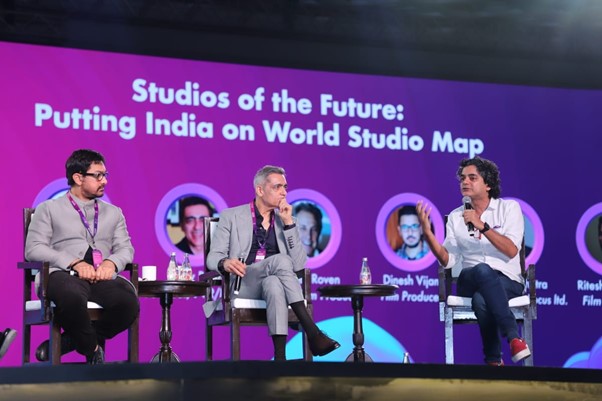

Moderated by film critic Mayank Shekhar, the session brought together key visionaries like producer Ritesh Sidhwani, Namit Malhotra of Prime Focus Limited, filmmaker Dinesh Vijan, PVR’s Ajay Bijli, and acclaimed American producer Charles Roven, known for his work on the global hit Oppenheimer.
Aamir Khan emphasized the importance of global thinking right from a project’s inception. He urged Indian filmmakers to look beyond national boundaries and establish distribution channels abroad to bring Indian storytelling to a wider audience. Reflecting on current challenges, he also highlighted how short windows between theatrical and OTT releases are discouraging viewers from going to theatres, a trend that needs immediate attention.
Charles Roven offered a perspective from the global stage, asserting that despite the rise of digital platforms, the magic of the big screen remains irreplaceable. He encouraged Indian studios to shift from a local lens to a broader, international outlook while crafting their narratives.
Dinesh Vijan focused on the power of authentic storytelling and international collaborations, pointing out that it isn’t just large budgets that make a film global. “Quality content and cross-border partnerships are what will take us there,” he said, also noting that even smaller Indian cities hold untapped cinematic potential.
Namit Malhotra highlighted how advanced technologies, especially AI, can help enhance storytelling and break barriers of language and accessibility. He underscored how India’s creative talents can benefit immensely from integrating innovation with tradition.
Producer Ritesh Sidhwani acknowledged the role of OTT platforms in giving Indian content unprecedented global visibility. “It allows us to experiment with formats and narratives in ways we couldn’t before,” he said.
Ajay Bijli, reflecting on the post-COVID slump in theatre attendance, urged for smarter release strategies that optimize revenue from both theatres and digital platforms. He noted that maintaining the health of the theatrical ecosystem is crucial to the industry’s long-term success.
As the session concluded, a collective sense of optimism prevailed. There was a clear recognition that the Indian film industry is at a turning point—and that government support, as seen through WAVES 2025, could be the catalyst it needs to truly shine on the world stage. The event was not just a panel discussion, but a symbol of hope and vision—where creativity meets policy, and where dreams of global recognition finally seem within reach.