
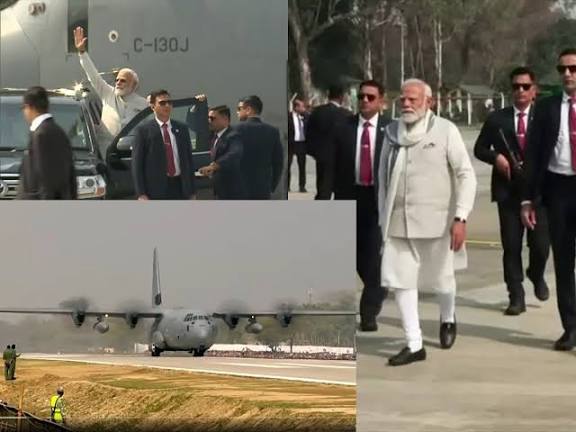

The 4.2-kilometre-long emergency runway has been constructed on the Dibrugarh–Moran stretch of a national highway in Assam at a cost of approximately Rs 100 crore. The facility is designed to accommodate frontline fighter jets and transport aircraft of the Indian Air Force (IAF) during emergencies.
The ELF assumes added importance due to its proximity to the China border. India maintains multiple air bases facing Chinese deployments along the LAC. However, military strategists have long pointed out the vulnerability of fixed airbases during wartime.
Why Highway Landing Facilities Matter
In the event of conflict, traditional airbases are likely to be primary targets. Parked fighter jets and transport aircraft are especially vulnerable to ground strikes. Emergency landing facilities provide alternative deployment points, allowing aircraft to disperse quickly and remain operational.
The Assam ELF is reinforced and sufficiently wide to handle heavy aircraft landings. Before an aircraft uses the stretch, traffic would be halted and security forces would secure the perimeter. Aircraft can be rapidly refuelled and rearmed, enhancing operational readiness.
Backdrop of Rising Regional Tensions
The Northeast holds significant strategic value. During the Doklam standoff in 2017, India closely monitored Chinese movements near the tri-junction of India, Bhutan and China. Defence planners have since prioritised infrastructure that enables rapid mobilisation in the region.
Air bases such as Tezpur, Jorhat and Chabua serve as key IAF hubs in Assam. Additionally, a Rafale squadron is based at Hashimara in West Bengal, south of Bhutan. Across the border, China maintains multiple airbases, making redundancy and flexibility crucial for India’s defence posture.
Historic Landing by the Prime Minister
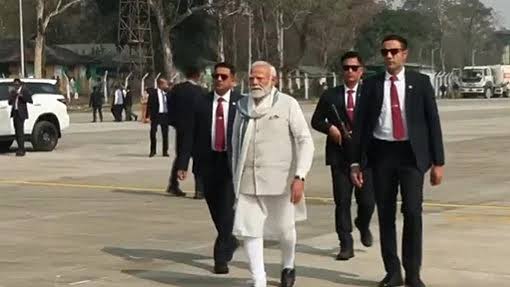
Prime Minister Modi took off from the Chabua airfield before landing at the emergency strip in Moran aboard a C-130J aircraft. Assam Chief Minister Himanta Biswa Sarma and Air Chief Marshal AP Singh were present during the demonstration.
The landing marks the first time such an emergency runway has been operationalised in the Northeast. Officials described it as a major boost to the region’s defence infrastructure.
Beyond Military Use
While primarily intended for defence purposes, the emergency landing facility can also be deployed during natural disasters and humanitarian missions. The Northeast is prone to floods and earthquakes, and rapid air access can significantly improve relief operations.
The government has been steadily enhancing infrastructure in border states as part of a broader push for self-reliance and security modernisation. More details on defence infrastructure initiatives can be accessed through the Press Information Bureau (https://pib.gov.in) and the Ministry of Defence (https://mod.gov.in).
Strengthening Air Defence Preparedness
The Assam emergency landing facility is part of a larger strategy to integrate highways into national defence planning. Similar landing strips exist in western India, but this is the first of its kind in the Northeast.
By combining civil infrastructure with military capability, India is signalling its readiness to respond swiftly to evolving regional challenges. The successful landing underscores the Indian Air Force’s operational flexibility and the government’s emphasis on border security.
As tensions along the LAC continue to shape strategic thinking, infrastructure projects like the Assam ELF reflect a long-term vision: ensuring that India’s air power remains agile, resilient and prepared for any contingency.