
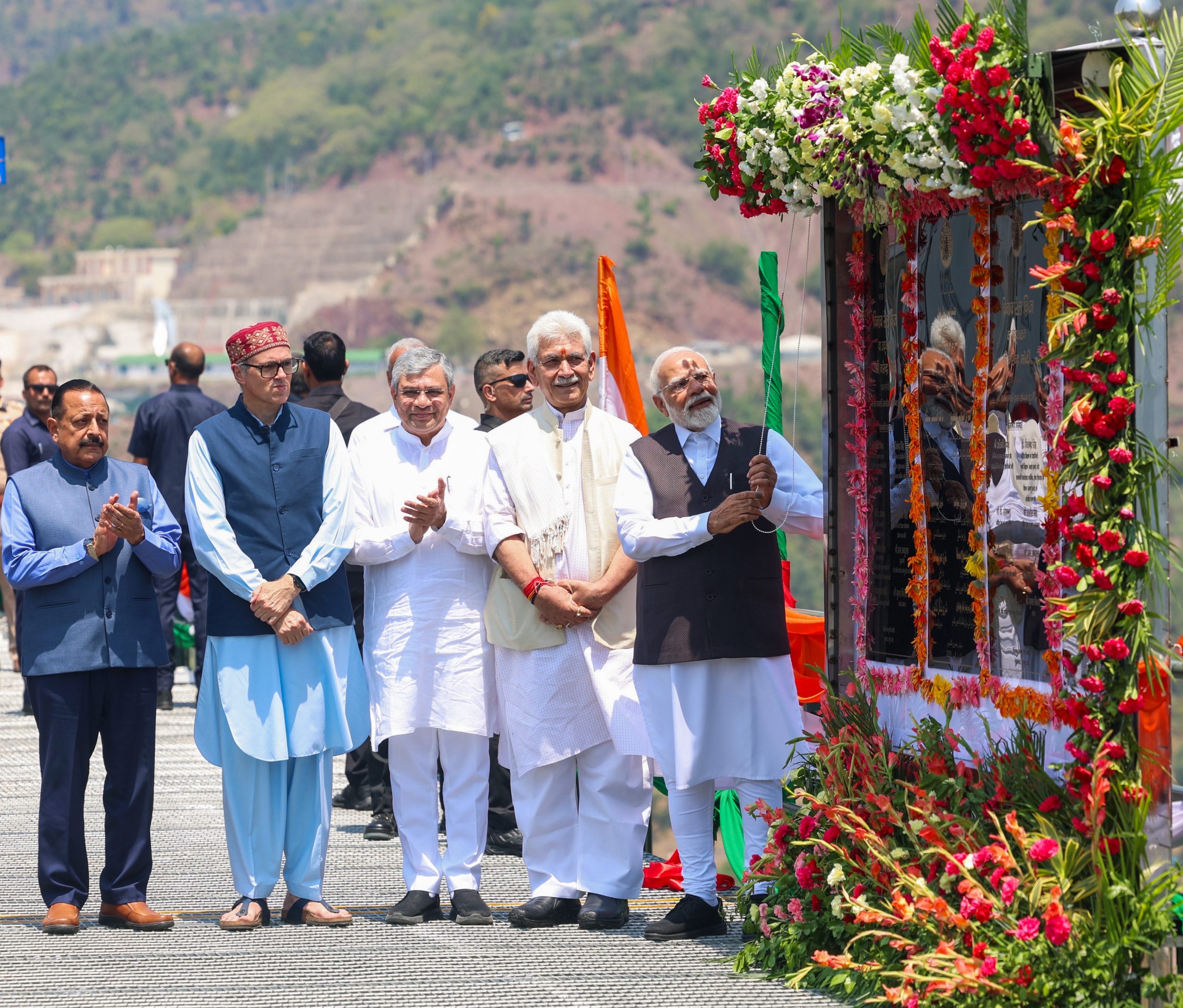
PM Modi Inaugurates First Railway Link to Kashmir Valley
PM Narendra Modi inaugurated one of India’s most ambitious railway projects on June 6, 2025. This new line directly connects the Kashmir Valley to the Indian plains by train for the first time.
The project improves connectivity and marks a new chapter in Kashmir’s integration with mainland India.


Connecting Udhampur to Baramulla via Srinagar
The new 272-kilometre railway line starts from Udhampur in Jammu and extends to Baramulla, passing through Srinagar, the valley’s largest city.
This line offers the first direct train access to the valley. Earlier, people depended only on mountain roads or air travel.
The route includes 36 tunnels and 943 bridges, posing a major engineering challenge for Indian Railways.
Chenab Bridge: World’s Highest Railway Arch
One of the standout features is the Chenab River Bridge, now the tallest railway bridge in the world.
The bridge measures 1,315 metres in length and rises 359 metres above the Chenab River, taller than the Eiffel Tower.
Engineers used steel and concrete to construct it for extreme weather resistance, including wind speeds up to 260 km/h.
They designed it for a 120-year lifespan, showcasing India’s engineering capabilities.
Vande Bharat Brings Speed and Comfort
PM Modi flagged off two new Vande Bharat trains on this route.
These semi-high-speed trains cut the travel time between Srinagar and Katra to just three hours, compared to six or seven hours by road.
Tourists, pilgrims, and locals—especially those visiting the Vaishno Devi shrine—stand to benefit.
Boost to Economy, Tourism, and Jobs
Modi stated that the new railway guarantees “all-weather connectivity”, even during harsh winters.
He stressed how the line will boost spiritual tourism, create job opportunities, and support local businesses in Kashmir.
People expect this project to become a lifeline for the regional economy and encourage development in long-isolated areas.
Images of schoolchildren boarding the train in Srinagar before the launch went viral, reflecting excitement on the ground.
High Security Amid Recent Tensions
Security forces maintained tight vigilance during Modi’s visit to Indian-administered Kashmir.
He visited the valley for the first time since recent military tensions with Pakistan last month.
The visit followed an April terror attack that killed 26 Hindu tourists.
India blamed Pakistan-based groups for the attack. Pakistan denied any involvement.
Modi also visited the newly completed Anji bridge, another high-altitude structure, before joining the main ceremony.
Kashmir Dispute Remains Unresolved
The Kashmir conflict continues to create tension between India and Pakistan.
Both countries claim the entire region, although each controls only a part.
Since 1989, armed groups in Indian-administered Kashmir have fought to either secede or join Pakistan.
India labels them as terrorists backed by Pakistan, while Pakistan calls them freedom fighters.
Military presence remains heavy, and peace efforts face serious challenges.
A Step Towards Integration and Stability
Despite ongoing conflict, the Indian government presents the railway as a major step toward integration.
The project provides year-round connectivity and aims to bridge economic, social, and cultural gaps.
Modi described the moment as historic, saying it will bring the valley closer to the rest of India—physically and emotionally.
As the trains begin their journey, they carry hope for more jobs, more tourists, and a brighter future for Kashmir.
For more detailed insights, read:
PM Modi to Inaugurate All-Weather Rail Link in Kashmir – An in-depth coverage of the strategic railway project enhancing year-round connectivity to Kashmir Valley.