
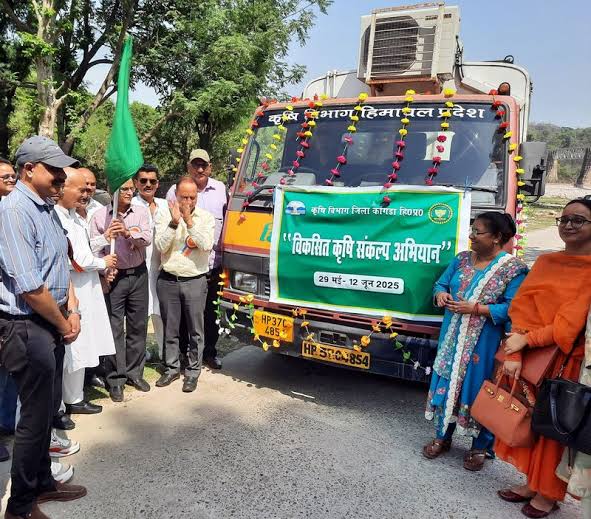
In a heartfelt address to the nation, Prime Minister Narendra Modi today launched the Viksit Krishi Sankalp Abhiyan, a landmark initiative aimed at transforming Indian agriculture and equipping farmers with the tools they need to thrive in an evolving world. Speaking via videoconference, the Prime Minister underscored the campaign’s importance as a bridge between scientific innovation and grassroots farming, especially as the nation prepares for the upcoming Kharif season.


Over the next two weeks, 2,000 dedicated teams made up of scientists, agricultural experts, government officials, and progressive farmers will traverse more than 700 districts, directly engaging with millions of farmers in their villages. These teams will not only share critical data but also provide practical, season-specific knowledge to ensure that farmers are well-prepared and better informed.
Prime Minister Modi acknowledged the traditional role of agriculture as a state subject but stressed the urgency for a united national approach in light of shifting global trends and climate challenges. He celebrated the record-breaking yields of Indian farmers, who have filled national grain reserves, but also pointed out the pressing need for modernization to keep pace with changing market demands and environmental concerns.
“We must now take scientific research from the lab to the land,” he said, emphasizing the need to make cutting-edge agricultural practices accessible to every farmer. He praised both scientists for their decades of research and farmers who have already embraced innovation, calling for accelerated efforts to make these benefits widespread.
The Prime Minister expressed his deep belief that Indian agriculture must become a cornerstone of Viksit Bharat — a developed India. He articulated a vision where the country not only meets its own food security needs but also rises as a dependable supplier in the global food market. Addressing pressing issues like climate resilience, sustainable water use, and soil conservation, he reiterated the government’s long-term commitment to these challenges over the past decade.
He also urged farmers to explore alternative sources of income, pointing to initiatives such as installing solar panels on farm boundaries, expanding beekeeping under the Sweet Revolution, and generating energy from agricultural waste through the Gobardhan Yojana. He emphasized the growing role of non-milking cattle in rural economies and encouraged value addition in agricultural products, particularly in underutilized crops like Shri Anna (millets).
Appealing directly to farmers, PM Modi encouraged them to actively interact with visiting experts, ask questions, and share their own experiences. To the officials and scientists involved, he offered a sincere reminder that their work must go beyond routine duties — it must be seen as a national service. He urged them to document farmer feedback, making the campaign a truly collaborative effort.
As the address concluded, Prime Minister Modi reaffirmed his confidence in India’s farming community and expressed hope that the Viksit Krishi Sankalp Abhiyan will open new avenues of progress, ushering in a new era of growth, dignity, and prosperity for India’s farmers. His message was not just one of policy, but of deep empathy and belief in the transformative power of India’s rural heartland.