
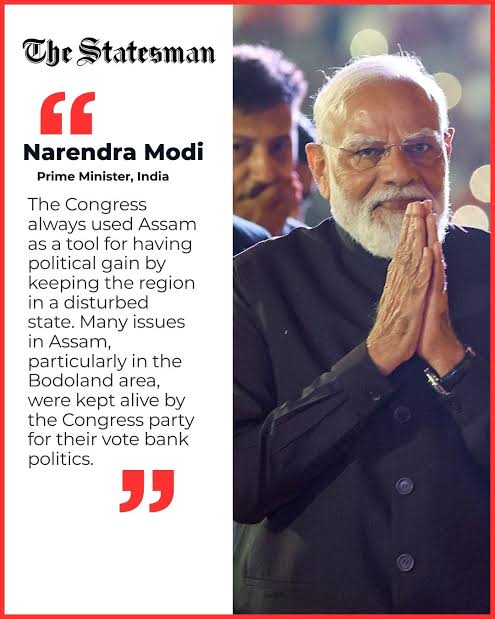

One of the most notable changes highlighted in the article is the improvement in Assam’s internal security situation. For decades, the state grappled with insurgency, frequent bandhs and social unrest, which hampered development and disrupted everyday life. Over the last 11 years, a sustained focus on dialogue, development and effective governance has significantly reduced violence and brought stability to the region.
The improved law and order situation has not only restored normalcy but has also created a conducive environment for investment and tourism. According to the article, peace has emerged as the foundation on which Assam’s broader development story is being built.
Cultural Identity and Heritage Take Centre Stage
Alongside peace, the article highlights a renewed emphasis on Assam’s rich cultural heritage. Traditional festivals, indigenous art forms and local languages have received increased institutional support, helping preserve the state’s unique identity while promoting cultural pride.
This cultural resurgence has also contributed to social cohesion, bridging gaps between communities and reinforcing Assam’s pluralistic ethos. The focus on culture, the article notes, has played a key role in reconnecting younger generations with their roots.
Infrastructure as a Catalyst for Growth
Infrastructure development forms another central pillar of Assam’s transformation. The article outlines how enhanced road networks, bridges, rail connectivity and improved air links have reduced the state’s physical isolation and strengthened its integration with the rest of India.
These projects have not only eased the movement of people and goods but have also opened new economic opportunities. Improved connectivity has boosted trade, tourism and access to essential services, particularly in remote and previously underserved areas.
Balancing Growth with Ecological Responsibility
A key theme emphasised in the article is Assam’s development model that balances economic growth with environmental sustainability. Given the state’s rich biodiversity and ecological sensitivity, development initiatives have increasingly factored in conservation and responsible resource management.
This approach aligns with the broader national emphasis on sustainable development and climate resilience. The article positions Assam as an example of how economic progress need not come at the cost of ecological degradation.
Aligned with the Vision of Viksit Bharat 2047
The Prime Minister’s post notes that Assam’s progress is closely aligned with the vision of Viksit Bharat by 2047. The article underlines how state-level reforms and targeted investments are contributing to this long-term national goal.
By focusing on peace, cultural confidence, infrastructure expansion and environmental responsibility, Assam is steadily positioning itself as a key contributor to India’s growth story in the coming decades.
Centre Highlights Regional Success Stories
By sharing the article, the Prime Minister has once again highlighted the importance of recognising and learning from regional development models. Such narratives, the PMO India post suggests, serve as inspiration for other states while reinforcing cooperative federalism.