 Vikram-I and the Rise of Private Launch Capability
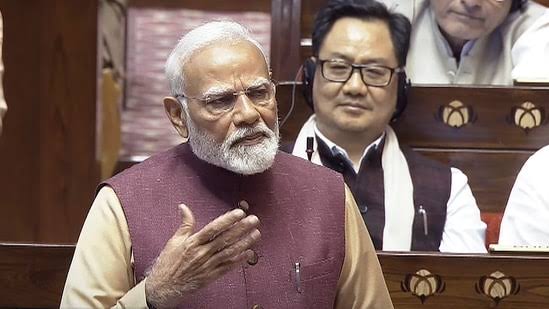
At the event Shri Modi formally unveiled Vikram-I, Skyroot’s first orbital rocket capable of placing satellites into orbit. He noted that Vikram-I represents the maturation of private capabilities that complement ISRO’s decades of leadership. The Prime Minister underlined that India now possesses launch infrastructure, manufacturing competence and human capital that few countries can match.
Skyroot founders Pawan Kumar Chandana and Naga Bharath Daka both former ISRO scientists and IIT alumni were singled out as examples of entrepreneurial risk-taking and technical excellence. The Prime Minister extended best wishes to the founders and the Skyroot team for accelerating India’s presence in the global satellite launch market.
Policy Reforms, IN-SPACe and an Open Ecosystem
Shri Modi credited recent reforms and the establishment of IN-SPACe for enabling private players to access testing facilities, technical know-how and regulatory pathways. “In just the past six to seven years, India has transformed its space sector into an open, cooperative and innovation-driven ecosystem,” he said, highlighting how policy changes have unlocked opportunities for startups nationwide.
The Prime Minister also noted that India’s space sector now supports diverse applications from agriculture and weather forecasting to defence and urban planning and stressed the strategic importance of increasing launch frequencies to meet rising demand for small satellites.
Gen-Z, Startups and the New Space Economy
Highlighting the role of youth, Shri Modi said that over 300 space startups in India illustrate a deepening private sector contribution. He emphasised that Gen-Z engineers, coders and designers are building propulsion systems, composite materials and satellite platforms, and that global investors are taking notice.
The Prime Minister linked the private space boom to India’s larger startup transformation from FinTech and AgriTech to deep-tech and semiconductors and pointed to initiatives like the National Research Foundation and the ₹1 lakh crore R&D fund as enablers for sustained innovation.
Strategic Opportunities and Global Integration
Shri Modi observed that India’s cost-effective, reliable space capabilities make it an attractive partner for satellite manufacturing, launch services and technology collaborations. He urged stakeholders to capitalise on this window to create manufacturing hubs, tech partnerships and global supply-chain linkages.
The Prime Minister also indicated that reforms will keep expanding, mentioning future private participation in sectors such as nuclear energy to strengthen India’s technological leadership and energy security.
Skyroot’s Journey and National Impact
Skyroot rose rapidly after its 2022 Vikram-S sub-orbital launch, becoming the first Indian private firm to reach space. The Infinity Campus aims to scale production with a capacity to build an orbital rocket every month, increasing India’s domestic launch cadence and supporting commercial satellite demand.
Union Minister Shri G. Kishan Reddy attended the event alongside industry leaders and investors, underscoring government support for private sector growth in strategic high-tech fields.
Looking Ahead
Concluding his remarks, Shri Modi urged India’s youth, startups, scientists and engineers to seize the emerging opportunities. He reaffirmed that the government will stand by innovators as the country seeks to make the 21st century “the century of India on Earth and in space.”