
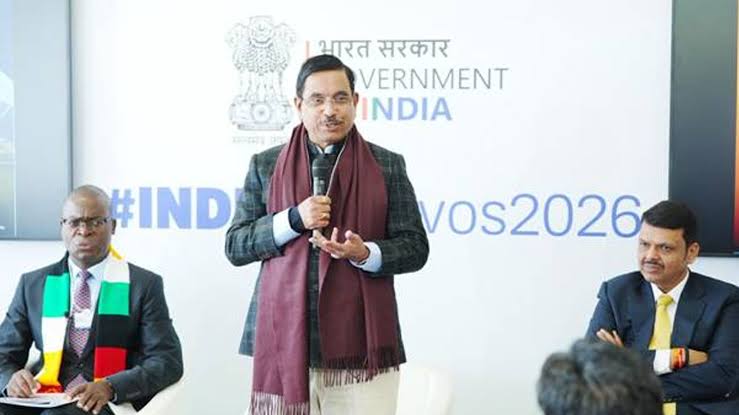

Shri Joshi highlighted that India has already achieved 267 GW of installed non-fossil energy capacity, with renewables accounting for about 52% of the nation’s total power generation. “Energy transition is not just an environmental imperative but a growth enabler, fostering industrialisation and making electricity affordable for households and businesses,” he noted.
People-Centric Schemes Boost Socio-Economic Transformation
Flagship initiatives such as PM Surya Ghar: Muft Bijli Yojana have facilitated rooftop solar installation in 2.7 million households over the last two years, targeting 10 million homes to generate around 30 GW of power. Under PM-KUSUM, more than 2.1 million farmers have solarised irrigation pumps, reducing reliance on grid electricity while earning additional income through surplus energy sales.
Reducing Costs, Strengthening Industry
By replacing high-cost subsidised electricity with affordable solar power, India has reduced electricity tariffs for households and industry alike. Shri Joshi emphasised that these reforms mark a historic transformation in the power sector and boost the country’s industrial competitiveness.
Building an Integrated Clean Energy Manufacturing Ecosystem
India has developed a robust domestic renewable energy manufacturing ecosystem. Solar module capacity stands at 144 GW, while solar cell manufacturing is at 27 GW and expected to reach 50 GW soon. The country is moving toward wafer and ingot manufacturing, completing the full domestic solar value chain. Wind energy, battery storage, and pumped storage are also scaling rapidly, generating employment and supporting grid reliability.
Integrated Energy Security and Reliability
Shri Joshi explained that India is integrating renewables with energy storage, pumped hydro, and nuclear power to strengthen energy security. Legal and policy reforms to expand nuclear energy ensure stable base-load capacity. India’s approach proves that affordability, sustainability, and security can be pursued simultaneously through coherent policies and scale.
Global Engagements at WEF
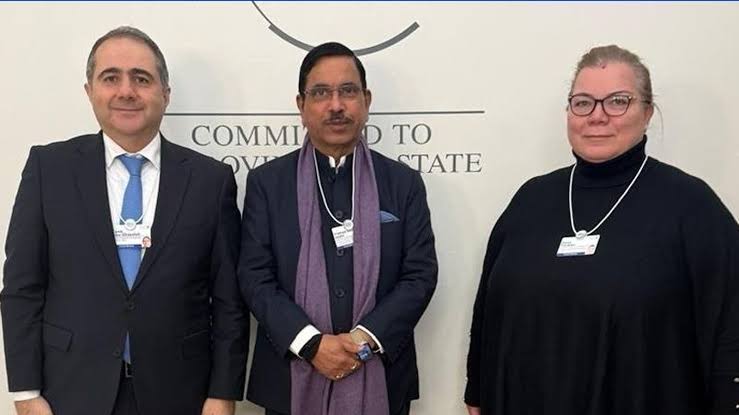
On the sidelines of WEF, Shri Joshi held discussions with international leaders, including ministers from Jordan and Zimbabwe, Dr. Fatih Birol of IEA, and CEOs of ENGIE, Acconia SA, and Bloom Energy, to promote clean energy investments and technological collaboration. These engagements aim to expand India’s renewable energy capacity towards the 500 GW non-fossil energy target by 2030.