
Operation Sindoor: capability with moral clarity
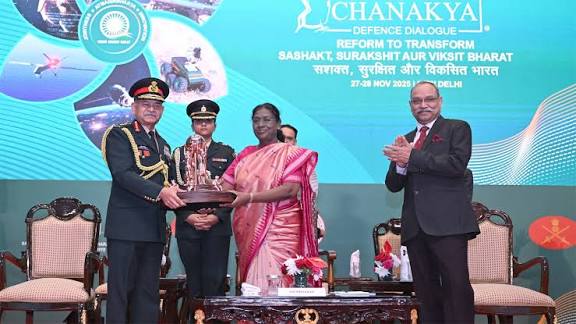
At the Manekshaw Centre, Murmu praised the armed forces for their professionalism and adaptability across conventional, counter-insurgency and humanitarian missions. She described Operation Sindoor as “a defining moment” that demonstrated both operational effectiveness and moral clarity, reinforcing India’s deterrence while aligning with diplomatic objectives.
The President warned that the global security landscape is being reshaped by competing power centres, technological disruption and shifting alliances. New domains cyber, space, information and cognitive warfare blur the lines between peace and conflict, she said, urging multi-domain doctrine and investments that deliver decision advantage.
Decade of Transformation: practical priorities
Murmu welcomed the Army’s “Decade of Transformation” and urged measurable reforms across structure, doctrine and procurement. She highlighted priorities such as automation in logistics, modular procurement for faster capability rollout and investment in dual-use technologies that serve civilian and military needs.
Industry, innovation and self-reliance
The President called for stronger defence R&D partnerships between services, DRDO, universities and industry. She encouraged nurturing start-ups and MSMEs focused on AI, autonomous systems and resilient communications, arguing that an ecosystem approach would scale indigenous solutions and reduce external dependency.
Human capital and inclusion
Murmu emphasised the importance of youth engagement through the National Cadet Corps, sports and education initiatives. She welcomed the expanding role of women officers and soldiers, saying broader inclusion would enhance effectiveness and inspire future recruits.
Defence diplomacy and training
On defence diplomacy, the President urged deeper cooperation with like-minded partners through joint exercises, logistics arrangements and capacity building to bolster regional stability. She also called for modernised curricula, simulation-based training and more exchange programmes to build interdisciplinary expertise suited to technology-driven threats.
Ethics, doctrine and policy relevance
Murmu urged delegates to weigh the legal and moral dimensions of emerging technologies, especially autonomous systems and information operations. She asked the Dialogue to convert expert debate into actionable recommendations for policymakers and called for improved civil-military coordination and intelligence sharing.
Development, resilience and Viksit Bharat
Highlighting the defence forces’ developmental role, Murmu noted examples of military engineering, medical outreach and vocational training that catalyse local economies and resilience. Linking reforms to India’s long-term vision, she said a capable, inclusive and technologically advanced military would help realise Viksit Bharat by 2047.
For the full text of President Murmu’s address, see the Press Information Bureau release. Details of the Chanakya Defence Dialogue programme and participants are available on the event’s official site.