 Conference on ‘Everyday Essentials’ to highlight public services
This year’s theme, chosen by the United Nations, focuses on ‘Everyday Essentials’ emphasising that human rights are rooted not only in legal protections but also in access to fundamental services such as healthcare, education, housing, justice and social security. Reflecting this idea, NHRC will host a national conference on ‘Ensuring Everyday Essentials: Public Services and Dignity for All.’
Dr. P. K. Mishra, Principal Secretary to the Prime Minister, will deliver the keynote address, outlining the government’s broader vision of inclusive governance and efficient service delivery. The event will bring together senior officials, academics, diplomats, human rights experts and representatives from UN agencies.
Public service delivery central to rights and dignity
The Commission has stressed that equitable access to basic amenities is essential to fulfilling the constitutional values of justice, liberty, equality and dignity. With welfare schemes such as PM Awas Yojana, Jal Jeevan Mission, Swachh Bharat Mission, Ayushman Bharat and Ujjwala Yojana improving the reach of essential services, NHRC believes consistent monitoring, accountability and rights-based evaluation remain crucial.
Two conference sessions ‘Basic Amenities to All: A Human Rights Approach’ and ‘Ensuring Public Services and Dignity for All’ will feature leading domain experts and senior government functionaries, who will analyse progress, challenges and rights-based strategies for future action.
NHRC’s legacy: 23.8 lakh cases and systemic reforms
Since its establishment in 1993, the NHRC has played a pivotal role in advancing civil, political, economic, social and cultural rights across India. The Commission has registered over 23.8 lakh complaints including suo motu cases and has recommended around ₹264 crore as relief for victims of human rights violations.
Beyond grievance redressal, NHRC contributes to policy development, legislative reviews and nationwide awareness programmes. The Commission’s investigations, open hearings, camp sittings and thematic advisories have helped embed a human-rights perspective in governance.
Strengthening institutions through capacity building
NHRC continues to strengthen institutional capacity by training civil servants, police personnel, educators and students through workshops, seminars, internships and moot courts. Its ITEC-supported programmes have also expanded India’s global footprint in human rights cooperation. To date, four international capacity-building programmes have trained 78 senior officials from 23 countries across Africa, East Asia, Central Asia, South America and the Pacific.
Digital innovation for accessible human rights protection
Expanding its digital outreach, NHRC has operationalised the HRCNet Portal, enabling citizens to file complaints online and track updates in real time. Integrated with over five lakh Common Service Centres, the portal improves transparency and accessibility, especially for remote and rural communities.
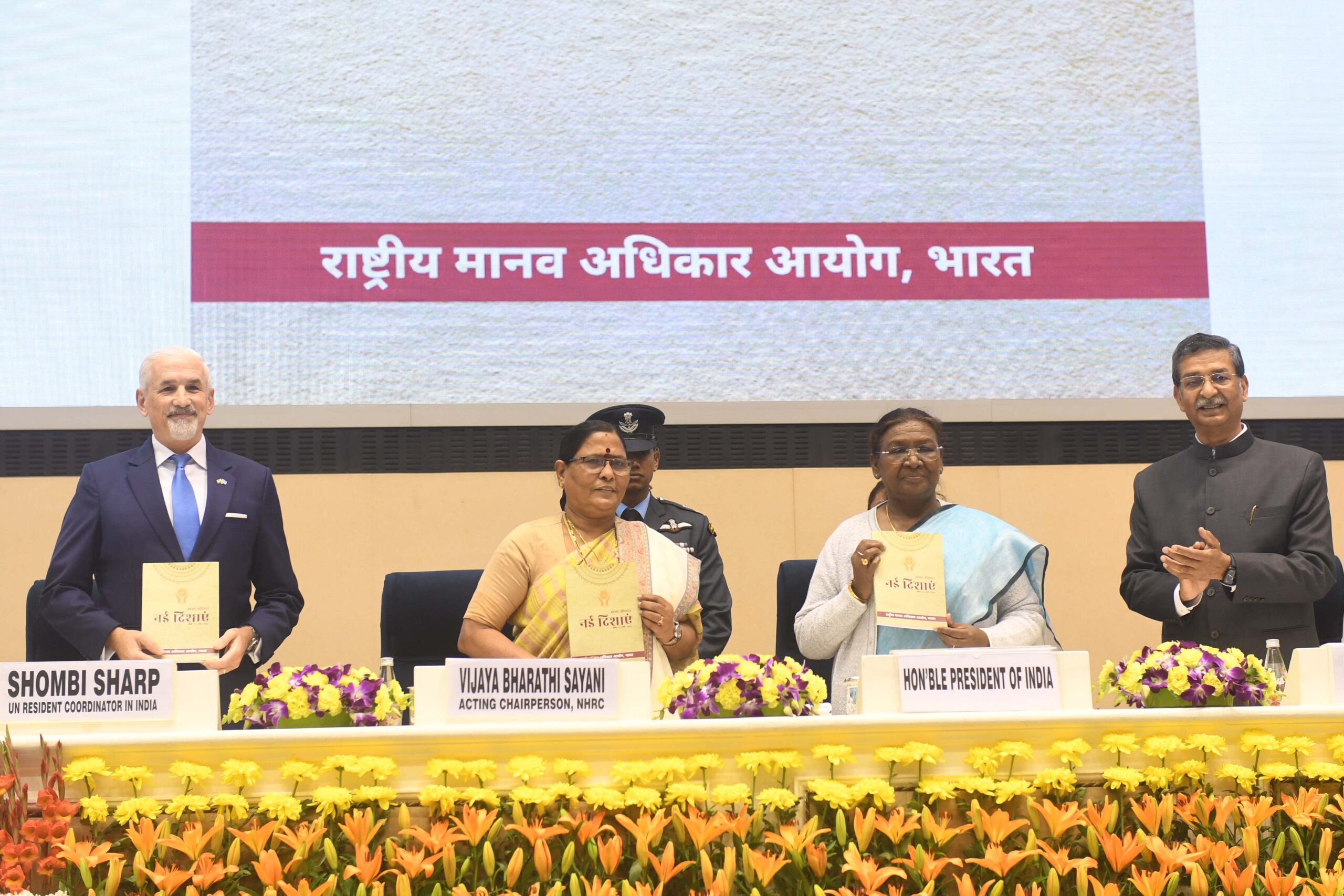
The Commission will also release new publications on Human Rights Day to document its activities and highlight evolving human rights challenges.