
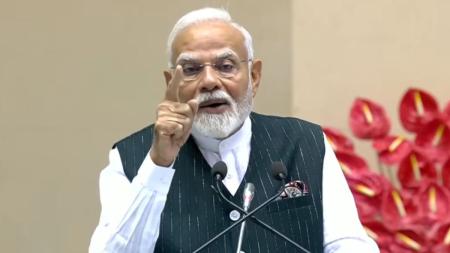
In a deeply reflective and forward-looking address on the occasion of the 17th Civil Services Day, Prime Minister Narendra Modi spoke from the heart to India’s civil servants at Vigyan Bhawan, Delhi, acknowledging their indispensable role in shaping the nation’s future. The event held special significance as it coincided with the 75th year of the Constitution and the 150th birth anniversary of Sardar Vallabhbhai Patel, whose vision of the bureaucracy as the “Steel Frame of India” still resonates powerfully.
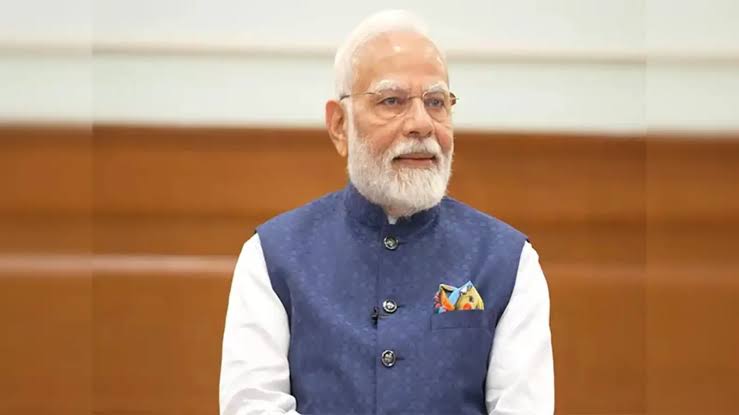

He acknowledged the rapid pace at which the world is changing, noting how even within families, the younger generation’s tech-savviness creates a sense of generational distance. In such a world, the government, he said, cannot afford to operate with outdated systems. He recalled the transformational reforms initiated since 2014, which aimed at modernizing governance, simplifying compliance, and ensuring last-mile delivery of public services with greater efficiency.
The Prime Minister’s vision for “Holistic Development” was not just a slogan but a heartfelt promise: clean water in every home, quality education for every child, financial access for every entrepreneur, and digital empowerment in every village. He stressed that governance must be measured not by the number of schemes launched but by their real impact on people’s lives, sharing touching examples from remote districts where small efforts led to profound transformations.
The achievements of the past decade, he said, have laid a strong foundation for a “Viksit Bharat”—a developed India. Yet, he acknowledged the road ahead is challenging. As the most populous country in the world, India must focus on inclusive growth, ensure the saturation of basic amenities, and harness technology to solve real-world problems. He cited impressive statistics—crores of homes built, toilets constructed, rural households connected to tap water, and millions provided with healthcare—highlighting the human stories behind the numbers.
In a moment of candor, he reminded civil servants that their role has evolved. No longer mere regulators, they must become enablers and facilitators of growth. Using the MSME sector as an example, he emphasized how vital it is for India’s civil services to create a globally competitive, compliance-friendly environment that empowers local entrepreneurs to thrive in international markets.
He passionately spoke about the importance of embracing data, AI, and emerging technologies, not just to keep up with global trends, but to serve citizens more effectively. His vision for a future-ready civil service found form in the Mission Karmayogi and the Capacity Building Programme—initiatives he believes are essential to equipping officers with the tools needed in a rapidly evolving world.
The Prime Minister did not shy away from addressing global challenges either—climate change, cybercrime, energy and water security—and urged India to stay ahead of the curve, build resilience, and act locally with a global outlook. His appeal to civil servants was not just professional but personal: to listen deeply to the most vulnerable, to serve not with status, but with soul, and to always put people first.
He concluded with a powerful invocation of “Nagrik Devo Bhava”—the citizen is divine—calling upon India’s civil servants to become not just administrators, but compassionate architects of a just, inclusive, and forward-looking India.
It was more than just a speech. It was a call to purpose. A heartfelt reminder that every policy touches lives, and every action taken by a civil servant can change the course of someone’s future.