 Protein Sheets as Natural Semiconductors
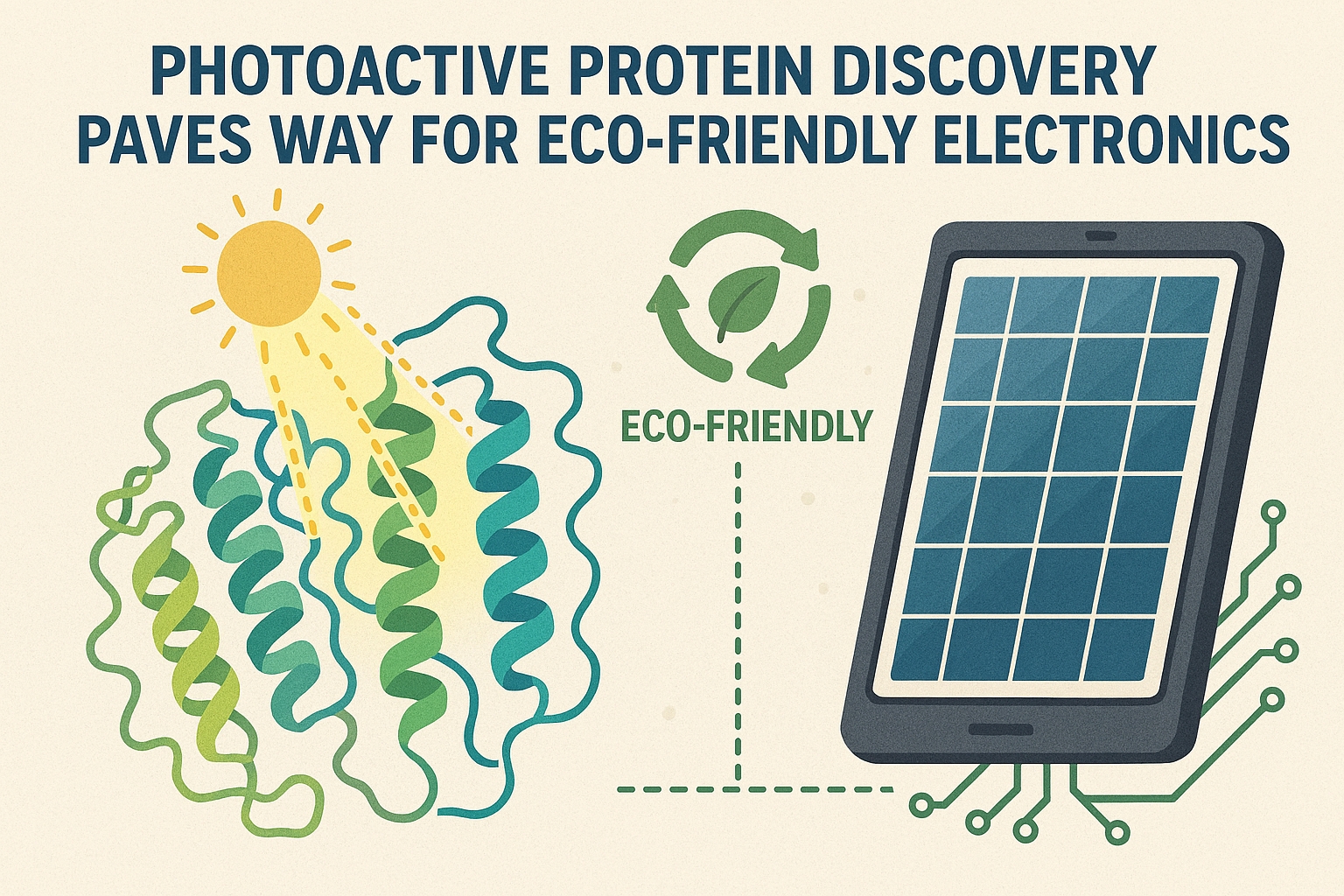
Experiments revealed that these protein sheets behave like light-driven, scaffold-free semiconductors. When exposed to UV light, electrons are released from tyrosine residues within the protein, creating an electrical signal akin to a miniature solar cell. This effect relies solely on the protein’s natural order and does not require synthetic additives or high-temperature processing.
The precise arrangement of tyrosine residues and the ordered protein structure were confirmed using advanced microscopy and controlled electrical tests. Disordered or unfolded proteins containing tyrosine did not exhibit the same electrical activity, underscoring the unique potential of these natural protein sheets.
Applications in Sustainable Electronics
The discovery presents opportunities for creating next-generation electronic devices that are both safe and eco-friendly. Potential applications include wearable health monitors, skin-safe UV-detection patches, and implantable medical sensors. Additionally, the technology could enable temporary or disposable environmental sensors that naturally decompose, reducing electronic waste.
With the ability to produce genetically tunable, low-energy, light-sensitive materials, this protein-based technology could make low-cost detectors, biocompatible sensors, and minimally invasive medical devices a reality. The research aligns with a growing global trend towards sustainable electronics that balance functionality, safety, and environmental responsibility.
Future Directions and Research Significance
Published in Chemical Science, the study is a significant step towards bio-inspired electronics. By learning from nature’s intrinsic mechanisms, scientists can design materials that are efficient, environmentally responsible, and suitable for real-world applications. The findings indicate a promising pathway for flexible, soft, and biodegradable electronics capable of powering devices ranging from wearables to medical implants.